


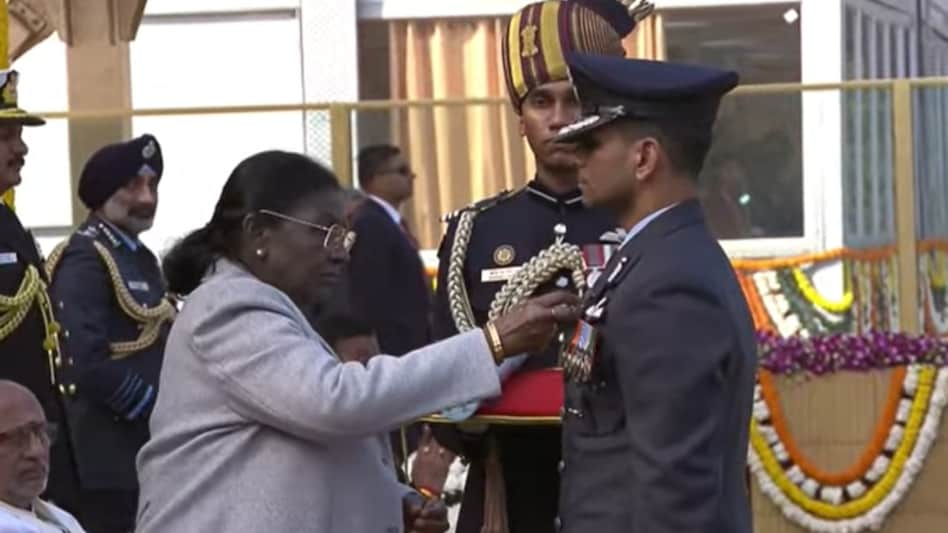
 Group Captain Shubhanshu Shukla honoured with the prestigious Ashok Chakra for his extraordinary courage during the historic Axiom Mission 4.
 President Droupadi Murmu marked Republic Day celebrations at Kartavya Path with a standout moment — conferring the Ashoka Chakra on Group Captain Shubhanshu Shukla, the first Indian to set foot on the International Space Station (ISS).
The President presented the country’s highest peacetime gallantry award to Shukla during the national ceremony on the capital’s central boulevard, placing his space milestone at the heart of this year’s Republic Day honours.

 JSW Infrastructure shares hit record high; stock up over 50% in six months
 GRSE shares rise 4% as board approves Rs 2,896 crore for shipyard expansion
 OpenAI warns of autonomous AI risks, calls for global rules before AI starts improving itself
 Most expensive residential unit: All about Dinesh Thakkar who bought ₹711 crore Juhu tower
 Meesho shares: Fresh price target signals 24% upside as UBS raises growth estimates
  What’s Hot: Stocks, Gold & Big Money Moves | Daily Markets Show | September 22 | Business Today
 IT Stocks: Is The Worst Over? Kshitiz Mahajan Shares His Market View
 Varmora Granito IPO: Management On ₹245 Crore Debt Reduction & Growth Plans
 Tier-2 Cities Drive India’s Next Realty Boom | ₹1.7 Tn Opportunity Explained
 Delhi SIR: 47.5 Lakh Names Off Draft Roll, 33 Lakh Voters Flagged For Discrepancies
 Engineers India shares: EIL jumps 6% on Kenya greenfield refinery plant
 Optiemus Infracom shares hit 20% upper circuit limit on Nothing JV; here's why
 Protean eGov shares extend gains; here's what analysts say
 ITC Hotels shares: Jefferies sees 32% upside; stock down 19% in 2026 so far GRSE shares rise 4% as board approves Rs 2,896 crore for shipyard expansionWhat’s Hot: Stocks, Gold & Big Money Moves | Daily Markets Show | September 22 | Business Today
 Abakkus Mutual Fund gets SEBI nod for SIF platform ‘Fokkus’; plans equity, debt and hybrid strategies
 Nvidia CEO Jensen Huang says there is a “0% chance AI will end the world by 2030”Engineers India shares: EIL jumps 6% on Kenya greenfield refinery plantIT Stocks: Is The Worst Over? Kshitiz Mahajan Shares His Market View












