


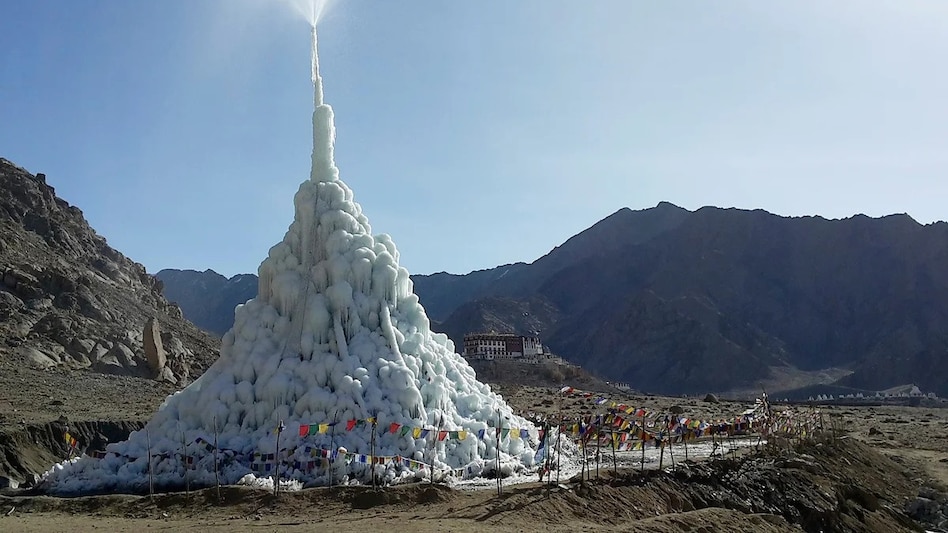
 The ice stupa acts as a frozen reservoir to support farming in Ladakh.
Ladakh’s long struggles with water scarcity have inspired one of the Himalayas' most inventive climate solutions: ‘an ice stupa’, a man-made frozen reservoir designed by engineer and activist Sonam Wangchuk. The idea developed around 2014 and 2015; it stores winter water as ice so it can be released gradually during the spring planting season, when farmers need it the most.
Water problems in Ladakh

 ‘Much Appreciated’: Elon Musk responds to Reliance’s statement on Starlink’s India entry
 Brent oil futures hit $110 a barrel! These stocks to watch next week
 Jio IPO: GMP rises; Ventura, SMC Global, SBI Securities, 3 others share views
 'Internet access a fundamental right': Supreme Court rejects age-based ban; issues directions to Centre, platforms
 AI rally loses momentum in emerging markets: Where could investors look next?
 Gold Investment Options: ETFs, EGR And MCX Explained | How To Invest In Gold Beyond Physical Buying
 Redmi Note 17 Pro Max Review , Vivo V80, Vivo Vision | Tech Gear EP 20 | Business Today
 Mahindra XUV 3XO ZNG Review: Turbo Power Meets CNG Mileage
 Gold, Silver Prices: Limited Upside Ahead Of Diwali? Expert Sees Gold At ₹1.5 Lakh, Silver At ₹2.3
 Expert Names REITs And INVITs To Watch For Quarterly Payouts And Potential Investment Returns
 10 IT stocks add Rs 2,75,000 crore in m-cap in best week in 18 years; here's whyAI rally loses momentum in emerging markets: Where could investors look next?
 Burma Burma operator Hunger Pangs files draft IPO papers with SEBI Jio IPO: GMP rises; Ventura, SMC Global, SBI Securities, 3 others share viewsBrent oil futures hit $110 a barrel! These stocks to watch next week
 Architect of Squid Game is out: Netflix cuts global chief Bela Bajaria. Who is she?10 IT stocks add Rs 2,75,000 crore in m-cap in best week in 18 years; here's why
 Anthropic quietly pitches draft bill to limit how Washington halts dangerous AI models: Report'Internet access a fundamental right': Supreme Court rejects age-based ban; issues directions to Centre, platformsGold Investment Options: ETFs, EGR And MCX Explained | How To Invest In Gold Beyond Physical Buying












