


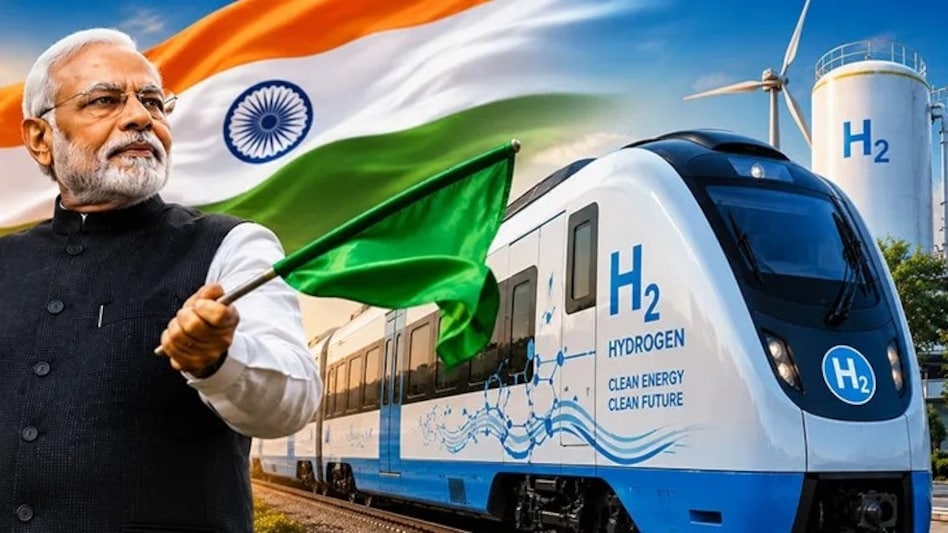
 PM Modi to flagged off India First Hydrogen Train
India is set to enter a new era of sustainable rail transport with the launch of its first hydrogen-powered train. The project marks a major milestone in Indian Railways' push towards cleaner, greener mobility, reducing dependence on diesel and cutting carbon emissions. Here are the most frequently asked questions about the train’s features and the route it is expected to cover.
What are the key features?

 US accuses 40+ nations, including India, Canada, EU of running shadow network helping China dodge Trump tariffs
 Meta under NHRC scanner over ‘paid promotion’ of adult content; Report
 From ₹55 crore to ₹158.66 crore: How N Chandrasekaran's salary increased in a decade
 Air India Phuket-Delhi flight lost control for 4 secs before plunging 300 ft, reveal Airbus findings
 Tata Group succession: How N Chandrasekaran’s resignation might change the conglomerate?
 Red Fort Blast: UN Report Attributes 2025 Delhi Attack To Al-Qaeda AQIS
 Border Row: Nepal's 210-Year-Old Sugauli Treaty Missing? What It Means For India Border Dispute
 Tata Group Leadership Shake-Up: Who Will Replace N Chandrasekaran As Chairman?
 Bengaluru Food Safety Crackdown: Cockroaches, Expired Food & Hygiene Lapses Exposed
 "Tata Sons Listing Could Hurt Air India", Says Market Expert Sudip Bandyopadhyay
 Zetwerk files updated draft IPO papers with Sebi for Rs 2,600 crore fresh issue
 KEC International shares hit 52 week low, Q1 earnings hit investor sentiment
 Why LG Electronics India shares are surging today
 Aurobindo Pharma shares slip after opening higher; here is why
 Tata Motors PV shares slip 5% post Q1 earnings; brokerages share price targets, outlook Red Fort Blast: UN Report Attributes 2025 Delhi Attack To Al-Qaeda AQISMeta under NHRC scanner over ‘paid promotion’ of adult content; Report
 Grand Hyatt near Yashobhoomi? DDA plans ₹1,000-crore 5-star hotel for Dwarka by 2030
 FM Sitharaman’s Jaipur Chai Stop: Tea, Talks And A Paytm Payment
 Mahindra Launches BLAZO i-TRK












