


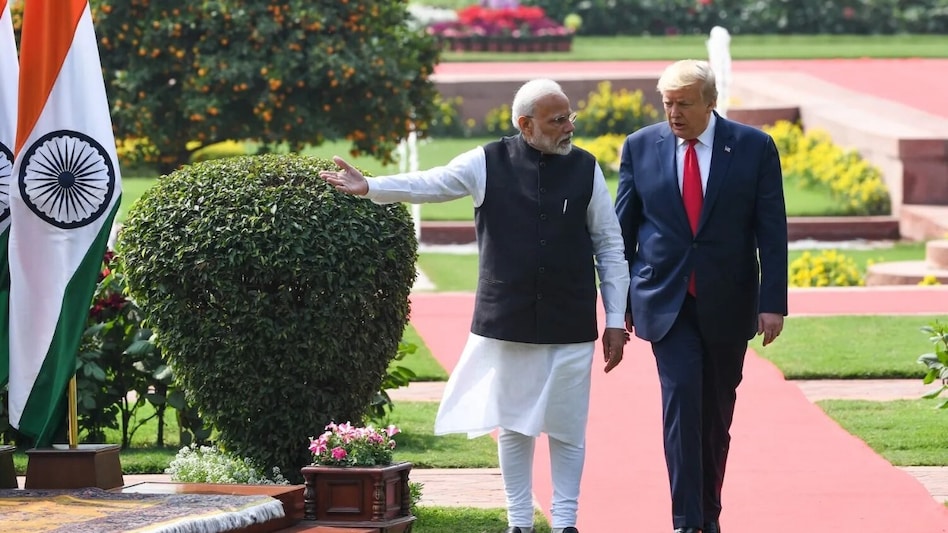
 Donald Trump, in a message, said: "On behalf of the people of the US, I extend my heartfelt congratulations to the government and people of India as you celebrate your 77th Republic Day.”
US President Donald Trump on Monday extended greetings to India on the occasion of its 77th Republic Day, underscoring the “historic bond” between the two countries even as bilateral relations continue to navigate challenges on trade, tariffs and other contentious issues.
“On behalf of the people of the United States, I extend my heartfelt congratulations to the government and people of India as you celebrate your 77th Republic Day,” Trump said in a message shared by the US embassy in New Delhi. “The United States and India share a historic bond as the world’s oldest and largest democracies,” he added.
 ‘Oligopolistic nature’: Govt wants to cap number of airports an operator can run
  Adani-linked funds: SEBI rejects settlement bids, says report
  Skyways Air Services IPO opens today: Should you subscribe? Check price band, GMP, reviews & more
 Up 27x in 5 yrs! Why this multibagger smallcap stock showing 50% fall in some trading apps today?
 Symbiotec Pharmalab IPO opens today: Should you apply? Check price band, GMP, reviews & key details
 Retirement Does Not Mean Tax-Free Income: Know When Pension And Other Income Is Taxable
 How Retirement Income Is Taxed And What Investors Need To Know
 Commuted Vs Uncommuted Pension: Know The Difference And How Each Is Taxed After Retirement
 Motor Insurance Add-Ons You Actually Need Explained: Zero Depreciation, RSA & Return-To-Invoice
 No Claim Bonus Explained: When Should You Claim Or Pay For Repairs Yourself?
 Hexaware shares soar 8% after AI Day; CLSA, Jefferies, HSBC set price targets
 Horizon Industrial Parks shares make muted market debut; stocks list at flat note on BSE, NSE
 L&T shares gain on bagging Rs 15,000 crore-plus ultra-mega Middle East gas project
 Lalithaa Jewellery Mart shares make a strong market debut; stocks list at 32% premium on BSE, NSE
 Oriental Hotels shares rally 6%, IHCL fall; here's why | Merger news Hexaware shares soar 8% after AI Day; CLSA, Jefferies, HSBC set price targetsHorizon Industrial Parks shares make muted market debut; stocks list at flat note on BSE, NSEL&T shares gain on bagging Rs 15,000 crore-plus ultra-mega Middle East gas project
 Beyond Bengaluru: Can Mohali and UP capture India’s next GCC wave?Lalithaa Jewellery Mart shares make a strong market debut; stocks list at 32% premium on BSE, NSE












