












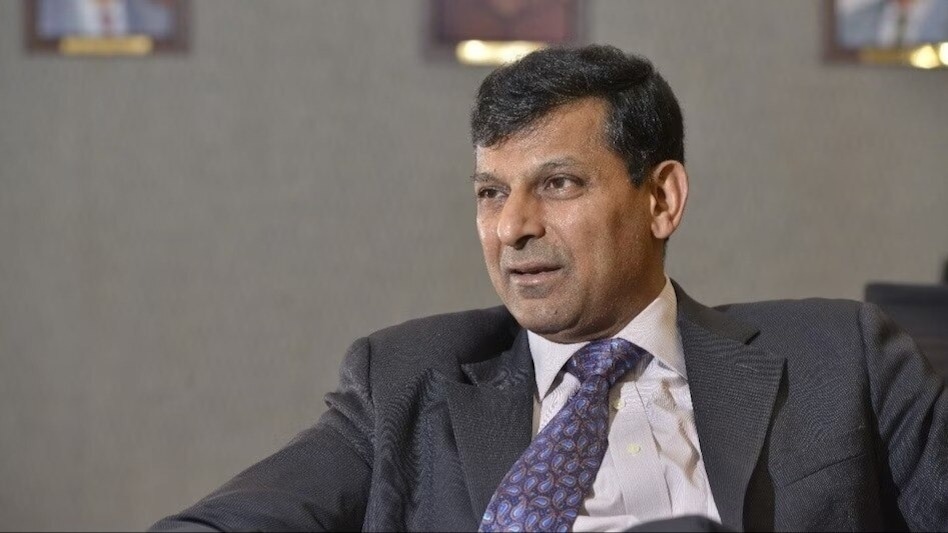
 Former RBI Governor Raghuram Rajan
  Former RBI Governor Raghuram Rajan
 Former RBI Governor Raghuram Rajan has warned that redistributive wealth taxes measures are ineffective in the real world, where the very rich find "legal" ways to avoid them. Speaking on a podcast with India & Global Left, Rajan said that while inequality in India may be high, wealth taxes are not the answer.
"You can certainly believe that wealth inequality, income inequality in India has reached tremendously high levels," Rajan said, while adding, "People say, oh, wealth tax, inheritance tax. That's the easiest thing for the rich to get around. Absolutely the easiest. Look at how much wealth tax [countries] collect. The answer is pretty close to zero."
Responding to economist Thomas Piketty's claim that the problem lies in the lack of political will, Rajan countered: "That’s not true. You don't need to be illegal about it. You can do it completely legally, which is what I see in the US - how you get around even paying lower taxes. If you put it at 'we're going to take 10% or 5% or 2% of your overall wealth', there's a huge incentive to avoid it. And they will find ways of avoiding it."
He continued: "Show me one country that has collected serious wealth taxes anywhere. I would challenge Piketty on that. I'll tell you a good way of doing it - do the Communist revolution. Lots of bloodshed, lots of violence, and lots of poverty after that. That's the way to equalise if you really want to go about it. Take any meaningful wealth tax and show me one country that has collected more than a pittance on it. Just talking about it is nonsense."
Instead of targeting the wealthy with symbolic taxes, Rajan argued that India should focus on expanding access to opportunity and creating conditions for more people to become successful. "Let's level up rather than level down," he said. "Leveling down typically is going to catch the upper middle class, who are already paying high taxes… It's not going to catch the very rich."
"I would say, for example, on big wealth in India, a strong Competition Commission, which ensures there is no concentration in any industry, is going to be far more effective in creating more opportunity for the small and medium sectors. A better financial system, which lends to the small and medium sectors, not just to the big guys - that's going to create more opportunity," the economist added.
Explaining his stance on redistribution, Rajan said: "So when I say let's level up rather than level down, what I'm saying is leveling down typically is going to catch the upper middle class, who are already paying high taxes because they're salaried and they actually pay the taxes that the incomes generate. It's not going to catch the very rich, because they will find every which way of doing it. And trust me, if they can't, they will legislate a process which will do it."
He continued, "Whatever the will, you have to run a government. So what I would say is, greater competition, greater access to finance, and try and close the loopholes where you can, by all means. Let everybody pay a fair share of their taxes. Stop finding ways through companies that you can hide income and convert what is actually income into a capital gain on which you pay nothing down the line. So those are the things we need to close down. Let's be realistic, that really what we want to do is create more sort of entrepreneurs who do well. For that, let's create more opportunity."
Rajan also cited India's debt recovery framework to illustrate how laws designed to catch defaulters end up hurting smaller businesses more than large corporates who eventually find workarounds. "For the first few years, we catch the big wigs...After that, they figure it out. And the small fry gets caught by the recovery process," he said.
"The best form of redistribution in India is getting people good jobs," Rajan concluded. "People are saying, they’re giving us wheat, rice, but what’s the point when we don’t have a good job?"
 Govt ramps up fuel, shipping preparedness as Hormuz tensions rise; LPG, petrol stocks adequate, says Centre
 Strait of Hormuz crisis: 22 countries ask Iran to stop attacks, restore shipping route
 Gold, silver prices drop up to 12% this week; what lies ahead for precious metals?
 Generic Semaglutide hits India: Prices fall 90% as companies compete for diabetic patients
 Natanz nuclear facility hit in airstrike; Iran says no radiation leak reported yet
 UAE Shoots Down 90% Iranian Missiles, Inside The Powerful ‘Sky Guardian’ Defence System
 Is Iran Heading Toward Civil War? Rising Risks Could Trigger Global Energy And Security Crisis
 India’s Oil Crisis Deepens: Crude Basket Hits $156, Costs Surge Amid Gulf Conflict
 Market Volatility to Continue? Avinash Gorakshakar Shares Strategy After Bloodbath
 Can Ethanol Replace LPG In Indian Homes? Sugar Industry New Proposal
 Gold, silver prices drop up to 12% this week; what lies ahead for precious metals?
 Tata Motors PV, DCX Systems, SBI, Waaree Energies, Eternal among stocks in focus next week; here’s why
 Sensex, Nifty outlook for Monday, March 23: What to expect from stock market? Key levels, trading strategy & more
 HDFC Bank share performance: Before, during tenure, post Atanu Chakraborty’s resignation
 Waaree Energies shares in focus on Monday: CEO exits, CFO steps down; new leadership named