








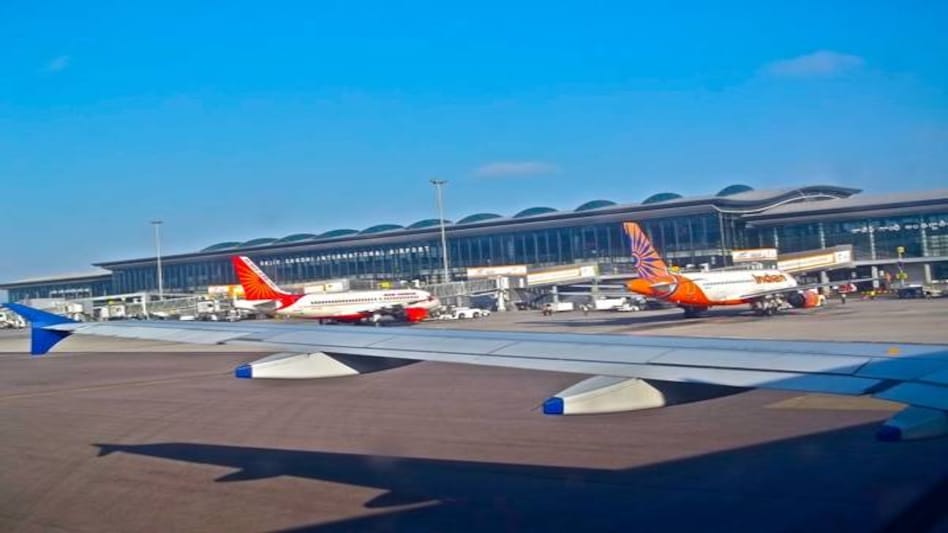
The aviation minister Pusapati Ashok Gajapathi Raju formally launched the UDAN (Ude Desh ka Aam Nagrik) scheme that promotes regional connectivity and makes flying affordable for common man. The key highlight of the scheme is that airfares will be capped at Rs 2,500 for one-hour flights on regional routes. The intent of the government is to fly 300 million domestic passengers by 2022 from 85 million in 2015/16. The target looks ambitious; and hence, the capping of fares is necessary.
The opinions are divided on the purpose of UDAN. A lack of clarity on finer details creates ambiguity on the actual implementation. Going by the policy statement, any cost that airlines bear above Rs 2,500 will be borne by the government. But it's not as easy as it seems. For instance, scheduled airlines are free to fix tariffs taking into account cost of operation, characteristic of service, reasonable profit and the generally prevailing tariff. But who will decide the reasonable profits - government or airlines? Since there are no clear definitions of reasonable profits, it is open to various interpretations. Similarly, if an airline flies to a new destination with no flights, then there are no prevailing tariffs to refer to.
Then, there are issues regarding the revival of airports in smaller towns. As per the national civil aviation policy, India has only about 75 operational airports/airstrips out of a total of 450. The revival of unutilized airports will be done if an airline shows interest in flying to a particular destination. Upon such request, the central government will work on building no-frill airport after taking inputs from concerned state government. But each such airport is expected to cost between Rs 50 crore and Rs 100 crore. The maintenance cost will be additional. What if the passenger demand may not be enough to support that kind of spending on infrastructure and subsidizing air fares? In the past, there are ample examples of airlines suspending operations to cities, especially smaller ones, due to poor passenger demand. That would burn a hole in the government's pocket, and unfair to keep spending taxpayers' money just to make flying affordable for a few.
ALSO READ: Baba Ramdev open to setting up Patanjali unit in Pakistan
According to global consultancy AT Kearney, there are about 33 airports in India where narrow-body Airbus and Boeing could land because; the remaining airports have short runways and a lack of high-speed runway exits. "For instance, Mysore, Kohlapur and Jamshedpur have potentially high-traffic airports that are hampered by inadequate flight accommodations. Although airstrips are undergoing some modernization, many would only be capable of handling regional aircraft in the medium term because of runway length restrictions. Even after modernization, demand out of such airports would be ideally served with a mix of both regional and narrow-body aircraft," says AT Kearney report. At the moment, a large chunk of aircraft flown in India (about 468) is narrow body. For instance, the largest carrier IndiGo flies just Airbus A320 (a narrow-body). Airlines would strongly resist introducing regional (or smaller) aircrafts such as turboprops in their fleet because of complexities associated with operating more than one type of aircraft.
A few airlines that BT spoke with says that they are not comfortable with government's involvement in fixing fares, even if it will lead to more passengers flying with them. The constant dealing (and negotiations) with government will be an added burden. However, some think otherwise. "The entire thing will be funded by the government. Of course, the devil is in detail but a policy statement is not supposed to go into detailing. It's for the first time the government has come up with an aviation policy. We should not draw conclusions so early," says Milan Zatakia, chairman and CEO of Millennium Aero Dynamics, an aircraft service provider and manufacturer.
Starting January next year, the first flight - where the tickets will be priced at Rs 2,500 per passenger - is likely to take off. To begin with, the scheme will be funded by a small levy on flight landings at key airports in the country. Flying has an aspirational value attached to it, and the idea of making flying affordable does have a mass appeal. Right now, it's largely driven by sops - given that costs are being borne by existing passengers and the government - rather than free market principles.
 Budget without ‘big bang’ measures: Nomura sees capex focus as positive, disinvestment target ambitious
 Union Budget 2026 maintained continuity, attempted structural transformation: SBI Chairman CS Setty
 Union Budget 2026: Pollution control funding cut even as cities struggle with smog, toxic air
 Adani Green, Adani Ports, Adani Power: Adani Group stocks rally up to 5%
 'Border 2' box office collection Day 10: Sunny Deol’s war drama crosses Rs 370 crore worldwide
  Budget 2026 Charts Viksit Bharat Path: PM Modi Calls It Historic, Focus On Reforms And Stability
 Budget 2026 Triggers Political Storm: PM Modi Calls It Booster, Opposition Slams ‘Visionless’ Plan
 Budget 2026 Plays Safe Amid Global Storms: Capex Push, No Tax Shock, Defence Boost
 No Income Tax Surprise In Budget 2026, But Higher STT Triggers Market Sell-Off
 Union Budget 2026 | Anil Parab On Budget 2026: Fiscal Discipline, MSME Growth & Global Supply Chain Strategy
 Silver ETFs: Selloff extends; Zerodha, Groww, MOFSL, Tata, Nippon silver ETFs tank up to 19%; here's why
 This Jhunjhunwala stock is stuck in bear grip; price targets, outlook and more Adani Green, Adani Ports, Adani Power: Adani Group stocks rally up to 5%Budget without ‘big bang’ measures: Nomura sees capex focus as positive, disinvestment target ambitious
 Sensex, Nifty turn flat; what lies ahead for markets after Budget?