GR: The healthcare industry is undergoing a digital transformation, with technology at the forefront. We focus on developing a wide range of technological solutions aimed at improving patient outcomes and enhancing the delivery of healthcare. Our solutions leverage advanced medical imaging, data analytics, and digital tools to support healthcare providers in seamlessly accessing systems via a wide range of network-connected devices. For instance, our Edison platform uses AI to analyse medical data and images swiftly and accurately, assisting doctors in diagnosing diseases. Similarly, the HealthSuite platform offers a cloud-based environment for healthcare providers to store and share data, enhancing patient care coordination and decision-making.
Our innovations empower clinicians with insights to help them diagnose, treat, and monitor patients more efficiently. Our recent collaboration with Medanta on the 24x7 e-ICU Command Centre serves as a hub for medical technology, enabling real-time patient monitoring even during unconventional hours. This promotes early interventions and integrates hospital systems with devices, boosting efficiency, collaboration, and quality patient care while reducing costs.
BT: What steps does GE HealthCare take to ensure the interoperability and seamless integration of its technology solutions with existing healthcare systems?
GR: GE HealthCare collaborates with Health Level Seven International (HL7) to establish and uphold healthcare interoperability standards. Our user-friendly and adaptable solutions assist customers in efficiently aggregating existing data securely and in compliance, effortlessly integrating them into existing workflows, enhancing care delivery, streamlining workflows, reducing uncertainty, and facilitating knowledge transfer.
By adhering to industry standards like Digital Imaging and Communications in Medicine (DICOM) and Health Level Seven (HL7), we ensure that our solutions can interact with other systems employing these standards. Application Programming Interfaces (APIs) are a set of rules that enable different software applications to communicate. Through the development of open APIs, GE HealthCare enables the integration of its solutions with other systems, benefiting healthcare providers who lack in-house expertise for integration. We also collaborate with partners to create and implement interoperability solutions, tapping into the knowledge of other companies and expanding our reach to healthcare providers.
BT: In what ways do your technology solutions address the challenges of accessibility in healthcare?
GR: While disruptive technologies hold the potential to enhance healthcare infrastructure and delivery, adoption is hindered by factors such as affordability, lack of awareness, distribution, and physical constraints. At GE HealthCare, we are focused on bringing to the fore technology that is uniquely suited to address the country’s dual challenge of the urban-rural divide. Our technology solutions address the challenges of accessibility in healthcare by enabling remote care delivery, providing portable medical devices, supporting healthcare workforce development, promoting data connectivity, offering cost-effective solutions, and forming strategic partnerships.
For instance, through GE Shop and GenWorks, we have introduced unique products to improve healthcare access, enabling providers to build a robust portfolio for quality care nationwide. GenWorks, which was formalised in 2015, has expanded Wipro GE Healthcare's presence to over 600 districts across India.
BT: How do you prioritise data security and patient privacy when designing and implementing your technology solutions?
GR: We prioritise maintaining the highest safety standards. We follow strict guidelines to protect sensitive information while delivering services to our customers. Our compliance practices are governed by rigorous processes and a deep commitment to safeguarding data security and privacy. From a procedural standpoint, we have three key aspects to consider. First, a defined internal process; second, strict adherence to global data security and privacy laws. Third, our product design incorporates robust structures for regional law compliance. We will continually update our data protection practices in alignment with the recently passed Digital Personal Data Protection Bill 2023, which respects individuals' rights while enabling lawful data processing.
BT: Are there any specific examples of how GE HealthCare's technology solutions have contributed to advancing medical research and improving medical practices?
GR: GE HealthCare's solutions, particularly in cardiology, have made a significant impact. One notable achievement was the introduction of the digital Cath lab, which transformed complex surgeries that took months into quicker and more accurate procedures like angioplasty and angiograms, reducing recovery time significantly. By integrating advanced interventional CTs, diagnoses that once took months can now be done within hours. These solutions have played a vital role in advancing medical research and, more importantly, improving medical practices. We collaborate closely with renowned key opinion leaders (KOLs) globally, conducting extensive research in top-tier hospitals and prestigious research institutes worldwide. Our partnerships with these institutions focus on jointly creating innovative solutions that propel the progress of medical research.
Our innovations leverage the power of AI and data science to improve clinical outcomes, enabling clinicians with assistive tools for faster diagnosis, thereby optimising clinical workflows.
BT: How do you see emerging technologies, such as blockchain or the Internet of Things (IoT), shaping the future of healthcare, and is GE HealthCare exploring their potential applications?
Technologies like blockchain and the Internet of Things (IoT) are poised to have a significant impact on the future of healthcare, offering opportunities to enhance patient care, improve efficiency, enhance data security, interoperability, remote monitoring, and patient engagement. Among the key technologies, 5G stands out as a significant catalyst, especially regarding accessibility. Its widespread deployment globally or within a country will increase accessibility by reaching remote areas with limited traditional broadband services.
BT: How does GE HealthCare collaborate with healthcare providers and other industry stakeholders to co-create solutions that best address their specific needs and challenges?
GR: GE HealthCare strongly believes in collaborative ecosystems to drive innovation, enhance accessibility, and transform healthcare digitally. Through partnerships and collaborations, we make our solutions more accessible to medical professionals as well as facilitate the healthcare industry’s transition to a virtualized and distributed care model. A recent example is our collaboration with Elekta, a leader in radiation therapy, to expand access to precision radiation therapy solutions.
With a clear focus on nurturing future tech talent, GE HealthCare launched the Healthcare Innovation Lab in collaboration with IISc. This lab focuses on real-time problem-solving in care delivery, developing digital solutions for the Edison platform, and advancing diagnostic and medical image-reconstruction techniques using deep learning and AI.
By actively involving healthcare providers and stakeholders in the co-creation process, we aim to develop solutions that are not only technologically advanced but also highly relevant, effective, and user-friendly.
Also read: 'Rest of Middle East may rely on India': How Israel-Hamas war will impact Indian pharma exports
Also read: UP govt allows cough syrup company linked to Uzbek deaths to re-open factory: Report



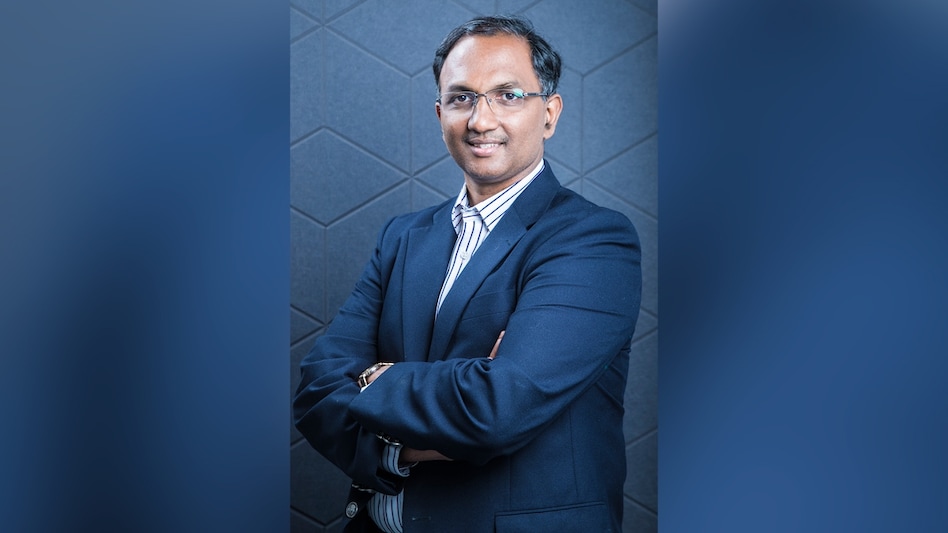 Girish Raghavan, Vice President of Engineering at GE HealthCare
 BT Big Story: India wants to become a shipbuilding power. Can it match China, Japan & South Korea?
 LPU riots: Regular classes suspended for 10 days, midterms postponed amid violent protests
 PB Fintech shares: Macquarie target on battered stock hints at 67% upside
  PC Jeweller shares in focus as firm becomes 'debt free'; stock near 52-week high
  'We are prepared...': Iran foreign minister warns of 'doomsday war' after Trump rejects peace offer
 R Veeramani Case: Granite Tycoon Faces Widening POCSO Probe In Chennai
 Gen Z And Money: Why Young Investors Want Quick Returns Over Long-Term Wealth Creation
 How Is Alexa+ Different? Will It have Ads Even If You Pay? Exclusive Chat
 Demand Robust Across Segments | Production To Ramp Up, Exports To Expand: Vivek Srivatsa
 GST Council To Meet On October 7: Invoice Matching, ITC & UPI MDR Tax In Focus
 IEX expands into coal trading as subsidiary seeks licence, stock reacts
 Adroit Industries IPO: How to check allotment status on Bigshare, BSE, NSE; fresh GMP & listing date
 ESDS Solutions shares: Brokerage assigns 'Sell' call after recent stellar run; check target
 YES Bank shares fall 4% on Citi's negative watch; Axis Bank also in focus
 Sensex tanks 900 pts, Nifty gives up 22,900; key factors dampening market sentiment
  WhatsApp is testing a new way to navigate on Android: What’s new
 Gold, silver prices on September 28: Check latest rates in Delhi, Mumbai, Kolkata, other cities












