The government mandates box warning on Nimesulide
This week, the Central Government directed all manufacturers to carry a mandatory “Box Warning” on Nimesulide labels, cartons, package inserts, and promotional materials. The move follows deliberations by the Drugs Technical Advisory Board (DTAB), the apex panel advising the Central Drugs Standard Control Organisation (CDSCO) on drug safety.
In its April 2025 meeting, DTAB reviewed an Indian Council of Medical Research (ICMR) report examining Nimesulide’s effects in adults. While the drug is already prohibited for children under 12, the board noted it continues to be widely prescribed for short-term fever and pain management in adults. DTAB recommended that ICMR conduct a systematic review on use in children under 12, adolescents aged 12–18, and adults over 60 before further policy decisions.
The Board also endorsed ICMR’s safety guidelines: Nimesulide should be used only as a second-line therapy, avoided in pregnant or lactating women, and not administered to patients with renal or hepatic impairment or alongside other drugs affecting liver or kidney function. Immediate-release oral formulations above 100 mg were recommended for prohibition.
Study reports adult efficacy of Nimesulide, calls for further review in children and elderly
Amid regulatory scrutiny, the ENDEVER study—conducted in collaboration with Dr. Reddy’s Laboratories’ medical affairs and clinical research teams—reported that Nimesulide quickly reduced fever and fever-related pain in adults aged 18–60. Published in the Journal of the Association of Physicians of India (JAPI), the study involved 303 adults across four centres: Dr. Mustafa’s Clinic in Hyderabad, Medipoint Hospitals and Ojas Multispecialty Hospital in Pune, and Medstar Multispecialty Hospital in Bengaluru.
Participants received Nimesulide 100 mg, ibuprofen 400 mg + paracetamol 325 mg, or paracetamol 650 mg alone. Fever was tracked using thermometers, and pain assessed on a 0–100 Visual Analogue Scale (VAS), where higher scores indicate more severe pain. Nimesulide reduced fever within 15 minutes and provided faster pain relief than the other groups. Within two hours, 40% of patients with moderate pain and 6.5% with severe pain reported only mild discomfort; by day two, many were completely pain-free.
Safety outcomes were reported as reassuring, with just 2% experiencing mild side effects such as nausea, headache, or drowsiness, and no serious adverse events. The study noted that its findings applied only to adults aged 18–60, leaving safety and efficacy in children and seniors above 60 to be further evaluated.
“Nimesulide is an effective anti-inflammatory and painkiller. However, our main concern has always been its safety profile. Caution is needed for children under 12 and adolescents, and further evaluation is required for those over 60. Special care is also necessary for patients with liver or kidney disease. Overall, this aligns with existing guidelines,” said Dr. Sukhvinder Singh Saggu, Director, Minimal Access, GI & Bariatric Surgery, CK Birla Hospital, Delhi.
Combination formulations driving market growth
While Nimesulide has stagnated, combination therapies are emerging as the preferred choice for Indian consumers seeking multi-symptom relief. Nimesulide with Paracetamol grew 13% year-on-year to ₹269 crore, with a five-year CAGR of 6%, while Drotaverine paired with Nimesulide expanded 11% YoY to ₹25 crore, showing an 8% CAGR over the same period. Other combinations, such as Nimesulide with Loratadine, Ambroxol, or Phenylephrine, recorded short-term spikes in demand, though their five-year CAGR remained negative at 4%.
“The data show that combination therapies are becoming the preferred choice for Indian consumers seeking multi-symptom relief. Manufacturers aligning portfolios with these combinations are likely to capture the largest market share,” said Sheetal Sapale, VP Commercial, Pharmarack.
Overall, the Nimesulide market rose from ₹414 crore in August 2021 to ₹503 crore in August 2025, representing an 8% YoY increase last year and a five-year CAGR of 5%. The trajectory suggests that commercial performance will be shaped by clinical effectiveness, regulatory measures, and growing preference for combination therapies.
Nimesulide, a non-steroidal anti-inflammatory drug has a long history in India as a short-term fever and pain relief medication. While globally, some countries such as Finland, Spain, and Ireland restricted or banned it over concerns of liver toxicity, in India it has remained a popular choice for adults. Safety concerns led the CDSCO to ban its use in children under 12 in 2007, yet the drug continued to be widely prescribed for adults. Major manufacturers include Dr. Reddy’s Laboratories, Cipla, Emcure, Macleods, Ipca, Glenmark, Biobrick Pharma, Henin Lukinz, and Therawin. API producers include Mangalam Drugs & Organics, Vital Laboratories, Manus Aktteva Biopharma, Thykn Products, Unimark Remedies, and Aarti Drugs.



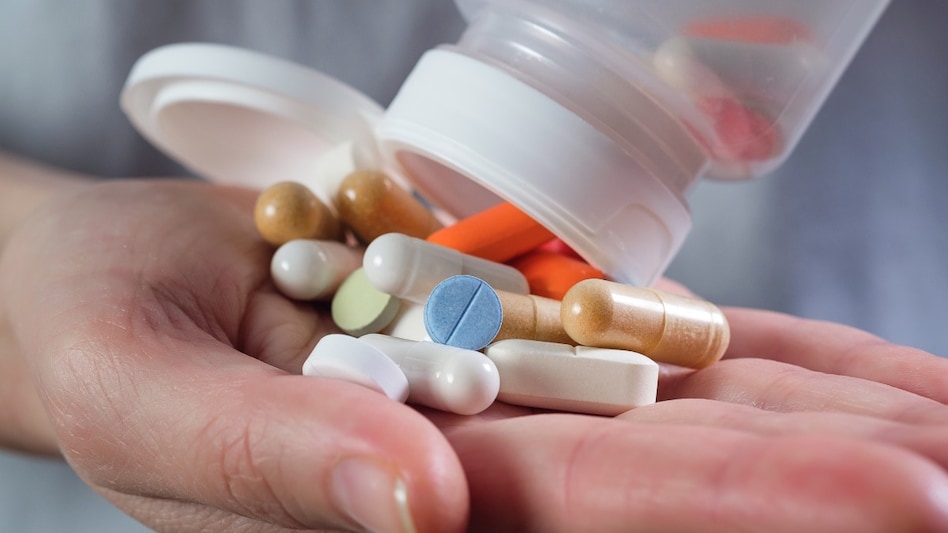 This week, the Central Government directed all manufacturers to carry a mandatory “Box Warning” on Nimesulide labels, cartons, package inserts, and promotional materials.
 Tata Sons rejects Noel Tata objections over N. Chandrasekaran reappointment
 NSE becomes Asia's second most-valued stock exchange, m-cap at $46.89 billion
 Biggest risk is regulatory risk...: Nithin Kamath warns fintech valuations face rule-change risk after IRDAI commission proposals
 HSBC plans India equity broking return amid IPO boom, says report
 BT Big Story: Is 66% = zero? The Tata Sons question on everyone’s minds
  Meta’s New Gadgets: Camera-Free Glasses, VR Eyewear And AI Handheld Device Unveiled
  MDR Levy: Will Retail Trading Volumes Take A Hit? | NSE Chairman Srinivas Injeti
 NSE Lists At ₹1,800: Exclusive Post-Listing Interview With India's Largest Exchange
 From Mobile Trading To AI: How NSE Plans To Protect Market Integrity
 NSE On India’s Capital Markets Growth | IPOs, REITs, InvITs And More
 Whirlpool of India clarifies on promoter stake sale report; stock slips
 From Azim Premji to DMart’s Radhakishan Damani: The famous investors sitting on thousands of crores in NSE shares
 Solar Industries stock gets 'Buy' call on defence push and global explosives growth
 BTTV Exclusive | NSE CEO Ashish Chauhan says new products to drive diversification, calls EGRs transformational
 'Where is Pakistan': When Nelson Mandela asked Hamid Mir
 UPI needs greater investment, resilience as ecosystem costs rise: NPCI CEO Dilip Asbe












