


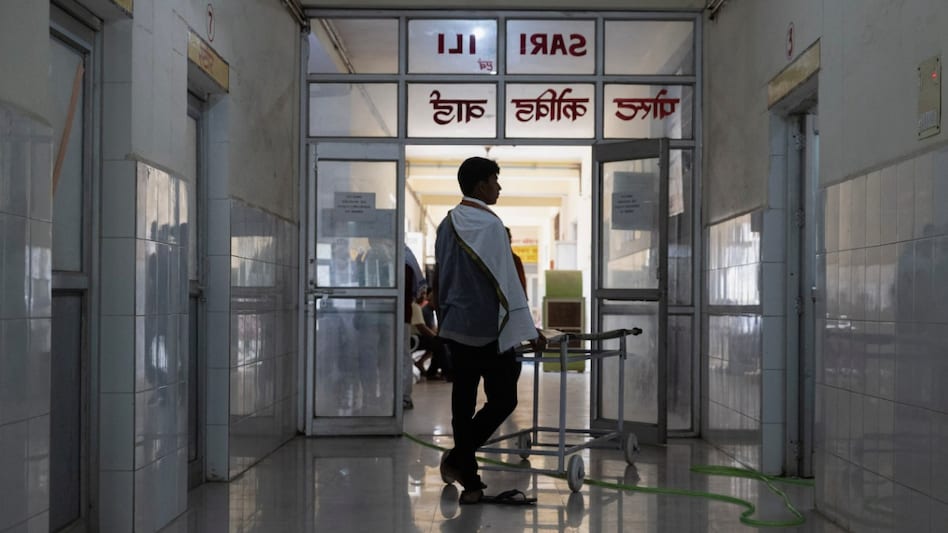
 Centre has announced a comprehensive overhaul of rates for nearly 2,000 procedures under CGHS
The government’s long-awaited revision in Central Government Health Scheme (CGHS) package rates is set to give a strong earnings boost to India’s private hospital sector, sector analysts have said.
The Centre has announced a comprehensive overhaul of rates for nearly 2,000 procedures under CGHS, the first such revision in 15 years, effective October 13, 2025. The new framework links reimbursement to hospital quality and city tier, aligning prices with current medical costs and incentivising compliance with quality norms.
“Preliminary analysis suggests an overall price hike of 25 to 30 percent across most procedures,” said Nitin Agarwal, Research Analyst at DAM Capital. For instance, coronary artery bypass graft (CABG) rates have increased from ₹1.46 lakh to ₹2.36 lakh, ₹2.71 lakh for super-specialty units, while normal delivery rates have jumped from ₹9,200 to ₹35,000.
The new structure differentiates rates based on accreditation and location. NABH-accredited hospitals will get the base rate, while non-accredited facilities will receive 15 percent less. Super-specialty hospitals with over 200 beds will earn a 15 percent premium, a newly introduced incentive. Tier-II and Tier-III cities will receive 19 percent and 20 percent lower rates, respectively.
According to DAM Capital, the revision is a big positive for hospitals, especially those with significant exposure to government health schemes. For hospitals deriving about 10 percent of their revenues from central government schemes, the revision could translate into a 2.5 percent revenue increase and up to 10 percent EBITDA growth, the report estimated.
Among listed players, Fortis Healthcare, Max Healthcare, Narayana Health, and Yatharth Hospitals are expected to be the biggest gainers, given their 15 to 35 percent revenue exposure to government schemes. HCG (HealthCare Global) is also likely to benefit, the investment bank indicated.
DAM Capital maintained a constructive outlook on the sector, with Apollo Hospitals, Fortis Healthcare, Max Healthcare, and Narayana Health as its top picks. It has a ‘Buy’ rating on these stocks, citing potential FY27 EBITDA upsides once the new CGHS rates take effect.
“This revision not only corrects long-pending pricing distortions but also provides visibility for margin improvement from the second half of FY26 onwards,” the report noted.
DAM Capital projects that hospital EBITDAs, currently ranging between 17 percent and 27 percent across major listed players, could expand further as the new rates are adopted by other state and central government schemes, which typically benchmark against CGHS. The move has been widely welcomed by the healthcare industry, which has long sought alignment of reimbursement rates with current medical costs.
Similarly, Mythri Macherla, Vice President & Sector Head, Corporate Ratings, ICRA Limited, termed the revision as a favourable development for hospital companies serving patients under the Central Government Health Scheme (CGHS).
“This is a positive move for hospital companies catering to CGHS beneficiaries,” Macherla said, noting that “major hospital chains typically earn around 4–8% of their revenues from CGHS patients, though in some cases the share can be even higher.”
She explained that “the updated policy introduces a tiered rate card system that differentiates between NABH-accredited and non-accredited facilities, and takes into account super-specialty hospitals with more than 200 beds, as well as those located in tier-II and tier-III cities.” This, she said, “is designed to better align reimbursement rates with the actual costs incurred by hospitals.”
“As a result, super-specialty and NABH-accredited hospitals are expected to see higher realisations, while the structure also addresses cost variations between metropolitan and smaller cities,” Macherla added.
NATHEALTH, Healthcare Federation of India, lauded the government’s decision, calling it a “significant reform” that strengthens India’s healthcare delivery system.
Ameera Shah, President of NATHEALTH and Executive Chairperson of Metropolis Healthcare Ltd, said the rate revision, coming soon after the recent GST relief on healthcare services, reflects the government’s intent to address long-standing sectoral concerns.
“This reform, along with the earlier GST relief, reflects the Government’s commitment to strengthening healthcare delivery and addressing long-standing concerns of the sector. We thank the Government for considering NATHEALTH’s recommendations and acting upon them through this important policy measure,” Shah said.
She added that CGHS remains a vital programme for millions of beneficiaries, and the updated rates will improve access to safe and effective care while enhancing efficiency across the system.
Building on this momentum, NATHEALTH has suggested that CGHS and other government-sponsored schemes be periodically benchmarked to the Consumer Price Index (CPI) to ensure predictability and sustainability.
“Such a mechanism would create a win-win value proposition for patients, providers, and policymakers,” Shah noted, reaffirming NATHEALTH’s commitment to partner with the government in driving reforms that deliver accessible, affordable, and high-quality care for every Indian.
The move, analysts further said, is expected to significantly boost participation by private hospitals.
However, Macherla cautioned that “despite the upward revision in CGHS rates, one key concern remains the long receivable cycle under government schemes like CGHS, which is much longer than for other payer categories such as cash-paying, international, or insured patients.”
It is pertinent to note that while the government had partially revised CGHS rates in April 2023, covering consultations, room rents, and ICU charges, the current overhaul is more comprehensive and structural revision.
In the 2023 update, OPD consultation fees were raised from ₹150 to ₹350, and in-patient consultation fees from ₹300 to ₹350. ICU charges were fixed at ₹5,400, including accommodation for all ward entitlements, while room rents were increased to ₹1,500 for general wards, from ₹1,000, ₹3,000 for semi-private wards, from ₹2,000, and ₹4,500 for private rooms, from ₹3,000.
Hospital shares on Monday surged up to 4.5 percent on October 6 after the government announcement. Max Healthcare led the rally, climbing 7 percent, followed by Fortis Healthcare, which rose 4.3 percent, and Apollo Hospitals, up 2.3 percent. Shares of Narayana Hrudayalaya and Yatharth Hospitals gained around 5 percent and 4 percent, respectively, while the Nifty Healthcare Index edged up 0.6 percent, with hospitals emerging as top performers.
Macquarie said the government’s move represents the first substantial CGHS rate revision in 15 years, with procedure costs in major therapy areas, including cardiology, neurology, oncology, and orthopaedics, expected to increase by 5–30 percent.
The brokerage called the update a “positive for the hospital industry,” noting it could boost profitability for leading private players.
The global brokerage also projected that the revised rates could translate into a mid-single-digit rise in EBITDA for Max Healthcare and Apollo Hospitals, assuming procedure rates increase in the high-teen percentage range.
For context, the Central Government Health Scheme (CGHS) serves as the nodal healthcare provider for about 4.2 million central government employees, pensioners, and their dependents.

 'Will discharge my responsibilities with complete humility': Pralhad Joshi after being appointed Education Minister
 'All Delhi metro stations open for passengers,' says DMRC after CJP calls off Jantar Mantar protests
 From NEET protests to politics? What CJP's Saurav Das and Ashutosh Ranka have now revealed
 Large office spaces remain in demand as India's leasing touches 48 million sq ft in H1 2026, says report
 Gold, silver prices today (July 26): Check latest rates in Delhi, Mumbai, Kolkata, other cities
 FDs vs Markets: Where Should You Keep Your Short-Term Money?
 Why Term Insurance Is Essential for Every Earning Member | Sum Assured & Coverage Explained
 Pakistan's Alleged Terror-Politics Nexus: Lashkar Links Spark Questions Over Fazlur Rehman
 Think Life Insurance Is Optional? Here's Why Every Indian Family Needs It Today
 FD Vs Arbitrage Fund: Which Is Better For High Taxpayers?
 Adani Power: 45 GW target, Rs 2 lakh crore capex plan among conference call highlights
  ITC Hotels, Chalet, Ventive, IHCL, SAMHI: Hotel stocks to buy despite travel disruptions
 ITC shares: Rs 307 a key short-term level to watch; here's target price
 Mphasis shares: FY27 guidance maintained; brokerages keep 'Buy' after Q1; check target price
 Should you buy every IPO? Research suggests patience may be the smarter strategy
 From a BA graduate to a five-time MP and Cabinet veteran: What did new Education Minister Pralhad Joshi study?From NEET protests to politics? What CJP's Saurav Das and Ashutosh Ranka have now revealedGold, silver prices today (July 26): Check latest rates in Delhi, Mumbai, Kolkata, other citiesLarge office spaces remain in demand as India's leasing touches 48 million sq ft in H1 2026, says report
 Petrol, diesel prices today, July 26: Check latest rates in Delhi, Mumbai, Chennai, Kolkata and other cities









