








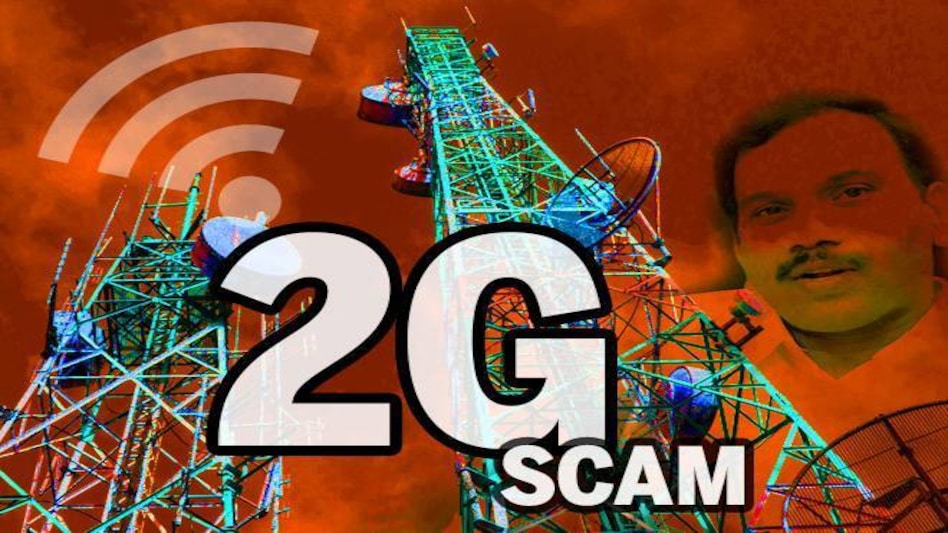
The Enforcement Directorate (ED) and Central Bureau of Investigation (CBI) have challenged the verdict of CBI special court on the 2G case in Delhi High Court. The two agencies have moved the court in less than three months of their defeat in the special court led by Justice O.P. Saini. While the decisions are on expected lines, challenging the court's order has opened a long, winding and futile saga in what is considered the biggest scam - resulting in a notional loss of Rs 1.76 lakh crore to the exchequer - that was unearthed nearly nine years ago. In December, a Delhi court acquitted former Telecom Minister A. Raja and 18 other accused in the 2G spectrum case
Unless there's a big miracle waiting to happen, the 2G case will unlikely come to an end at least in the lifetimes of those who are part of this alleged scam. The 2G case is a bunch of cases that involve dozens of accused, over 250 witnesses and pieces of evidence that run into 3-4 lakh pages. It took more than six years for the special court to deliver its verdict.
It can be argued that the much of the groundwork for the higher courts - High Court and Supreme Court (in case it goes right up to the apex court) - is already being laid by the special court, the case might be resolved in the upper courts in a shorter time frame. In several instances, the higher courts give enormous weightage to the lower courts' orders, and that should happen in this case too. Wrong!
The difference between the 2G case and other cases is the judgement of the special court itself. The judgement by Justice Saini frequently talks about the laxity on the part of investigating agencies - CBI and ED - in proving the charges against the accused. "I have absolutely no hesitation in holding that the prosecution has miserably failed to prove any charge against any of the accused, made in its well-choreographed charge sheet," Saini said in his judgement.
Since the allegations were not backed by an adequate investigation, the higher courts would likely give time to the agencies to present a solid case against accused. The botched up investigations lead to a loss of faith in the law enforcement agencies. It's the moral duty of the higher courts to maintain the trust of the common public in law enforcement bodies. So expect this case to drag on fo
 India engages Iran to secure energy flows as Hormuz tensions escalate
 Indian Navy warships escort Indian LPG tankers through Gulf of Oman amid regional conflict
 Donald Trump vows Hormuz will be ‘OPEN, SAFE, and FREE’, warns of action against Iran
 West Asia conflict: How Air India, IndiGo, Akasa fuel surcharge hikes are making flights costlier
 IPO listing: India tweaks IPO rules to help big tech, digital firms list with smaller stake dilution
 Will Gold Prices Hit ₹1 Lakh Again? Sachin Jain Explains The Future Of Gold
 Ashank Desai: Accountability Is Squarely On You' In Golf Just Like In Business
 Maye Musk On Motherhood, Career & Happiness | India Today Conclave 2026
 Is IMEC Still Possible? Karan Adani Responds Amid Global Tensions
 Malaika Arora Explains Her 3 F’s Approach To Lifestyle, Brands & Entrepreneurship
 IPO listing: India tweaks IPO rules to help big tech, digital firms list with smaller stake dilution
 Stay patient during volatility, markets remain resilient despite global shocks: SEBI chief Tuhin Kanta Pandey
 Helium shortage: Dixon Tech, Lal PathLabs, Vedanta, HAL, MTAR shares take a hit; here's why
  RIL stock falls 14% from January high; what lies ahead for the index heavyweight?
 Rs 2,000 crore daily loss! OMCs take Rs 20 per litre hit on petrol, Rs 45 on diesel