


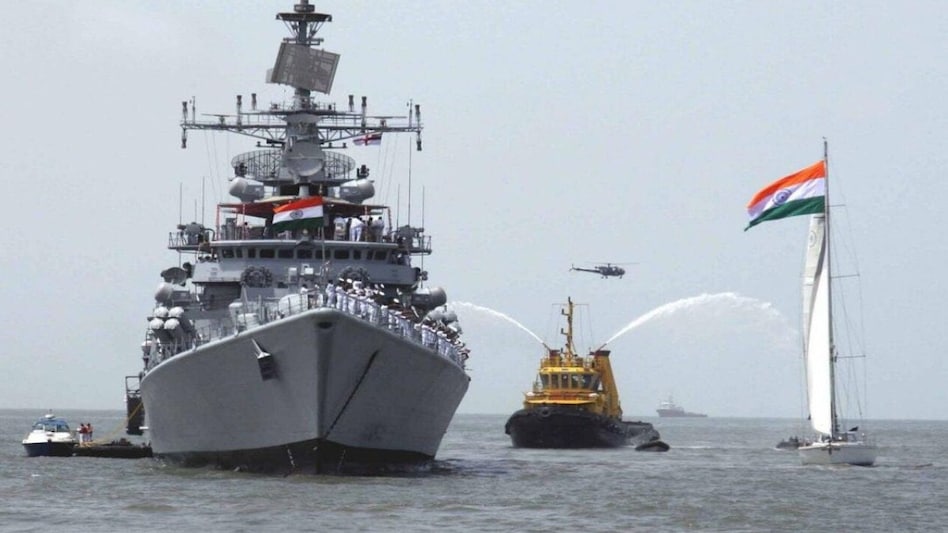
 The safe transit of the Shivalik and Nanda Devi is the latest in a series of efforts by Indian authorities to secure their merchant fleet, drawing on both naval capabilities and diplomatic channels.
The Indian Navy has deployed warships to escort two Indian-flagged liquefied petroleum gas (LPG) tankers, Shivalik and Nanda Devi, through the Gulf of Oman after regional tensions escalated following recent attacks involving the United States, Israel, and Iran. The escort operation is aimed at ensuring the safe passage of Indian commercial vessels carrying critical fuel supplies through one of the world’s most sensitive maritime corridors.
The move comes after a series of attacks since February 28 disrupted navigation in the Strait of Hormuz, a key chokepoint that handles nearly 20% of global oil shipments. With more than 24 Indian-flagged vessels currently operating near the Strait, authorities have stepped up security measures to protect the merchant fleet amid rising risks to shipping. According to Rajesh Kumar Sinha, Special Secretary in the Ministry of Shipping, the Indian tanker Jag Prakash has already exited the eastern side of the Strait safely, indicating progress in efforts to secure vital trade routes.
Satellite tracking data has confirmed the presence of three Indian Navy warships in the Gulf of Oman, providing escort to merchant vessels. Satellite imagery analyst Damien Symon stated, “Three Indian Navy warships appear to have arrived in the Gulf of Oman, likely to escort merchant vessels amid the tense security situation in the region - Indian flagged LPG Tanker SHIVALIK, IMO 9356892, is currently being escorted as per tracking data.”
Symon further cautioned about the reliability of vessel tracking in the area, noting, "Note - These positions might fluctuate due to ongoing GPS disturbances in the region, take current positions as estimates subject to change." The region has witnessed frequent navigational challenges due to electronic interference, complicating monitoring and operational planning for all stakeholders involved.
This multi-layered approach has been reinforced by high-level diplomatic engagement, with External Affairs Minister S Jaishankar meeting Iran's Seyed Abbas Araghchi four times since the crisis began. Additionally, Prime Minister Narendra Modi has discussed the safe transit of Indian vessels directly with Iranian President Masoud Pezeshkian.
The tankers are transporting approximately 92,700 tonnes of liquefied gas, underscoring the significance of their safe passage for India's energy security. The Shipping Corporation of India confirmed that both vessels successfully passed through the Strait of Hormuz on 14 March and are now en route to Indian ports, with Shivalik expected to arrive at Mundra and Nanda Devi at Kandla in the coming days.
As reported by Symon, "Second Indian Flagged LPG Tanker NANDA DEVI appears to be moving away from the Gulf of Oman likely to join the Indian Navy escort group currently assisting LPG Tanker SHIVALIK as both tankers move towards India as per declared data." The coordinated movement of these ships under naval escort highlights India's commitment to ensuring the uninterrupted flow of strategic cargo amid heightened international tensions.
The safe transit of the Shivalik and Nanda Devi is the latest in a series of efforts by Indian authorities to secure their merchant fleet, drawing on both naval capabilities and diplomatic channels. These operations reflect a growing emphasis on national maritime security and proactive risk management in response to evolving geopolitical threats in the region.

 Behind the reduction in workforce in India’s top three private sector banks
  'Eye for an eye': Houthis declare naval blockade against Saudi Arabia
 No proposal to abolish LTCG on listed equities: Govt in Lok Sabha
 Blame it on the IndiGo fiasco? Air ticket refund complaints up 233% in 2025
 'No commitments made so far': CJP delegation meets JP Nadda, seeks Dharmendra Pradhan's removal
  Tatva Up 20%; HDFC, Axis Bank Drop on Weak Q1
 Why Parliament Could Not Function on Day 1 of the Monsoon Session | Full Report
 Is Facial Recognition Actually Secure? | 1X Neo Robot & Ultraviolette X-47 Review | Tech Today
  Jupiter Hospital Opens Dombivli Unit As It Targets A 3,000-Bed Network
 Best Midcap & Small Cap Mutual Funds to Buy Now | Expert Reveals Top Picks
 JSW Steel Q1 earnings: Here's how the stellar show may impact the metal sector
  Kotak Bank, Axis Bank Q1 earnings are out: Expert strategy on trading these stocks
  Sensex falls over 400 pts, Nifty ends below 24,250 as US-Iran attacks, banking results hit sentiment
 Vedanta stocks: Accumulate from a medium-term perspective, says Kranthi Bathini
 Reliance Industries Q1 results: Analysts turn bullish after earnings; is it time to buy?









