Union Minister Nitin Gadkari addressed the India News Manch, stating that 'conversion of knowledge into wealth is the future'. He emphasized that 'futuristic knowledge and futuristic technology' are the most important resources for the country's future. Mr Gadkari noted that the government refers technical problems to IITs because of their high credibility. He also highlighted Prime Minister Narendra Modi's mission to make India a '5 trillion dollar economy' and the world's third-largest economy. He added that 'no material is West and no person is West ', depending on leadership vision.
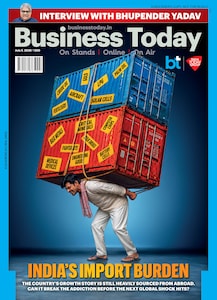
Union Minister Nitin Gadkari attended the release of the book Sanatan Sanskriti Ki Atal Drishti, outlining his vision for the next edition of Nation First. Gadkari stressed that peace and non-violence can only be upheld by a strong and capable nation, underlining the importance of power, technology, and resources. He highlighted the need for futuristic thinking in defence, innovation, science, and clean energy to reduce fossil fuel imports and pollution. Emphasising alternative fuels, electric mobility, and indigenous technology, Gadkari said true nationalism lies in converting knowledge into wealth, reducing imports, boosting exports, and building a self-reliant India through innovation and leadership.
Gadkari recounted his visit to Iran in July 2024, where he attended the swearing-in ceremony of Iranian President Masoud Pezeshkian
Union Minister Nitin Gadkari attended the release of the book Sanatan Sanskriti Ki Atal Drishti, recalling Atal Bihari Vajpayee’s firm belief in secularism. Gadkari said Indian culture, rooted in Sanatan and Hindu traditions, is inherently inclusive and universal, guided by the idea of “Vasudhaiva Kutumbakam”. Quoting Swami Vivekananda, he stressed respect for all faiths and paths to the divine. Gadkari argued that Hindutva represents cultural nationalism, not exclusion, and called for learning from historical mistakes to guide India’s future, emphasising that Indian civilisation has always sought global welfare, not dominance.
Speaking at an event at Indian Institute of Technology Bombay, Union Minister Nitin Gadkari stressed the need to cut imports and boost exports by developing indigenous, proven and economically viable technologies. He highlighted diversification of agriculture towards energy and alternative fuels as key to raising farmers’ incomes and reducing fossil fuel imports. Gadkari said surplus crops like rice, wheat and maize can power biofuels such as ethanol, biodiesel and green hydrogen, generating jobs and growth. Citing ethanol production from maize and bamboo, he said such initiatives have directly benefited farmers and strengthened India’s economy through innovation-driven, sustainable development.
Addressing concerns over multiple levies on vehicle owners, Nitin Gadkari clarified the government’s position on road taxes, fuel cess and toll charges. He explained that while infrastructure funding involves PPP, BOT and TOT models, accountability must be clearly understood. Gadkari stressed that the Ministry of Road Transport and Highways is responsible only for National Highways, not state, city or rural roads—despite frequent public criticism on social media. On quality issues, the minister underlined that the government has taken strict and corrective steps, including a new rule to blacklist non-performing contractors for two years. He reiterated that improving national highway quality remains a top priority, while misinformation often blurs the distinction between different road authorities.
As part of the MoU, AMTZ has authorised CIAN Agro to represent it in the supply of medical equipment, consumables and related services in both domestic and international markets.