

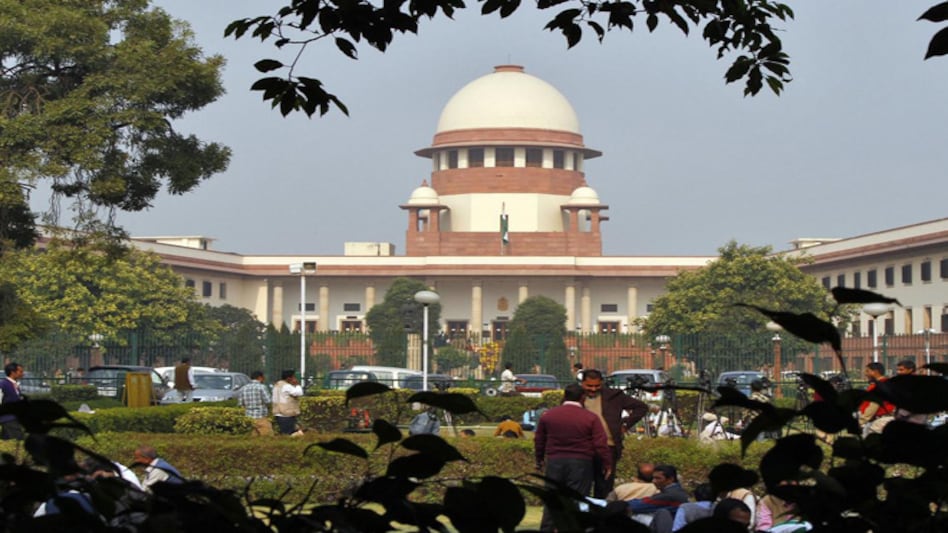
 Supreme Court has 4 posts for judges lying vacant
Indian courts have a problem of shortage of judges. Out of 1,080 sanctioned posts for judges in higher courts as well as the Supreme Court, as many as 419 are lying vacant. Only 661 posts are being occupied, shows data provided by Minister of Law & Justice, Communications and Electronics & Information and Technology Ravi Shankar Prasad in the Lok Sabha. When it comes to lower courts, as many as 24,247 posts have been sanctioned but 4,928 are lying vacant.
The Supreme Court has a sanctioned strength of 34, out of which four posts are lying vacant. The highest number of posts lying vacant among the higher courts is in Allahabad High Court with 64 vacancies, out of a sanctioned strength of 160 posts. Bombay High Court has 31 vacancies out of 94 sanctioned posts, while Delhi High Court has 29 vacancies out of 60 sanctioned posts.
 Nepal may tap India for power imports as glacier collapse hits critical hydro infra: Report
 Himalayan disaster: No warning, no trigger. What triggered the deadly Nepal-Tibet floods?
 India, Canada eye Bilateral Investment Treaty to unlock ₹4.65 lakh crore trade by 2030
  Gold at $4,400: Is it still worth buying after the latest rally?
 India’s minimum wage vs US, China and Japan: How much do workers earn in purchasing-power terms?
 Nepal Flood Crisis: Massive Floods Leave Trail Of Destruction Across Rasuwa, Nuwakot And Chitwan
 Oseltamivir Shortage Explained: Why H1N1 Cases Are Driving Demand & Prices Are Varying Sharply
 Stock Market Outlook: Strong Earnings, Global Risks; What’s Next For Nifty Above 24,000?
 Lupin Stock Outlook: Citi Downgrade Vs Bernstein Buy; Is The Pharma Stock A Buy Now?
 Polycab, KEI Industries: BofA Buy Calls, Targets Up To ₹11,000; Sunny Agrawal Picks Polycab
 NSDL, CDSL, BSE shares: Check key technical levels to watch out for
 HDFC Bank shares hit 52-week low, down 28% YTD; experts see further downside
 Fintech firm Paramotor Digital gets Sebi nod for IPO
 Wipro ADRs jump 7% on Google Cloud partnership; key details
 Internet stocks look expensive, but Nykaa and Lenskart remain long-term bets: Mayuresh JoshiNSDL, CDSL, BSE shares: Check key technical levels to watch out for
 Gold, silver prices today (August 28): Check latest rates in Delhi, Mumbai, Kolkata, other citiesIndia, Canada eye Bilateral Investment Treaty to unlock ₹4.65 lakh crore trade by 2030
  Quote of the Day by Ratan Tata: 'India needs to come out of its socialist pattern of doing things on a rationing basis'
  Petrol, diesel prices today, August 28: Check latest rates in Delhi, Mumbai, Chennai, Kolkata & more












