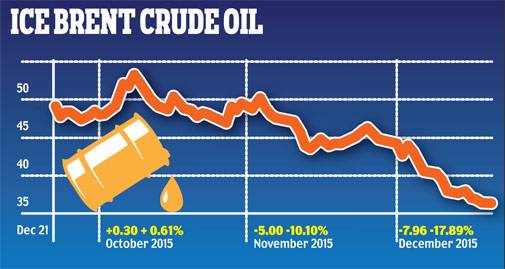
Brent crude prices on Monday fell another two per cent to $36.04 per barrel, a level that was prevailing in 2004. Photo: Reuters
With international prices of crude oil plummeting to an 11-year low, prices of petrol, diesel and jet fuel are likely to come down further in the domestic market.
The price of the Indian basket of crude oil imports have currently fallen to the $33-$34 per barrel range, which is expected to bring down the average price for the current fortnight below $39 per barrel, which was recorded for the previous fortnight.
 'FOMO, fixed return': SEBI proposes revamped ad code for bond portals from misleading investors
 Bangladesh-Pakistan ties: What Dhaka’s interest in Saudi-Türkiye defence pact means for India
 AI jobs rise 51% in India, but 75% of job skills could change by 2030: LinkedIn India head
 From small loans to big businesses : How rural women are changing India’s microfinance story
 RBI forex swap facility draws $72.85 billion inflows, FCNR(B) deposits account for bulk
  Rental Income Tax: 3 Key Deductions Every Senior Citizen and Property Owner Should Know
 Meta’s $200 Billion Trial: Did Instagram & Facebook Keep Kids Hooked?
 Motor Insurance Explained: Is Third-Party Car Insurance Enough? Know Before You Buy
 Retirement Tax Planning: 5 Ways Senior Citizens Can Reduce Their Tax Liability
 #IndiaAt100 : Adipen Bose Nandhiji On Conscious Capitalism- Can Profit & Purpose Coexist?
 India stocks lag global markets in 2026: BofA data shows 9.1% decline in USD terms'FOMO, fixed return': SEBI proposes revamped ad code for bond portals from misleading investors
 Crompton Greaves says no plan to sell stake, expects revenue to double by FY31
 Gaja Alternative Assets IPO: 3 ways to check application status; allotment odds, GMP, listing date
 FII sentiment shows early signs of turnaround after months of selling: Report
 From rocket launches to space supply chains: The new industrial chokepointsIndia stocks lag global markets in 2026: BofA data shows 9.1% decline in USD terms
 'Trust key asset for modern corporate governance,' SEBI Chairman Tuhin Kanta Pandey
 Beyond major urban hubs: SEBI plans distributor model to boost retail reach in corporate bonds'FOMO, fixed return': SEBI proposes revamped ad code for bond portals from misleading investors