Apart from oil, India imports nearly 50% of its natural gas needs. Qatar, one of the biggest natural gas suppliers to India, has been impacted by Iranian bombings. That could create problems for Indian businesses as gas supplies get delayed.
Also read: Iran war: Indian ships allowed to cross Strait of Hormuz
With US President Donald Trump stating that the war will end soon, Brent crude prices softened to just around $88 per barrel. What does the extended war mean to energy supply in India, especially relating to crude oil, liquefied petroleum gas (LPG), and liquefied natural gas (LNG).
Also read: Who drives India's natural gas demand?
BT takes a deeper look.
How has India’s crude oil import changed in recent times?
In FY2025, India spent $137 billion to import 242.4 million tonnes of crude oil. That’s a 4.2% increase from the 232.7 million tonnes imported in FY2024. According to the Petroleum Planning & Analysis Cell (PPAC) of the Ministry of Petroleum and Natural Gas, the country’s import dependency on crude oil during April ‘25-January’26 has risen to 88.6% from 88.2% during the same period of FY2025. During April-January, India’s crude oil imports rose to 206.3 million tonnes from 201 million tonnes in the same period of FY2025.
How much oil does India have in strategic reserves?
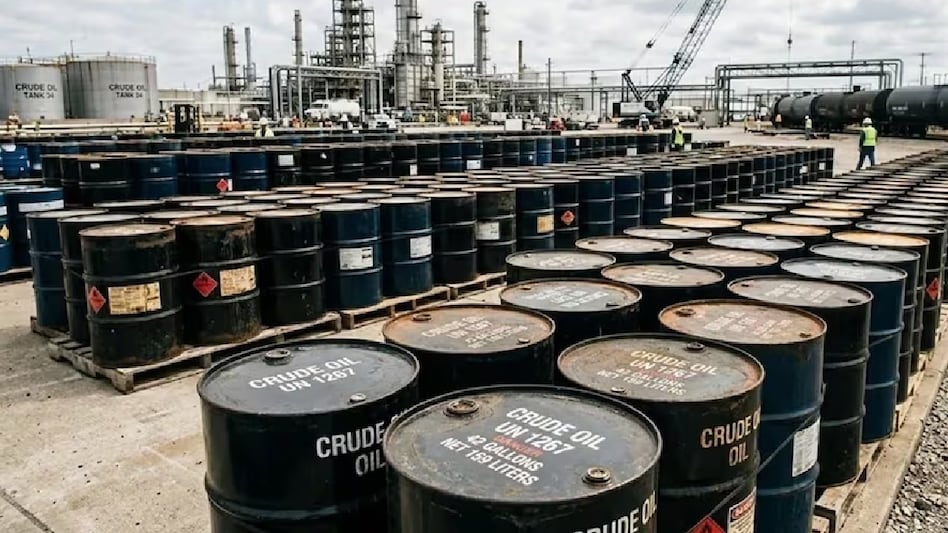
Over the years, India has built strategic underground crude oil reserves at three locations—Visakhapatnam, Mangaluru, and Padur (near Udipi). This has a capacity of 39 million barrels.
These underground reserves are currently estimated to be able to cater to 15 days of demand. Apart from the strategic oil reserves, operating petroleum refineries are expected to account for another 15 days of fuel supply. That means the country has close to a month of crude oil supplies at any given time. In sharp contrast, the US Strategic Petroleum Reserve has a storage capacity of 714 million barrels.
What are India's alternatives for crude?
In case India faces problems in evacuating crude oil via the Strait of Hormuz, it can buy available Russian oil. There are enough tankers with Russian crude on the high seas that India can tap. It is estimated that Indian refiners, including state-owned IndianOil Corporation and Reliance Industries, have picked up 30 million barrels of crude in recent days. The United States has given India the green signal for 30 days to source Russian oil, primarily to keep global crude oil prices in check.
How bad is the LPG supply situation now?
India has seen an uptake in LPG consumption over the past few years as more people have connections today due to the Pradhan Mantri Ujjwala Yojana (PMUY). As a result, LPG consumption touched 31.3 million metric tonnes in FY25. In the first 11 months of FY26, it has already hit 30.9 mmt.
Close to 40% of India's LPG consumption is met by Indian refineries. The balance is imported from Saudi Arabia and Iran. With the Iran war, supplies have to come from Saudi Arabia, so long as their refineries are not impacted.
The government has already instructed domestic refineries to increase their LPG production by 10%. That shall be done by ensuring all propane and butane available are used to produce LPG.
With elections ahead in key states later this year, the focus of the government will be to ensure that domestic LPG consumers do not suffer due to supply shortages. That’s why the government has invoked the Essential Commodities Act 1955 to regulate the availability, supply, and equitable distribution of petroleum and petroleum products and natural gas. LPG supply could get delayed, meaning longer wait time for consumers. However, if the situation in the Middle East improves, supply could be normal quite soon.
What is the status of LNG supplies?
India has eight LNG terminals with a capacity of around 52.7 million metric tonnes per annum, with Dahej in Gujarat (17.5 mmtpa) being the largest.
The bulk of India’s LNG imports comes from Qatar—QatarEnergy (formerly RasGas) supplies close to 40% of India’s LNG needs. With QatarEnergy declaring force majeure post an Iranian attack, supplies have been hit. The 20-year deal with QatarEnergy is to supply 7.5 mmtpa of LNG to India annually.
The shortage of LNG will impact Indian industry badly. The priority for gas supply will be for power generation and fertilisers. Industrial users have been asked to curtail usage.
However, with increased LNG prices, it becomes viable to source it from Norway and the US. The ships will take longer to reach India, leading to supply shortages during such periods. Norway’s Equinor has signed a 15-year deal with Deepak Fertilisers for an annual supply of 650,000 tonnes of LNG starting 2026.
How India can prepare for the future
One way out is to build underground storage facilities for LNG on the lines of what we have for crude oil. India needs to build underground storage for 10% of India’s annual consumption. Most developed nations where gas accounts for a large share of their energy mix, have 10-15% storage provisions. As India looks to increase the share of natural gas in the energy mix from the current 6.7% to 15% by 2030, building gas storage is an imperative.


 For India, which imports 88% of its crude oil needs, the Strait of Hormuz accounts for close to 50% of supplies
 Bangladesh-Pakistan ties: What Dhaka’s interest in Saudi-Türkiye defence pact means for India
 AI jobs rise 51% in India, but 75% of job skills could change by 2030: LinkedIn India head
 From small loans to big businesses : How rural women are changing India’s microfinance story
 RBI forex swap facility draws $72.85 billion inflows, FCNR(B) deposits account for bulk
  JioBlackRock Mutual Fund revises 6 schemes, adds gold, silver ETFs to flexi cap fund allocation
 Rental Income Tax: 3 Key Deductions Every Senior Citizen and Property Owner Should Know
 Meta’s $200 Billion Trial: Did Instagram & Facebook Keep Kids Hooked?
 Motor Insurance Explained: Is Third-Party Car Insurance Enough? Know Before You Buy
 Retirement Tax Planning: 5 Ways Senior Citizens Can Reduce Their Tax Liability
 #IndiaAt100 : Adipen Bose Nandhiji On Conscious Capitalism- Can Profit & Purpose Coexist?
 Crompton Greaves says no plan to sell stake, expects revenue to double by FY31
 Gaja Alternative Assets IPO: 3 ways to check application status; allotment odds, GMP, listing date
 FII sentiment shows early signs of turnaround after months of selling: Report
 ₹24,800 crore bill: How transaction costs are eating into retail derivatives trading
 Cupid, NTPC Green, NTPC, Raymond Realty, HAL shares: Key technical levels to watch
 Numero Uno Gujarat: How Gujarat, the growth giant, is attracting massive investments in manufacturing
 Govt scraps 12-minute ad cap on TV channels to level playing field with digital media
 Gold ETFs attract ₹1,179 crore in first half of August even as prices rebound: What is driving investor demand?
 How We Did It: The methodology behind the ranking of India’s Top 10 manufacturing states
 Maharashtra CM Devendra Fadnavis on the state's $100-bn infra-ambition












