


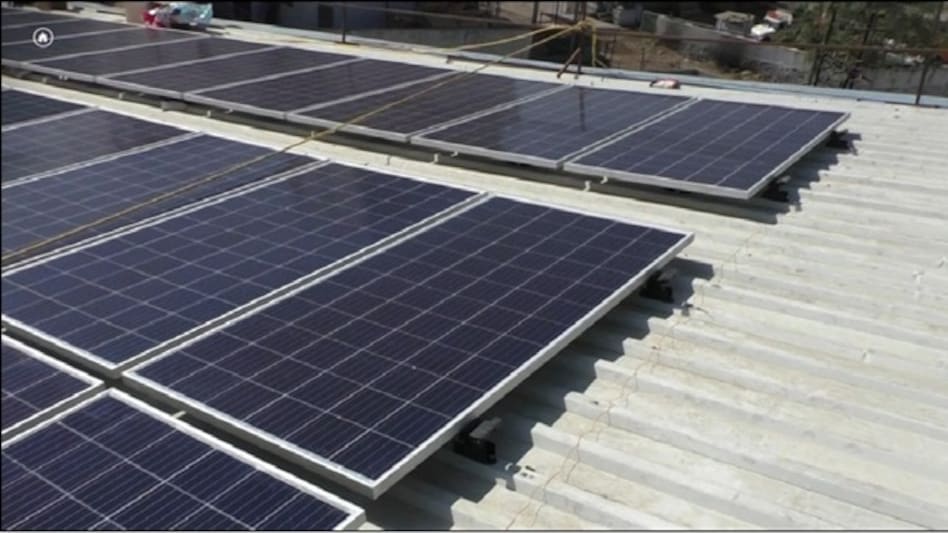
 Pradhan Mantri Surya Ghar Yojana: Fragmented supply chain imposes challenges
The government’s Pradhan Mantri Surya Ghar Yojana (PMSGY) has received more than 579,000 applications of 4.9 GW of residential rooftop solar installations till July 2025. However, achieving the FY27 target of 30GW capacity remains a considerable challenge, according to a new report.
The report by the Institute for Energy Economics and Financial Analysis (IEEFA) and JMK Research & Analytics said despite a near-fourfold increase in applications between March 2024 and July 2025, only 13.1% of the target of 10 million installations and just 14.1% of the allocated Rs 65,700 crore in subsidies have been met till July 2025.

 Markets Next Week: Jio Platforms IPO, high crude oil prices and Q2 earnings in focus
 10 investing mistakes retail investors should avoid, from overpaying to panic selling
 Over 1,200 arrested: Historic 143-year-old town hall in Limoges burnt down amid widespread French riots
 Top 10 industries where women make up the majority of the workforce: Here's the list
 'Banarasi Silk', 'Kashmir Pashmina', 'Patan Patola': GI-tagged products to set your festive vibe
 SIR Explained: Forms 6, 7 And 8—What Voters Must Know | Akshita Nandagopal Explains
 Gold Investment Options: ETFs, EGR And MCX Explained | How To Invest In Gold Beyond Physical Buying
 Redmi Note 17 Pro Max Review , Vivo V80, Vivo Vision | Tech Gear EP 20 | Business Today
 Mahindra XUV 3XO ZNG Review: Turbo Power Meets CNG Mileage
 Gold, Silver Prices: Limited Upside Ahead Of Diwali? Expert Sees Gold At ₹1.5 Lakh, Silver At ₹2.3
 Markets Next Week: Jio Platforms IPO, high crude oil prices and Q2 earnings in focus10 investing mistakes retail investors should avoid, from overpaying to panic selling
 YES Bank Q2 profit rises 65% to Rs 1,080 cr; proforma impact of restatement of AT-I bonds revealed
 ICICI Bank Q2 results: Net profit jumps 20% to Rs 14,843 crore; NIM contracts
 IDBI Bank Q2 net profit falls 39% to Rs 2,205 crore on year-ago's one-off gain
  Gold, silver prices on October 18: Check latest rates in Delhi, Mumbai, Kolkata, other citiesSIR Explained: Forms 6, 7 And 8—What Voters Must Know | Akshita Nandagopal Explains
 India’s EV market is growing faster than America’s. Here’s why
  Kolkata puja pandal stampede: CM announces ₹25 lakh compensation, govt job for each victim’s family
 From diesel to data: Russia in talks with US to power data centers with nuclear energy












