


 Retail inflation in India may surge to 6% in October, driven by food prices and poor monsoon
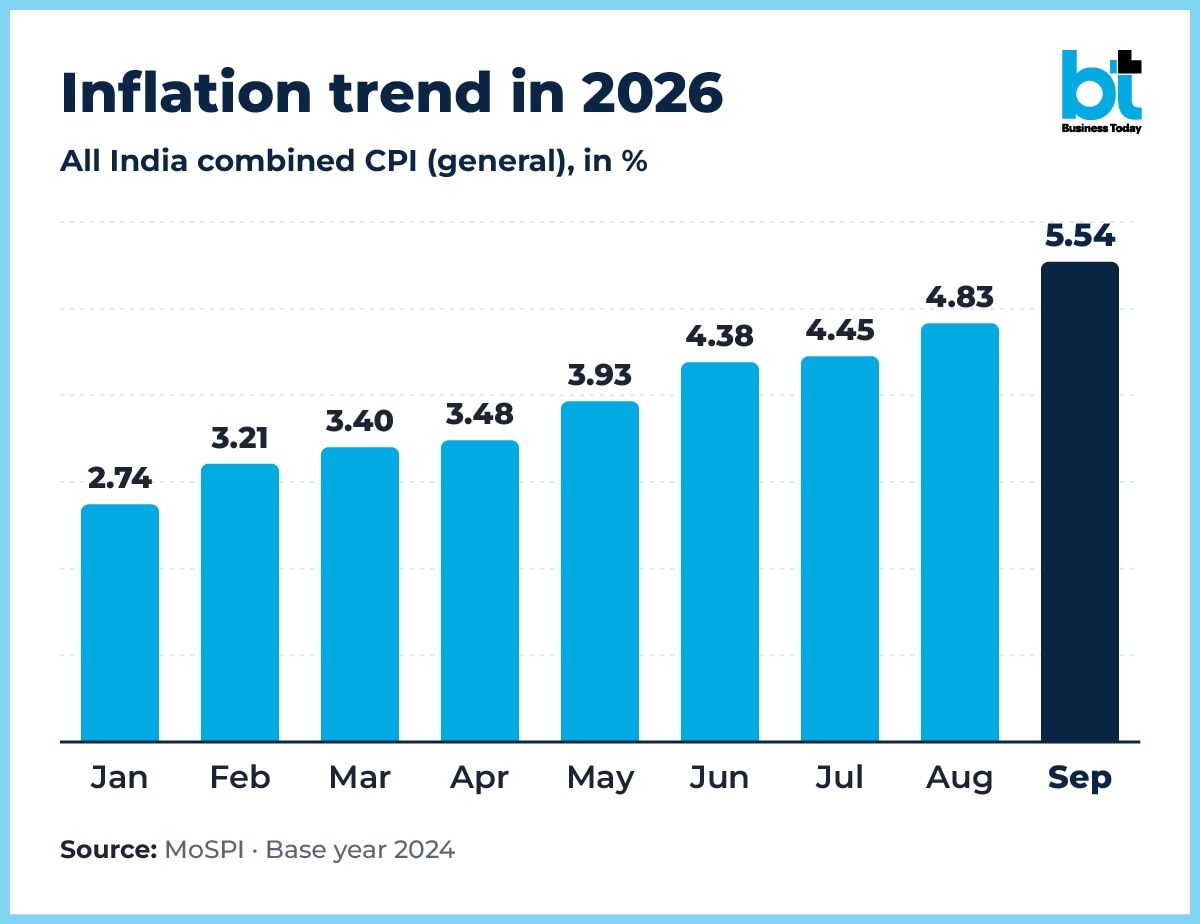
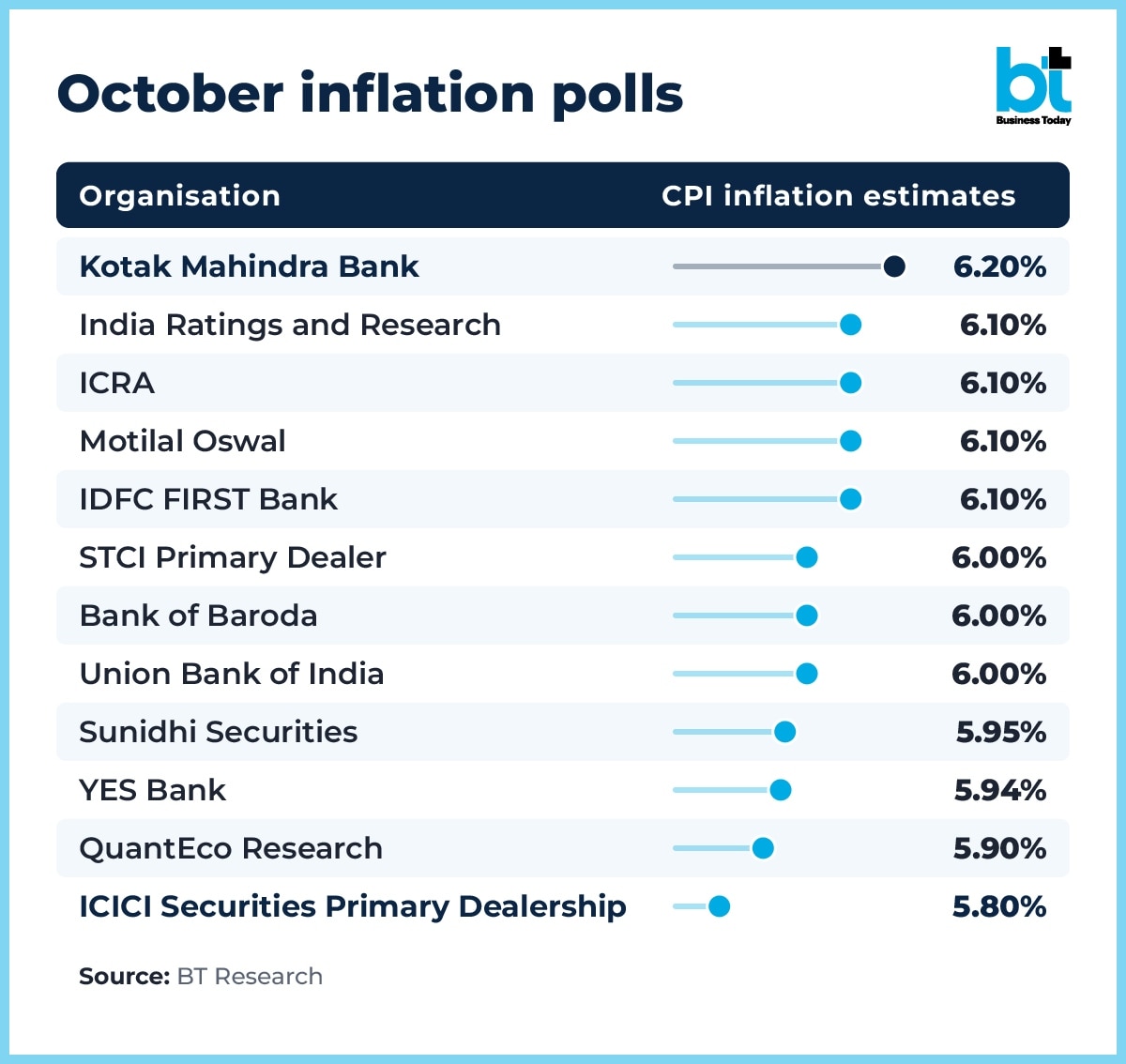
India’s retail inflation is expected to accelerate to a two-year high in October, potentially touching or breaching the Reserve Bank of India’s (RBI) upper tolerance limit of 6%, driven by rising food prices, deficient monsoon rainfall and broadening commodity price pressures.
The official Consumer Price Index (CPI) inflation data for October is scheduled to be released by the Ministry of Statistics and Programme Implementation (MoSPI) tomorrow, November 12. However, economic growth is expected to remain resilient, with industrial and services activity offsetting weakness in agriculture, according to estimates by Bloomberg Economics, Informist, Nirmal Bang Institutional Equities, SBI Research and BofA Securities.

 India's GDP growth to beat RBI forecast? SBI sees 7.8% expansion in Q2; Moody's raises FY27 outlook
 'Nvidia is an amazing company, but a bad investment': Aswath Damodaran's valuation warning
 ‘It’s been a world war’: Sunil Bharti Mittal says Indian telecom sector has been a real battleground
 Nifty targets, stock market rally: Why Bernstein, JPM, BofA, Citi, HSBC turn positive on India
 India bans battery scrap exports to boost domestic recovery of critical minerals
 Jensen Huang Scandal: Taiwan Reacts To Nvidia CEO’s Reported Affair
 Degrees But No Jobs? Dr Shamika Ravi Decodes India's Youth Unemployment
 The Sarkari Job Trap: Dr Shamika Ravi On Why Govt Exams Destroy Lifetime Wealth
 Nvidia's $200 Billion Shock: Jensen Huang Spy Scandal Raises Questions Over AI Future
 Indian-Origin Democrat Pia Dandiya Wins In Florida, Speaks Exclusively To India Today
 Nifty targets, stock market rally: Why Bernstein, JPM, BofA, Citi, HSBC turn positive on India
 HLE Glascoat shares jump 5% as subsidiary bags $42-48 million order
 Dilip Buildcon emerges lowest bidder for Rs 901-crore NBCC project; stock climbs 3%
 Bajaj Finance to launch Rs 11,700-crore QIP this week: Report
 Top bets of Jhunjhunwala: Titan, IKS, TMCV & 3 others worth Rs 48,000 crore! What analysts say?India's GDP growth to beat RBI forecast? SBI sees 7.8% expansion in Q2; Moody's raises FY27 outlookNifty targets, stock market rally: Why Bernstein, JPM, BofA, Citi, HSBC turn positive on IndiaHLE Glascoat shares jump 5% as subsidiary bags $42-48 million orderDilip Buildcon emerges lowest bidder for Rs 901-crore NBCC project; stock climbs 3%'Nvidia is an amazing company, but a bad investment': Aswath Damodaran's valuation warning