









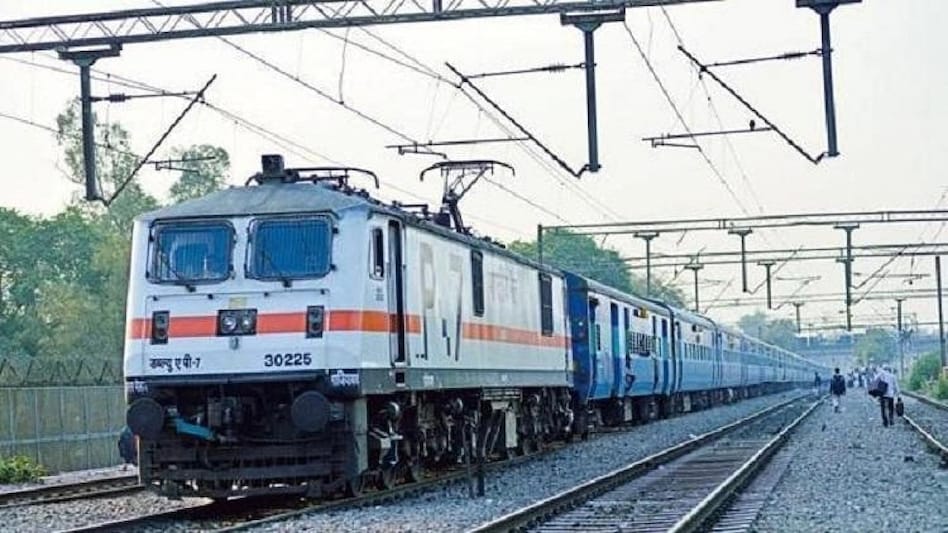
 Kavach, device signal is passed at danger (SPAD) when a train passes a stop-signal. Once the system is activated, all trains within a 5-km range will halt to protect trains on adjacent tracks.
 Kavach, device signal is passed at danger (SPAD) when a train passes a stop-signal. Once the system is activated, all trains within a 5-km range will halt to protect trains on adjacent tracks.
On World Safety Day, Railway minister Ashwini Vaishnaw conducted a live testing of Kavach, an indigenously developed, automatic protection technology for trains.
The test involved two trains travelling towards each other at full speed and halting automatically once it noticed the opposing train on the same line within a prescribed distance. The minister was at Secunderabad to take part in the trial, and have a first-hand experience of Kavach.
'Kavach', which literally means armour, is being promoted by the Railways as the world's cheapest automatic train collision protection system.
Kavach system enables the trains to stop on their own if the digital system notices any manual error like "jumping" of the red signal or any other malfunction. Once implemented, it will cost Rs 50 lakh per kilometre to operate compared to about Rs 2 crore worldwide, as reported by India Today.
The indigenously developed Automatic Train Protection (ATP) system has been built to help the Railways achieve the goal of "zero accidents".
Kavach, device signal is passed at danger (SPAD) when a train passes a stop-signal. Once the system is activated, all trains within a 5-km range will halt to protect trains on adjacent tracks.
Kavach was announced in the 2022 union Budget as a part of the Atmanirbhar Bharat initiative. As per PTI reports, 2,000 km of rail network is planned to be brought under the indigenous world-class technology, ‘Kavach’, for safety and capacity augmentation in 2022-23.
(With agency inputs)
 'BSNL belongs to people of India, no plans for privatisation': Jyotiraditya Scindia in Lok Sabha
 Sensex, Nifty gain 3% in 3 days; investors get richer by Rs 9 lakh crore. What's next?
 Nippon Multi Cap Fund: A long-term wealth builder for less than a cup of Starbucks Coffee!
 ‘Situation still worrisome’: Govt says there is improvement in online booking of LPG cylinders
 Strait of Hormuz: ‘Jag Laadki’ carrying 80,886 MT of crude oil reaches Adani Ports Mundra
 Cuba In Total Blackout: 10 Million Without Power As Trump’s Oil Pressure Deepens Crisis
 UPI Goes Global: Shashi Tharoor Says India Now A Tech Power Changing How The World Sees Digital Pay
 “Second Opinion Matters”: PM Modi Explains Why Two Houses Strengthen India’s Democracy
 Where Should You Invest? Top Investment Themes Now | Amit Khurana Reveals
 D-Street Rebounds Amid War, Is It Time To Buy Stocks Now?
 Waaree Energies, Indosolar shares close up to 11% higher today; here’s whySensex, Nifty gain 3% in 3 days; investors get richer by Rs 9 lakh crore. What's next?
 PG Electroplast shares rise for 3rd day; should you buy, hold or sell?
 BEML shares rise on first overseas metro rolling stock order
 Groww, BSE, Angel One, KFin Tech, ICICI Pru AMC: Capital market stocks gain upto 11% today