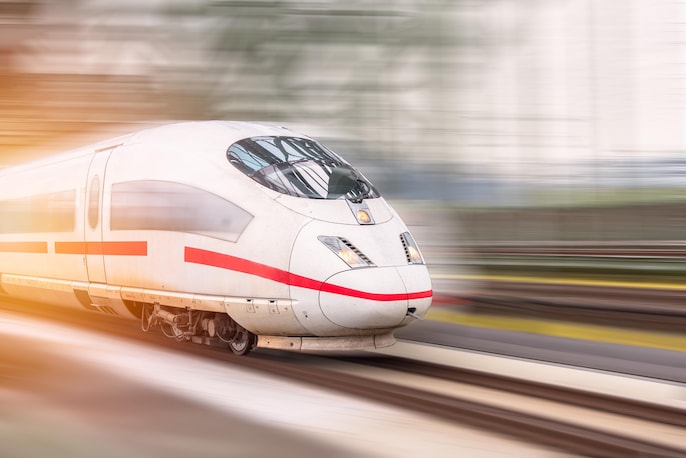
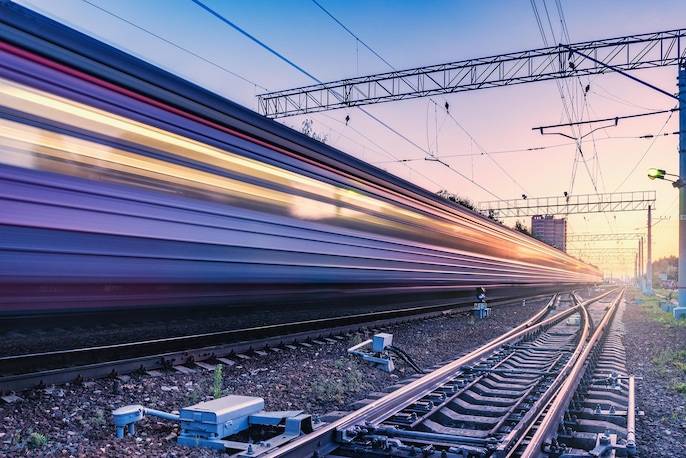
The Delhi–Varanasi High-Speed Rail corridor is India's most advanced proposed bullet train project after the Mumbai–Ahmedabad line. Spanning 865 km across Delhi and 22 districts of Uttar Pradesh, it will cut a 10-hour journey to under 4 hours — connecting the capital with the country's most sacred city at 320 kmph. (Representative image)
The route begins at Sarai Kale Khan–Hazrat Nizamuddin, Delhi, and passes through: Jewar (Noida International Airport) → Mathura → Agra → Etawah → Kannauj → Lucknow → Raebareli → Prayagraj → Bhadohi → Manduadih (Varanasi). A separate 135-km link is also proposed connecting Lucknow to Ayodhya. Between 12 and 13 stations are planned along the route.
The corridor is designed for a top speed of 350 kmph, with trains expected to operate at up to 320 kmph commercially — the same as the Mumbai–Ahmedabad line. Once operational, the journey from Delhi to Varanasi is expected to take approximately 3 hours 55 minutes, compared to over 10 hours on the current fastest express train.

The corridor connects four of India's most visited pilgrimage and tourist destinations on a single line: Taj Mahal (Agra) · Sangam (Prayagraj) · Ram Temple (Ayodhya via link route) · Kashi Vishwanath Temple (Varanasi). Jewar International Airport — currently under construction in Gautam Buddha Nagar — will also be a station, turning it into a key interchange for domestic and international travellers.
Delhi–Varanasi is the most advanced of India's seven new proposed bullet train corridors. NHSRCL submitted the first Detailed Project Report to the Ministry of Railways on October 29, 2020. LiDAR aerial surveys — using helicopters equipped with laser sensors to map 300 metres either side of the proposed route — have already been completed across the 865 km corridor and through 60 villages in Raebareli alone.
The project is estimated to cost between Rs 1.21 lakh crore and Rs 1.71 lakh crore. Kanpur — one of UP's largest industrial cities and among the busiest stops on the Delhi–Howrah railway route — is not currently included as a station. Kanpur MP Awasthi has raised this in Parliament, urging the government to review the DPR and add the city. The corridor alignment is also being revised to reduce sharp curves — since bullet trains need long straight stretches to operate at 320 kmph.
 ASUS Jelly75 Keyboard Review
 AI SANA | Tech News Of The week | Dyson Toothbrush, iPhone 18 Pro Colours | Business Today
 Luxury Car Market Growing 9-10%; Mercedes-Benz Weighs Further Price Hikes
 Metropolis Healthcare Bets On AI, Expansion And Deeper Penetration
 Delhi PG Collapse: Unsafe Buildings, Missing Safety Checks & The Accountability Question