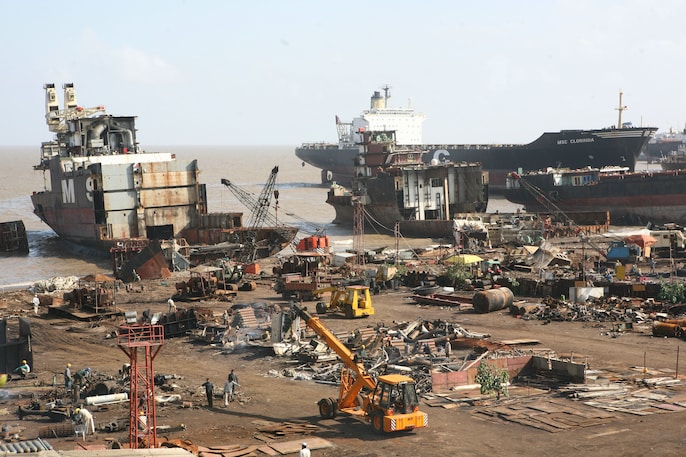
At Alang, ships don’t sink — they’re reborn. Once ocean giants, these vessels now rest on mudflats, waiting to be stripped, melted, and remade into the skeletons of cities and skyscrapers across India.

Every ship that runs aground brings not just scrap, but treasure — from fine teak and copper wiring to furniture, clocks, and art salvaged by workers who give lost luxury a second life.
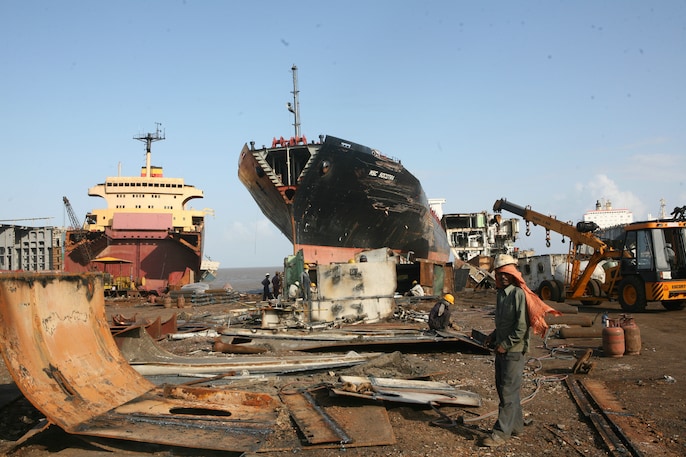
With bare hands and blowtorches, more than 25,000 laborers take apart the world’s dead ships, turning 10-ton slabs of steel into reusable wealth — piece by burning, hammering piece.
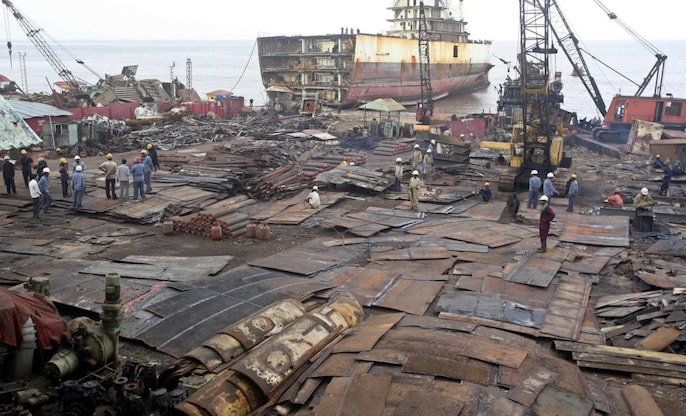
Ship recycling at Alang generates millions of tons of steel annually, feeding India’s booming construction and rail sectors. What once sailed global seas now supports its rising skylines.
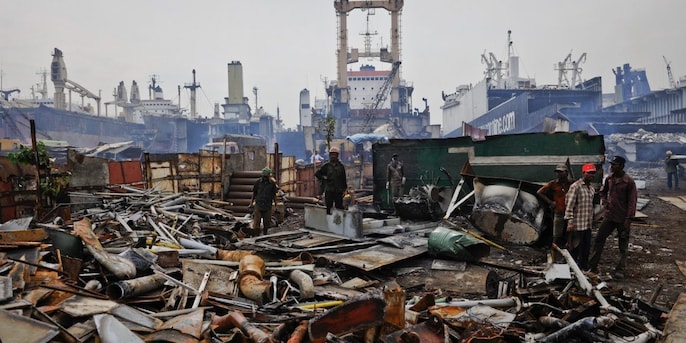
For decades, Alang has been praised for recycling and condemned for pollution — a contradiction that defines modern sustainability: dirty work in service of a cleaner planet.
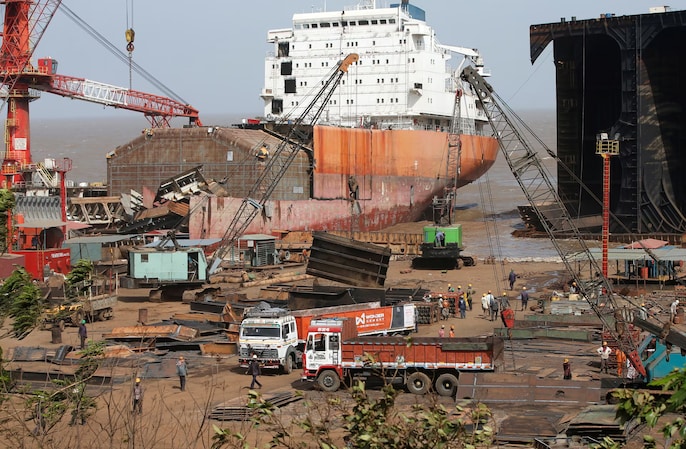
Europe’s cruise liners, Japan’s tankers, and America’s carriers all end their voyages here. Regulation and cheap labor make India’s beaches the world’s final port for billion-dollar giants.
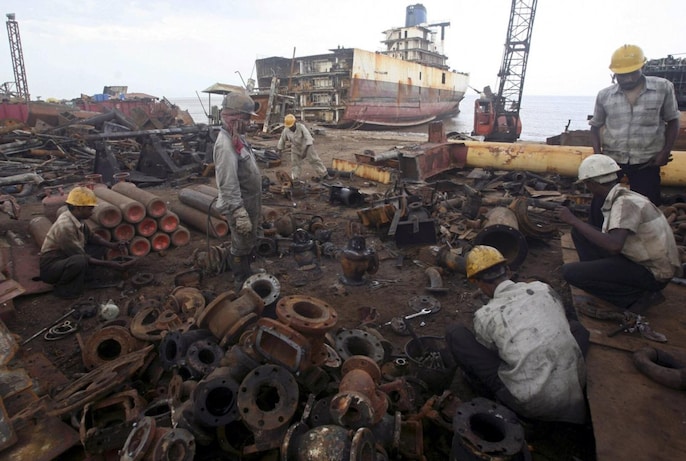
From Alang’s scrapyard steel, new ports, metro rails, and factories emerge. It’s circular economy at its most literal — the industrial afterlife of capitalism.

Each hull bears its own scars — faded flags, ghostly names, bulletproof glass from warships — reminders of oceans crossed, storms survived, and the end that waits for everything made by man.
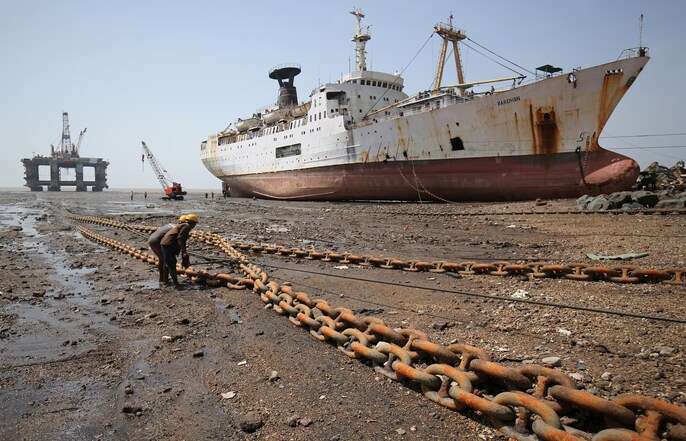
As global sustainability laws tighten, India is rebranding Alang into a “Green Recycling Hub,” promising safer methods, digital tracking, and cleaner seas — where destruction meets design.
 AI Data Centers, Aerospace & Gas Turbines: What's Powering Indo-MIM's Future Growth?
 Best Healthcare Stocks: Gaurang Shah's Outlook On Apollo Hospitals, Fortis & The Manipal Health IPO
 Is Indo-MIM's IPO Valuation Justified? Here's Why The Company Sees Strong Growth Ahead
 Treasury Bills Explained: Why T-Bills Are One Of The Safest Short-Term Investment Options
 FDs vs Markets: Where Should You Keep Your Short-Term Money?