
Every black hole is surrounded by an invisible boundary called the event horizon. Cross it, and nothing can come back—not light, not information, not signals. From that moment on, the universe loses all contact with you.

Einstein’s relativity predicts that time behaves differently near massive objects. As you fall toward a black hole, your clock slows relative to the rest of the universe. To someone watching from far away, your final seconds stretch endlessly.
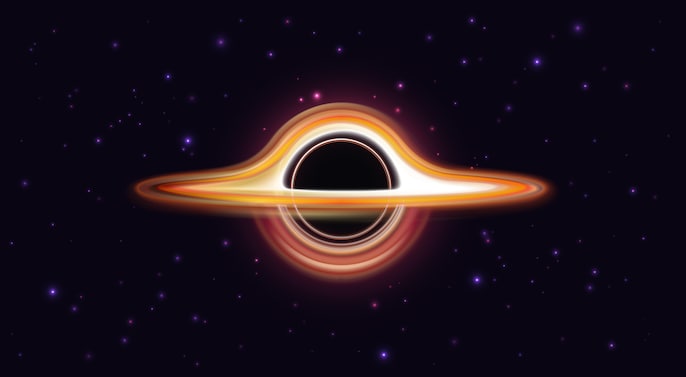
Near smaller, stellar-mass black holes, gravity changes dramatically over short distances. Your feet feel a much stronger pull than your head. The result is spaghettification—a real scientific term describing how objects are stretched into long, thin shapes. NASA scientists say this stretching would tear atoms apart long before reaching the centre.
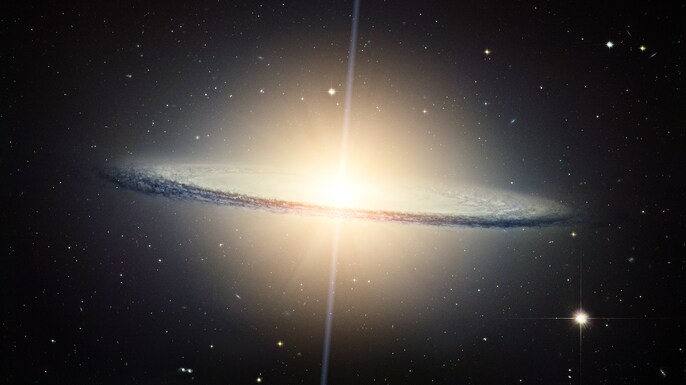
Supermassive black holes, like the one at the centre of our galaxy, behave differently. Their enormous size means tidal forces at the event horizon are weaker. In theory, you could cross the horizon without immediate harm—unaware that escape is already impossible.
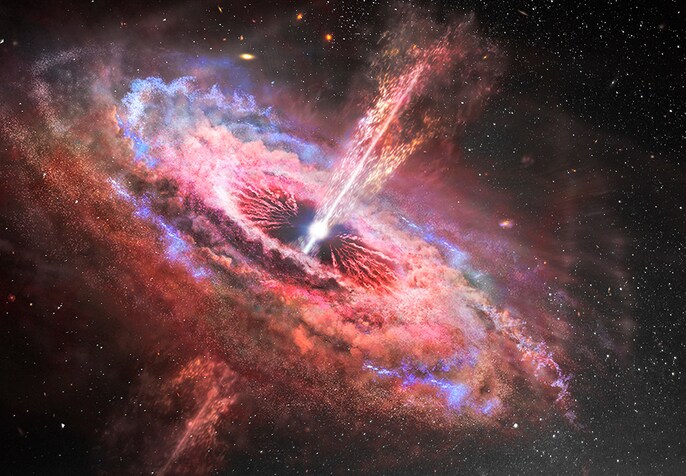
As you fall, light from the universe bends inward. Stars, galaxies, and cosmic radiation distort into a bright ring around the black hole. This lensing effect is one of the last observable features before darkness takes over. Astronomers use this same effect to detect black holes indirectly.
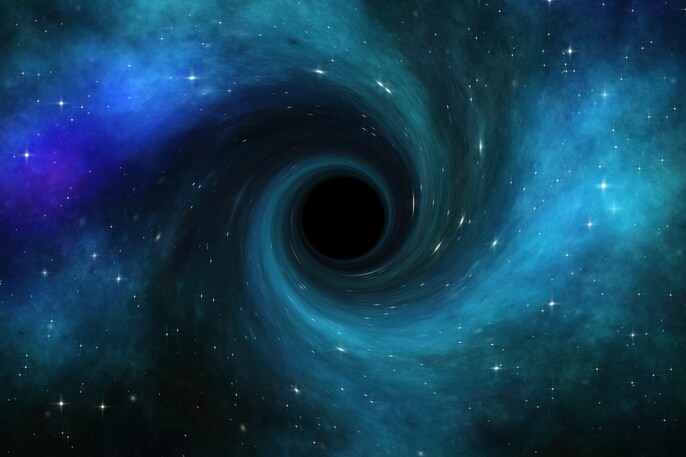
Any radio message you try to send back doesn’t abruptly cut off. Instead, it weakens and reddens as gravity drains its energy. To mission control, your signal slowly stretches into silence.
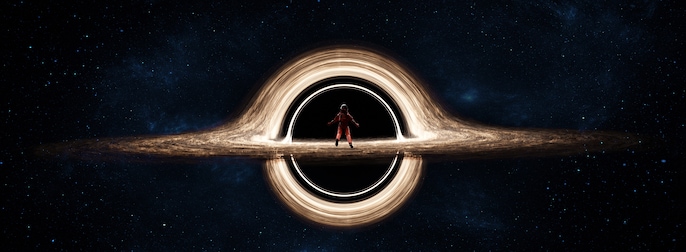
At the centre lies the singularity, where density becomes infinite and current equations fail. NASA emphasizes that physics cannot yet describe what truly happens here. Space and time lose their meaning, and known laws collapse.
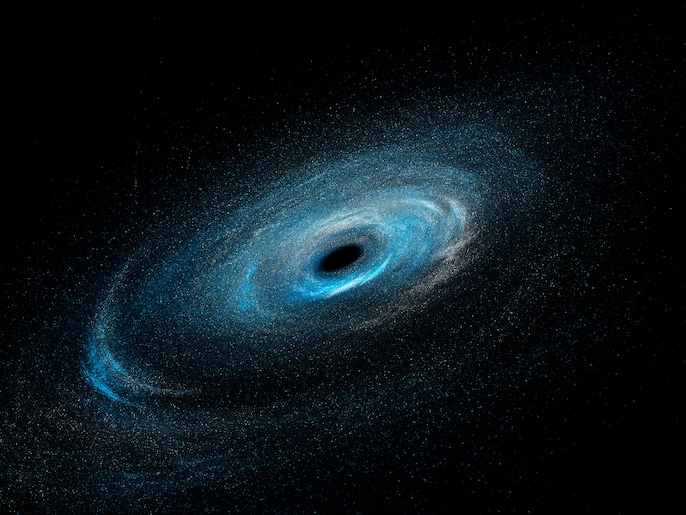
No human will ever test this scenario. But black holes remain crucial tools for understanding gravity, time, and the universe’s limits. By studying them from afar, scientists test theories that apply everywhere—from GPS satellites to the expansion of the cosmos.
 Gold Price Target 2026: Expert Sees MCX Gold At ₹1.8 Lakh By Year-End Amid Strong Demand
 Health Insurance: Why Pre-Existing Diseases And Waiting Periods Matter For Buyers
 Crude Oil Above $100: How High Energy Prices And Rupee Weakness Impact Gold Prices In India
 CEA On India’s Manufacturing Rise, Atmanirbhar Bharat And Modi’s Economic Policy
 Health Insurance Buying Guide: 7 Things First-Time Buyers Must Check Before Choosing A Policy