


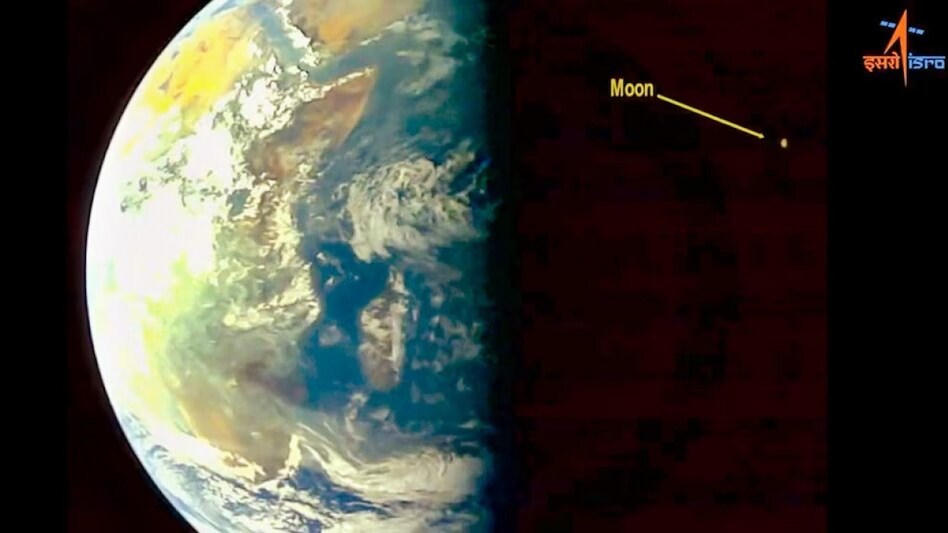
 “The Supra Thermal & Energetic Particle Spectrometer (STEPS) instrument, a part of the Aditya Solar Wind Particle EXperiment (ASPEX) payload, has begun the collection of scientific data,” said ISRO
Aditya-L1 Mission: The Indian Space Research Organisation (ISRO) announced today (September 18) that the Aditya L1 spacecraft has started collecting scientific data.
“The Supra Thermal & Energetic Particle Spectrometer (STEPS) instrument, a part of the Aditya Solar Wind Particle EXperiment (ASPEX) payload, has begun the collection of scientific data,” said ISRO.
 Crude oil could crash to $40 after Iran war ends, says US Treasury Secretary Scott Bessent
 Tata Sons chairman race heats up: T V Narendran, Saurabh Agrawal, NSE's Ashish Chauhan in contention
 We have been overestimating GDP growth...: Former Chief Statistician Pronab Sen
 Festive season revival? Indian airlines' capacity continues to shrink
 Monsoon update: These Delhi-NCR areas to see heavy rainfall today. Check latest details
 Parag Parikh Flexi Cap Fund Underperformance: Is Fund Size Becoming A Major Challenge For Investors?
 Midcap, Smallcap Funds: Strong Profit Growth Could Keep Investor Flows Robust, But Valuations Matter
 Travel Insurance Guide: Where To Buy, How Much Cover You Need & When To Get It
 MINI Countryman C Tech Overview | Tech Gear EP 17 | ASUS Jelly75 Keyboard | Business Today
 From LIC At 70 To 100: CEO Doraiswamy’s Big Promise To Policyholders & Shareholders
 Tata Power stock: Choice Broking expects recovery, assigns two price targets
  IPO rush next week: 11 issues eye to raise Rs 7,055 crore; 6 IPOs to open on same day, check details
 600% dividend stock: Check dividend per share, record date, payment date and other key details
 56% rally in TBZ stock: Upper circuit led to record high today; here's why
  Sensex, Nifty snap four sessions of losing streak; RIL, Tata Steel, Bajaj Finance boost sentiment Tata Power stock: Choice Broking expects recovery, assigns two price targets Parag Parikh Flexi Cap Fund Underperformance: Is Fund Size Becoming A Major Challenge For Investors?
 3.7 million followers, 20% engagement: Why Tukaram Mundhe is beating Fadnavis, Shinde on Instagram?Tata Sons chairman race heats up: T V Narendran, Saurabh Agrawal, NSE's Ashish Chauhan in contentionFestive season revival? Indian airlines' capacity continues to shrink












