


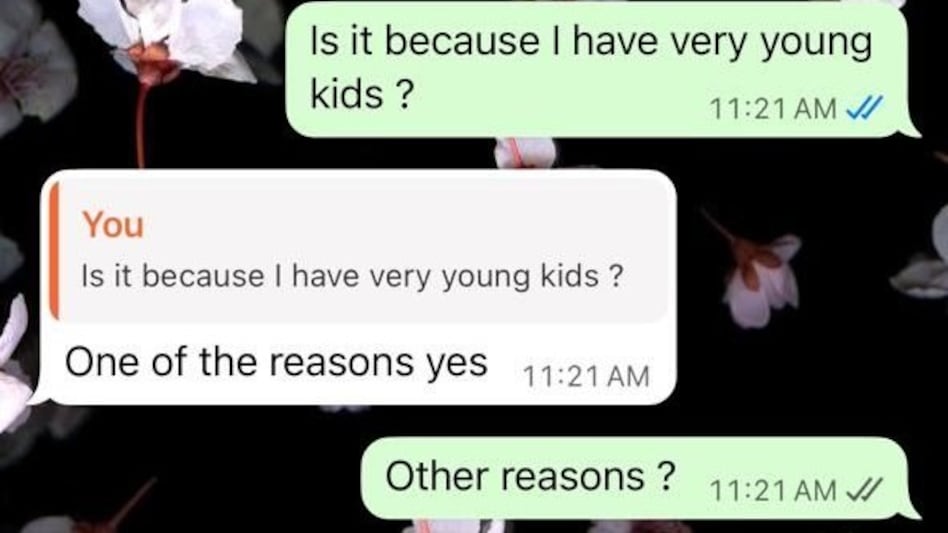
 'Why so many questions about my family?' Woman’s hiring experience triggers LinkedIn storm (Source: LinkedIn)
A LinkedIn post by marketing specialist Pragya has reignited debate around gender bias and the “motherhood penalty” in hiring, especially in senior roles. Detailing her experience during a 14-minute telephonic interview for a CMO position with a consumer brand, she wrote that nearly all the questions centred around her family, none on her qualifications or achievements.
For the first 11 minutes, she was asked to summarise her 11-year career. But what followed, she claimed, was a barrage of personal questions from the company’s promoter: “Who is in my family? How many kids do I have? What’s their age? Which school does the elder one go to? Who takes care of them when I’m away? What does my husband do? How’s his startup doing? And how would I commute to the office?”

 UPI MDR of 0.4% on transactions above ₹2,000 from October 15: What you need to know
 'Private sector must invest, must hire and compensate fairly': CEA Nageswaran asks India Inc to step up
 Apple under pressure in India over iOS 18 screen damage and warranty claims: All details
 India exports 500 tonnes of hilsa to Bangladesh as fish trade flow reverses
 'Sher aaya, sher aaya': Ex-HCL CEO says AI doomsday warnings are hype, won't kill humans
 Crude Oil Price Surge: Will Petrol And Diesel Prices Rise In India?
 Market Commentary: Sharad Avasthi On Nifty, Stocks & The Next Big Move
 RBI Files Caveat In Bombay HC Ahead Of Tata Sons Appeal | Tata Group Stocks | Tata Chemical Shares
 NSE IPO Explained: Price Band, Valuation, Growth Potential And Key Risks
 Stock Market Falls As Crude Oil Nears $110 & Weak Rupee | Stock Market News
 CDSL shares slip 4%; brokerage upgrades stock to 'Buy': Check revised target
 Paytm, One Mobikwik shares: How UPI fee fears may affect sentiment in fintech players
  Sensex tumbles 778 points; Nifty briefly slips below 22,900 amid CAS volatility; what's ahead?
 Hindustan Copper, Garware Hi-Tech Films, Vijaya Diagnostic Centre among stocks to turn ex-dividend on September 16
 Solar energy stock gets target price hike, HSBC maintains 'buy; says this
  From ₹10 Lakh Opening To ₹268 Crore Worldwide: Hanuman Ansh’s Box Office Run
 “13 Indian Seafarers Rescued, One Missing”: India On MT El Gaia Attack Off Oman Coast
 “Energy Cooperation Is Important”: MEA’s Randhir Jaiswal On Expanding India-Russia Energy Ties
 “Such Gimmicks Are Nothing New”: India Slams Pakistan’s PKR 70 Lakh Reward For Masood AzharIndia exports 500 tonnes of hilsa to Bangladesh as fish trade flow reverses












