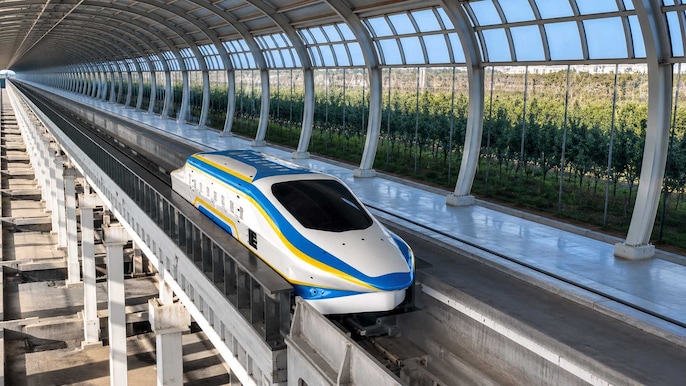
China’s Hubei East Lake Laboratory announced on December 26, 2025, that its experimental maglev platform had accelerated a 1.1-tonne model vehicle to 800kmph in 5.3 seconds. It should not be described as a newly achieved August 2026 record.
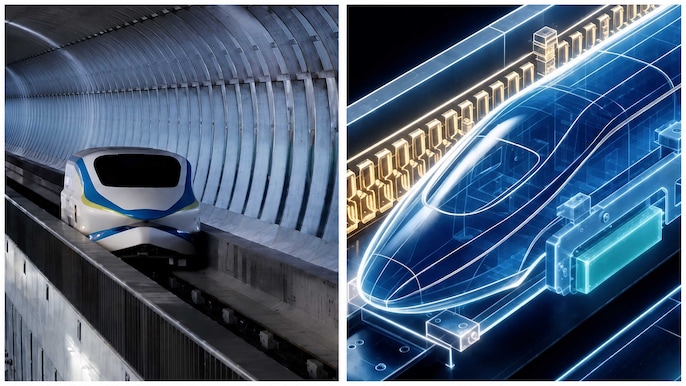
The test was conducted on a one-kilometre track. The vehicle reached 800kmph after approximately 600 metres and then came to a controlled stop at the end of the track, completing the entire run in about eight seconds.
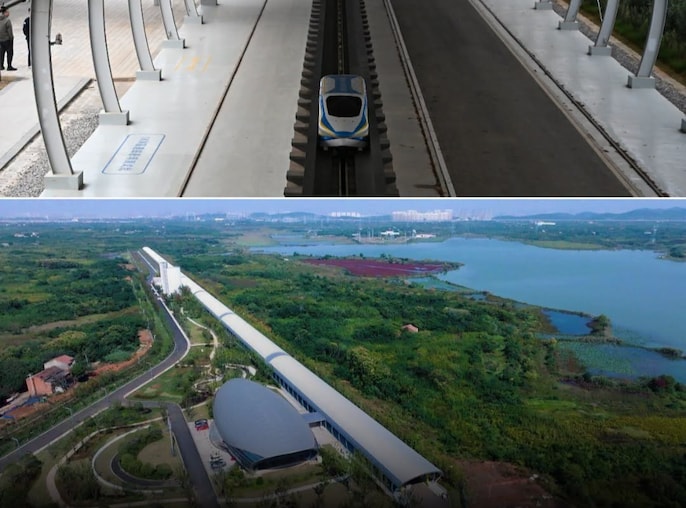
The 1.1-tonne vehicle was a model test platform—not a commercial train designed to carry passengers. Acceleration of this intensity would be unsuitable for an ordinary passenger service without fundamentally different operating parameters.

The system combines permanent-magnet suspension guidance with electromagnetic propulsion. Because the model does not depend on conventional wheel-to-rail contact, rolling friction is greatly reduced, although aerodynamic resistance becomes increasingly important at extreme speeds.

East Lake Laboratory’s platform reached 650kmph on June 16, 2025, and 700kmph on July 14 before progressing to 800kmph. The draft’s intermediate claim of a separate 798kmph record is not supported by the laboratory timeline reported by Xinhua.
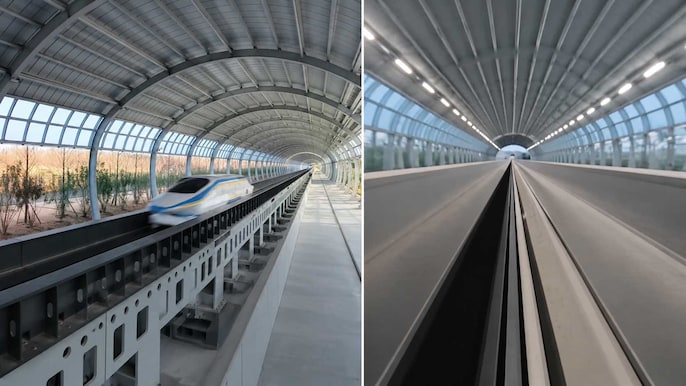
The Shanghai Maglev carries paying passengers at much lower speeds, while Japan’s Chuo Shinkansen maglev remains under development. East Lake Laboratory says its test platform can support research into future maglev transport, electromagnetic sleds, aerospace launches and other high-speed systems.
 Gold Or Silver? Expert Reveals Best Investment Route Ahead Of Festive Season
 ETF Explained: How Exchange-Traded Funds Work, Costs, SIPs, Trading & Tax
 Tata Curvv EV: First Look At The Tech-Packed Electric SUV
 IDBI Bank Stake Sale: Fairfax Bid, ₹53,000 Cr Valuation & Deal Delay Explained
 Adani Group Plans $2.5 Billion Offshore Loan To Refinance Cement Acquisition Deb