


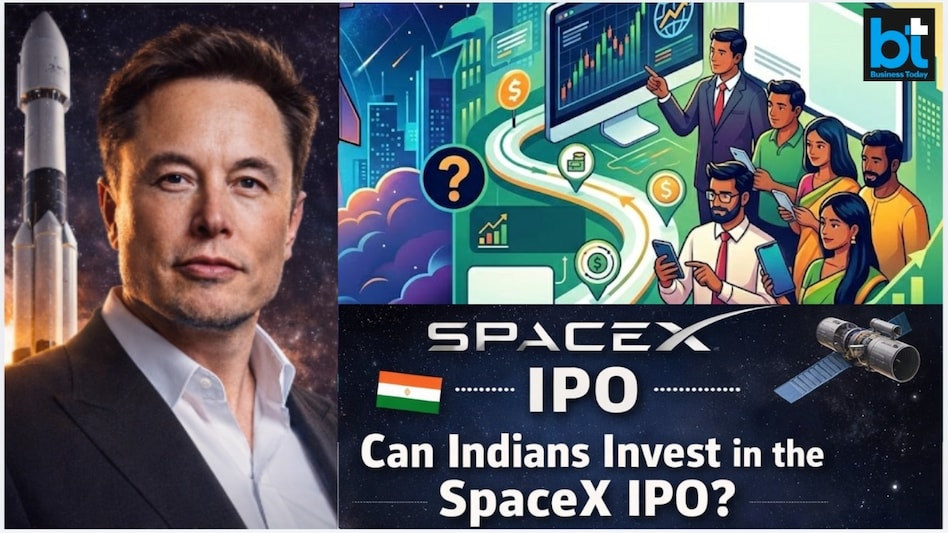
 PIC: AI-generated image for representational purpose only
Elon Musk-backed SpaceX is reportedly eyeing a massive initial public offering (IPO), which could make it the world’s most valuable private company. Early reports suggest that the Musk-led firm may raise around $75 billion, potentially making it the largest IPO ever—far surpassing Saudi Aramco’s $25.6 billion issue. The offering could value SpaceX at nearly $2 trillion, significantly higher than its previous fundraise valuation of about $800 billion.
According to media reports, roadshows for the SpaceX IPO could begin as early as June 2026. An EY report noted that 216 IPOs in the US raised $45.5 billion, while more than 1,290 issues globally raised $171.8 billion. Against this backdrop, SpaceX’s reported $75 billion IPO has the potential to reshape the global IPO landscape.

 Bangladesh turns to India for wheat as Black Sea disruption pushes up prices
 Morgan Stanley accidentally leaks 100-plus deal pipeline, including India IPOs: Report
 Sebi may ease margin requirements for longer-tenure F&O products
 India boosts LPG production as festive demand rises and Gulf supplies remain uncertain
 No petrol, diesel price hike proposal yet; govt may support OMCs if crude stays high
 India Growth Outlook Gets Major Boost: S&P, Fitch, ADB Raise FY27 Forecasts; OECD Upgrades 2026 View
 A-One Steels IPO Explained: Key Details, Growth Strategy & Future Outlook | Management Live
 Market Commentary: Nifty Outlook, Stocks & Market Strategy | Deven Choksey
 Ignore Large Caps? Why Investors Are Chasing High P/E Mid Cap Stocks Now
 30 IPOs In A Month: Deven Choksey On IPO Flipping And Secondary Market Liquidity
 Sebi may ease margin requirements for longer-tenure F&O products
 RBI to conduct OMO sale of Rs 25,000 crore in government bonds on September 28
 NSE shares: Deven Choksey lists reasons for long-term investment; calls stock 'shock absorber' in volatile markets
 Crude oil prices fall for sixth session; PL Capital explains what could happen next
 Mazagon Dock, GRSE shares: Does short-term bounce signal trend reversal? Analyst decodes
 Kenny the parrot’s Cybertruck covered in his own face sparks hilarious internet reactions
 A ₹1,400 flea-market find became a ₹2.5 crore masterpiece 70 years later. Here’s whyMorgan Stanley accidentally leaks 100-plus deal pipeline, including India IPOs: Report
 FSSAI flags misleading claims, prohibited food products on Amazon, Swiggy, Zepto platforms
 IIT-Bombay exam hall footage out: Student seen using phone before Prof Doolla escorts him out












