Q) How do you assess current valuations in Indian equities, particularly in mid- and small-cap stocks, at a time when Indian and global markets are near record highs? Do markets still have room to grow?
Ashwini Shami: We believe that markets are a bit expensive at the index level, however, there are rich alpha opportunities in the selected sectors. We are entering 2026 with a strong economic backdrop with low interest rates environment, low inflation and high growth. Consumption is expected to remain strong with various policy actions giving strong earnings growth opportunities for various sectors.
For disciplined investors who focus on mispriced opportunities, it is possible to build a 25–30 stock portfolio across 5–7 sectors that offer growth stronger than the broader economy yet are valued at nearly a 50% discount to current market valuations.
Q). Foreign investment flows have been volatile. Which global factors are you tracking that could influence FPI inflows over the next few months?
Shami: The US Federal Reserve’s monetary policy will play a key role in shaping FII flows. A moderate rise of 2.6% in core CPI inflation in November 2025, improving US GDP growth of 4.3% in Q3 2025, and a stabilising unemployment rate (although November’s reading of 4.6% was slightly higher than the expected 4.4–4.5%) point towards further rate cuts in 2026.
The Fed could lower rates by another 50 basis points, bringing policy rates closer to the 3% range. If macro data continues to support the Fed’s stance and rate cuts come early in the year, strong net buying by FIIs can be expected.
Q). For new investors, which themes or sectors should be considered as core long-term holdings?
Shami: Long-term investors, new to the market or otherwise, should stay away from pockets of extreme overvaluation. At the broad market level, currently, mid- and small-caps are a bit expensive while large-caps are more favourably priced.
With ongoing strong infrastructure and private capex cycle, capital creators, which include Banks, HFCs and infra NBFCs, have strong growth outlook with large unutilized capacity and are also attractively priced. Energy transition is another growth vector where investors can focus. Significant investments in renewables and growing power demand makes this a multi-decadal investment theme.
Q). How might changes in interest rates—both in India and globally—impact equity markets in the coming months?
Shami: With improving macros, we expect the interest rates to be lower in India and the US and this will have dual impact on the equities market. On one hand, the lower interest rate will support higher equity valuations with lower discount rates. On the other hand, lower rates will boost consumption as well as investments.
As the hurdle rate reduces, we expect more capex from the private sector supported by improving economic viability. The consumer demand is further supported by personal tax rate relief and GST rationalization. Leaner balance sheets and a strong demand outlook has triggered investments in fresh capacity building by multiple private sectors players.
Q). Rupee depreciation is often seen as both a risk and an opportunity. How are you factoring its impact into your sector and stock choices?
Shami: We expect the rupee to get support from FII flows as the rate cut cycle plays out in the US. With respect to the Indian economy, the strong GDP growth and low inflation regime will continue to provide flexibility to RBI to pursue a monetary policy that supports both Rupee as well as economic growth. We are currently not exposed significantly to the export/import oriented businesses and hence there is limited direct impact of the rupee volatility on the portfolio companies.
Q). What are other key risks should retail investors watch out for in 2026, especially in mid- and small-cap stocks amid global uncertainty?
Shami: Investors should stay clear of the pockets of extreme overvaluation seen in the mid/smallcap space. Some of these overvaluation pockets are from the sectors including consumer durables, FMCG, healthcare and realty where even at the index level the valuation multiples are way beyond the reasonable limits.
Q). Are there any sectors currently out of favour that could offer attractive opportunities if they stage a recovery?
Shami: Public sector banks, power, housing and infra NBFCs, EPC and mobility are some of the growth vectors where we see companies available at significant discount to the intrinsic value while the growth outlook for these remain in low to mid-teens for many years. The balance sheet strength and the overall growth tailwinds make these sectors inevitable for long-term investors.
Q). With a strong pipeline of IPOs, what should investors keep in mind when choosing between new listings in the current market environment?
Shami: While IPOs are structurally important to bring new investment opportunities including some of the new-age businesses we see no rush to invest in such opportunities if the price is not favourable. With evolving value drivers and business dynamics for some of these new-to-the-market companies, it is even more critical to not get pulled into the hysteria.
Q). Beyond traditional sectors such as consumption and banking, which long-term themes do you believe will shape India’s equity market over the next decade?
Shami: With more than 55% of the GDP coming from services sector we believe services-oriented business to lead the next leg of growth for the Indian economy. In the next decade the services sector is expected to contribute more than 60% and is expected to grow at a rate higher than the overall economy.
Other than financial services, we see business and professional services companies delivering strong growth, logistics and select technology services companies are also favourably priced.



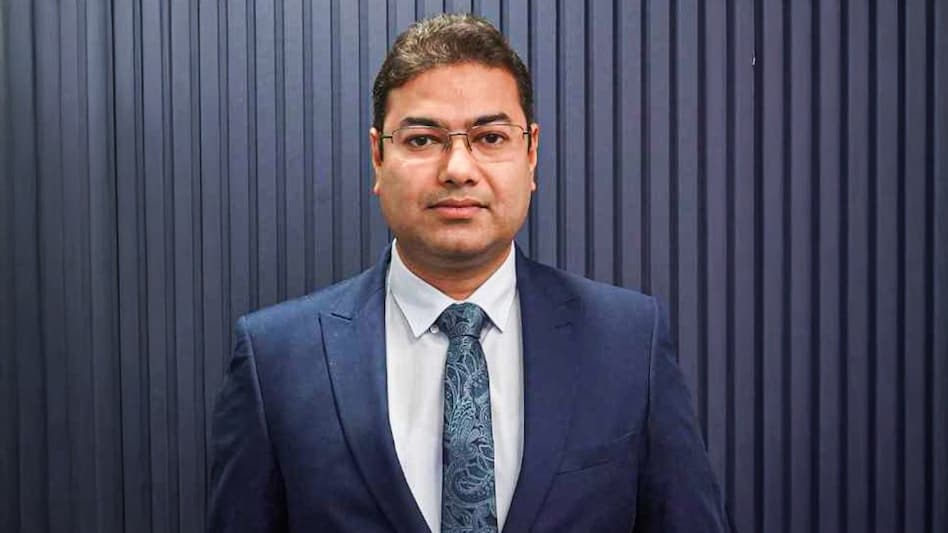 Ashwini Shami said disciplined investors can build a 25–30 stock portfolio across 5–7 sectors, targeting growth at nearly a 50% discount to current market valuations.
 HDFC Bank shares in focus: MD, CFO, Group Head fined in MSRDC case; warning letters issued
 'AI is a profound civilisational shift': N Chandrasekaran says software companies won't be left behind
 Parliament set for first major debate of Monsoon Session on Anti-paper leak bill; Here's what the bill proposes
 'Create jobs, do not replace them': Satya Nadella calls for community-first AI growth
 Beyond Strait of Hormuz & Red Sea: This Asian waterway is the world's most critical trade chokepoint
 DCB Bank Management | Q1 Earnings, Loan Growth, Margins & Asset Quality Explained
 Infosys Fined In France: 70-Hour Work-week Debate Returns After €175,000 Labour Penalty
 I.T. Sector Outlook: Is the Worst Over for Indian I.T. Stocks After Long Underperformance?
 France And Spain Wildfires Threaten Cap Ferret Mansions And Bordeaux Wine Country
 Maruti Suzuki Eyes 25-30% SUV Growth, Says CNG Demand Has Overtaken Diesel
 Nifty, Sensex, Nifty Bank outlook for today: GIFT Nifty down 53 pts; key levels to watch
 Suzlon, Ambuja Cements, Radico Khaitan: Stocks to trade— Key levels, target, stop loss
 Top stocks in news: Meesho, IndiGo, Suzlon, Coal India, BEL, Tata Power, Adani Energy, TMPV
 Tata Power Q1 profit rises 11% to Rs 1,176 crore; revenue up 6%, capex tops Rs 5,300 crore
 Samsung Galaxy Z Fold 8 First Impression: The foldable we've been waiting for?
 Petrol, diesel prices today, July 28: Check latest rates in Delhi, Mumbai, Chennai & more










