Q) Indian and global markets are near record high levels. How do you judge if the market is becoming expensive or still has room to grow?
Abhishek Singh: You can look at aggregate valuation measures such as market-cap-to-GDP, the price-earnings (P/E) multiples of broad indices, and the premium of mid-caps and small caps over large caps and compare them to history. You can also examine the growth and profitability implied by individual companies and ask rational money managers whether they currently see an idea-rich or idea-poor environment.
On most indicators, markets are not cheap but that is no reason to be despondent. If you are investing with a 10-year horizon, a reasonable base-case expectation is that Indian equities could deliver around 10–11% annual returns, and at some point, you may find better opportunities to deploy capital more aggressively.
Q) Which new investment themes such as manufacturing, defence, clean energy, or technology (AI) etc., look promising for long-term investors?
Singh: Some of the older themes are expensive, and I am reluctant to participate early in new ones. History has not been kind to early investors in disruptive technologies. The eventual profitability and value capture are often unclear. In most cases you are better off coming in later, with a higher allocation, when risks are more clearly defined and the economics of the business are far better understood. But avoiding investing in potentially world-changing technologies is hard to do. It is harder for smart people, and even harder for those who are both smart and wealthy.
Q) Among large-cap stocks, which sectors do you think can benefit the most from India’s strong economic growth in the next few years?
Singh: If growth picks up, almost all domestically focused businesses will do well. But investing is not about simply identifying the best quality business; that part is often easy. It is about assessing the odds that the market is not fully pricing in that quality.
It is about identifying the gap in the relationship between price and value. Given that financials participate in both the consumption and capex stories and act as a broad proxy for the economy, and given that their valuations do not seem excessive, that sector can continue to do well.
Q) How are global factors like US interest rates, China’s slowdown, or geopolitical tensions shaping your investment strategy?
Singh: They dominate the conversations we have with the external world, but they do not feature heavily in how we pick stocks. You have to be broadly aware, because large changes in the macroeconomic environment can alter the range of business outcomes and therefore the value.
But you also have to be careful not to slip into the prediction game. At least in my case, I try to react well rather than pre-empt. Reacting well is almost always enough.
Q) Are there any sectors that are currently out of favour but may offer good opportunities if they bounce back?
Singh: Unfortunately, there is no large sector that is truly out of favour and available at a deep discount to fair value. That is not an ideal set up either for investors or for their fund managers. For a well-behaved investor, dispersion and volatility are actually helpful. There are sectors that have underperformed, but the assumptions implied by current valuations are not in deep value territory. A few sectors such as banking, insurance and maybe even IT are probably the closest to fair value ranges.
Q) For hybrid funds, how do you decide the equity–debt mix when bond yields are high but markets are also rising?
Singh: In the hybrid funds that I manage, we keep the equity allocation within a narrow band. This removes one decision for the fund manager. The fewer decisions required from both the fund manager and the end investor, the better the investing outcomes tend to be. In some funds where the equity range is wider, we use systematic strategies to adjust the equity allocation.
Q) The Sensex, Mid-Cap, and Small-Cap indices delivered muted returns over the past year. What is your outlook for the next 12 months, and which segments of the market look better placed to deliver stronger performance?
Singh: I do not know what markets will do over the next twelve months. Large Caps are better placed and can do well relatively. Financials, utilities and custom synthesis businesses could do well.
Q) What key risks should retail investors watch out for in 2026, especially in mid- and small-cap stocks and due to global uncertainty?
Singh: Since all asset classes have done well over the last five years, investor expectations themselves may be the biggest risk. As rolling returns moderate and investors face a reality check, I hope they continue to remain as well behaved as they have been so far.
If you are carrying a level of risk that you would regret in the event that markets fall thirty percent for any reason, then act today. You have to keep asking that question at all points in time, irrespective of where the market is.



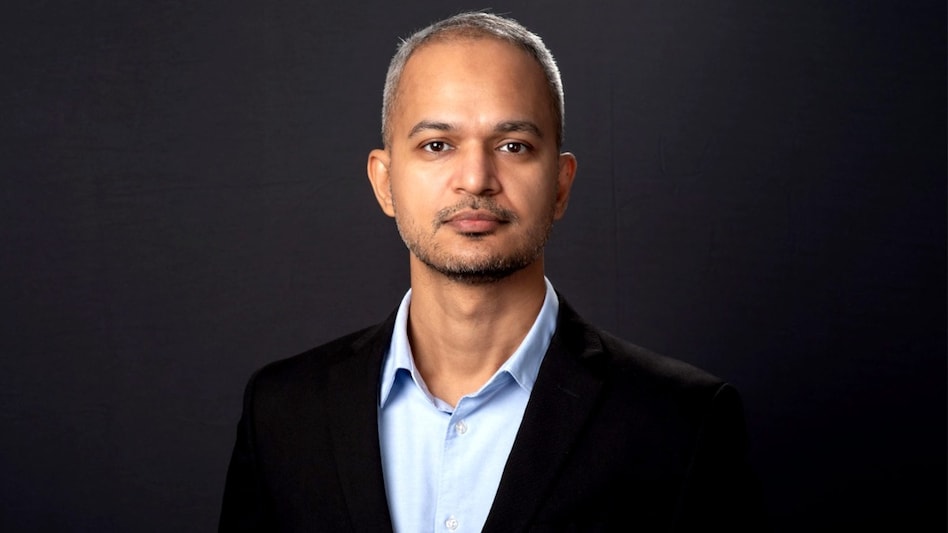 Abhishek Singh, Fund Manager at DSP MF, said Indian equities can reasonably deliver 10–11% annually over a 10-year horizon.
 NSE IPO fully subscribed on Day 2; QIB, NII quotas booked 1.3 times each
 Nestle faces FSSAI crackdown over baby food formula claims. What the regulator found
  Warren Buffett steps down as Chairman after 60 years: What changes at Berkshire Hathaway now
 Jefferies' Christopher Wood sees gold at $10,000 'sooner or later'; likes India's small, midcaps
 Satya Nadella highlights India’s AI talent, sees massive developer community emerging by 2030
 BTTV Exclusive | Jefferies’ Chris Wood On AI, US Bonds, Oil & India’s Market Outlook
 LIVE What’s Hot: Stocks, Gold & Big Money Moves | Daily Markets Show | September 17 | Business Today
 From NPAs To Infrastructure: CEA On How India’s Economy Has Changed Under PM Modi
  “PM Modi Is Architect Of Economic Policy”: CEA V. Anantha Nageswaran On India’s Growth Journey
 iPhone Sale Sparks Overnight Rush As Buyers Queue Across Delhi, Mumbai, Bengaluru
 NSE IPO: Applying for short-term gains from share sale? Analyst says this
 STT collections jump 52.9% to Rs 40,214 crore in FY27 so far; key details
 Kaynes Technology stock needs breakout confirmation; Moschip preferred semiconductor pick: Analyst
  Teach judgement over technique to survive AI wave: CEA Nageswaran urges B-schools












