Several factors are fuelling this sentiment. Firstly, our consistent financial performance and strong balance sheet, with the company’s net worth surpassing Rs 2,000 crore, have been pivotal, enabling the company to reward the shareholders handsomely in the last few years through bonus shares and robust dividends. Being a debt-free company further strengthens our position. Further, the expansion and diversification plans like furnace capacity expansion at Kalinganagar, mining operations at Sukinda & Mahagiri and ethanol business by leveraging surplus land and infrastructure at Therubali will significantly boost the profitability by FY26 and FY27.
Can you throw some more light on the expansion plans and how that can benefit the company?
Our expansion initiative at Kalinganagar, Odisha, is currently underway, which will enhance our production capacity by 96,000 tonnes. We will be scaling up our chrome ore mining operations from 0.65 million tonnes to 1.2 million tonnes in phases and power plant capabilities in phases to support our integrated production approach. The first furnace is expected to be operational by the first quarter and the second one by second quarter of FY27. This strategic enhancement positions us excellently to cater to the increasing demand.
What is your outlook on the Indian economy and how do you see it impacting the demand for stainless steel and ferrochrome going forward?
The Indian economy is poised for significant growth, driven by a strong focus on infrastructure development. With increased capital expenditure in this sector, we anticipate a substantial boost in demand for materials including stainless steel, which in turn will expand the demand for ferrochrome.
India’s per capita stainless-steel consumption is currently much lower than that of developed nations. India stands around 2.5 kg. In contrast, China’s per capita steel consumption is 10 kg while the per capita consumption of stainless steel in developed nations is over 15 kg. As the economy grows, we can expect a rise in the use of stainless steel, aligning with the country’s GDP growth trajectory. Given the vast population of the country, even a modest increase in India’s per capita stainless-steel consumption would result in substantial growth in the domestic steel and ferrochrome sectors.
What are your expectations from the Union Budget 2024?
Ferro chrome is a key source of input for stainless steel which is needed for infrastructure as well as exports. Introducing specific sub-code benefits through PLI schemes and RoDTEP would significantly provide cost relief, boost capacity expansion and provide a level playing field in the global arena.
Power costs are a critical concern for our industry, especially with the mandate to switch to renewable energy by 2030. Any incentives in the Union Budget to expedite this transition and encourage investment in renewable energy would be welcome. Additionally, the EU’s Carbon Border Adjustment Mechanism (CBAM), effective from October 1, 2023, requires extensive production and emission data for exports. Compliance is essential for Indian companies exporting to the EU directly or indirectly. Incentives in the Union Budget to facilitate this compliance would help companies meet these rigorous standards efficiently, supporting greener and more efficient production methods.
India is the fourth largest ferrochrome producer globally. How does IMFA plan to leverage this position and increase its market share in the domestic and international markets?
The ongoing expansion initiatives strategically position us to capitalise on rising market demand both globally and domestically. At present, we meet a portion of our customers’ needs. With our expansion, we aim to strengthen existing relationships and cater to additional demand as opportunities arise.
What is the current size of the Indian ferrochrome market and how much growth do you foresee in the next 3-5 years? What are the key drivers behind this expected growth?
At present, India’s production is 1.5 MT, half of which is consumed domestically and the remaining half is exported. Stainless steel is the main consumer of ferro chrome and the future use of stainless steel is set to rise in line with the GDP growth. India’s infrastructure sector is seen to become the biggest driver for the country’s economic growth, which will increase the demand for stainless steel, which, in turn, will have a cascading effect on the domestic ferrochrome market.
India exports around 50% of its ferrochrome production currently. Going forward, what is IMFA’s strategy--will the focus shift more towards meeting the growing domestic demand or will exports continue to play a key role?
The balance between export and domestic demand will continue to evolve based on market dynamics. International market demand will undoubtedly play a significant role considering our existing long-term relationship over the years. Recently, domestic prices have also been aligning closely with global prices, leading or lagging slightly. Once our Kalinga Nagar facility becomes operational by FY27, we will reassess and explore long-term opportunities in both markets.
What are the current key challenges facing the Indian ferrochrome sector in terms of raw material availability, power costs and environmental regulations, and how is IMFA addressing these challenges?
The growth prospects for the ferrochrome sector in India are very promising. However, there are concerns regarding rising energy costs, import dependance for metallurgical LPLA coke and potential constraints in chrome ore availability. At present, 95% of the country’s chrome ore production is concentrated in the Sukinda valley, where the majority of mines are open-cast and nearing the end of their open-cast operation life. The transition to underground mining has a long gestation time and there are no visible advancements in this area, which may lead to constraints in the availability of chrome ore. Rising power costs and the mandate to switch to renewable energy sources by 2030 can present challenges for power-intensive industries like ferrochrome.
As IMFA is a fully integrated operation, we are less affected by these factors. Our Mahagiri mines, which currently produce 50% of our output, stand as the sole operational underground mine in the Sukinda Valley. We have secured all necessary permissions to augment its capacity in alignment with our needs. We have visibility for the next seven years regarding our enhanced production and consumption. Our power requirement is sustainably met by the captive power generation facility of 204.5 MW, which includes 4.5 MWp from renewable (solar) energy. We are also actively expanding our energy portfolio with an additional 50 MW of hybrid renewable (solar and wind) energy round-the-clock to meet future demands.
With the increasing focus on sustainability, how is IMFA adapting its business model to address environmental, social and governance (ESG) concerns? What are the key ESG initiatives undertaken by the company?
At IMFA, sustainability is a core component of our business strategy--vital for growth, risk management, and societal impact. We’ve embedded ESG principles long before they became mainstream, prioritising long-term vision over short-term gains to ensure financial and environmental responsibility.
As a part of our EGS goals, we have established a series of ambitious goals in the areas of climate action, water and waste management for sustainability and environmental performance. We aim to reduce our carbon footprint by 50% by 2035 and achieve net zero emissions by 2050, aligning with our goals with global targets and contributing to the fight against climate change. Our recent achievement of producing green chromium with nearly zero carbon emissions exemplifies our commitment to sustainability. By setting new industry standards and focusing on green production methods, we are leading the way in sustainable manufacturing. We also aim to become a water-positive company by 2030, replenishing more water than we consume. In the area of waste management, our focus is on minimising waste generation and maximising recycling and reuse, contributing to the circular economy.
How is the global ferro chrome market evolving, especially with respect to demand patterns, pricing trends and competition from other major producing countries like China and South Africa? How does IMFA plan to stay competitive?
The ferrochrome industry is significantly influenced by China and South Africa. China, being the largest consumer and producer, dictates global demand, leading to notable price fluctuations. Conversely, South Africa’s control over a substantial portion of the world’s chromite reserves means any changes in its currency, production capacity, or export policies can have a significant ripple effect throughout the industry.
IMFA’s integrated business model effectively mitigates external dependencies, except for import dependence on metallurgical LALP coke, allowing us to remain competitive in this dynamic global landscape. Our ongoing investments in capacity expansion and technological upgrades ensure that we stay viable on the cost curve. This approach not only enhances our competitiveness but also ensures compliance with evolving industry standards.
How is IMFA integrating renewable energy into its operations?
At IMFA, integrating renewable energy is a key focus. At present, we operate a 30 MW plant utilising waste gas, complemented by a 4.5p MW solar plant and smaller rooftop installations. We are further expanding our green portfolio by pursuing 50 MW of hybrid renewable (solar and wind) energy for the Kalinga Nagar plant, and by including a 10 MW power generation unit running on waste gas. Moreover, we are transforming our diesel-operated mining fleet to electric equipment, reducing our carbon footprint and promoting sustainable practices in operations.
How do you see the company’s sales and profit grow over the next five years?
The ferrochrome market is inherently cyclical, making long-term predictions over five years challenging. The market is influenced by various macroeconomic indicators and dynamics, including demand from China and South Africa, as well as the geopolitical environment. We typically forecast for two quarters. As for IMFA, we expect our growth trajectory for the upcoming quarter to remain consistent with the patterns observed over the past 2-3 years.



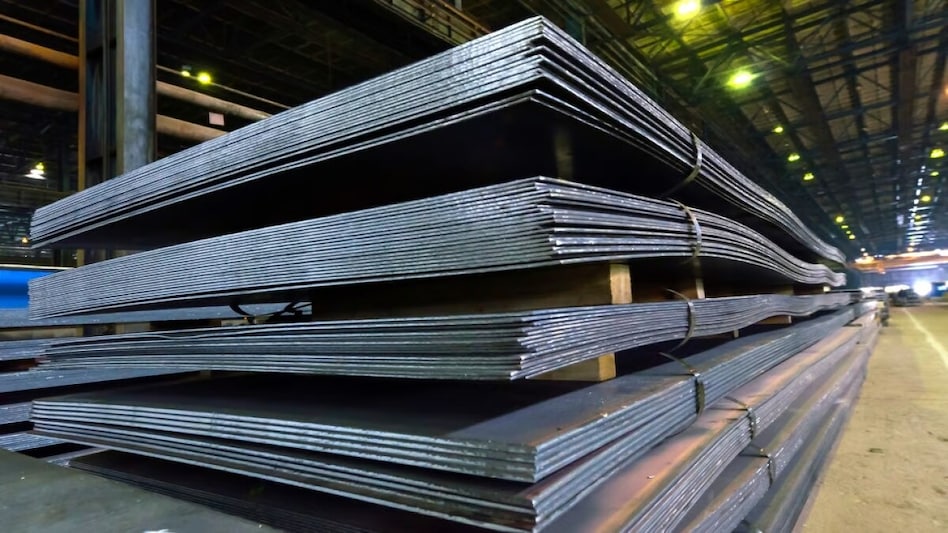 ndia’s per capita stainless-steel consumption is currently much lower than that of developed nations. India stands around 2.5 kg. In contrast, China’s per capita steel consumption is 10 kg
 TCS to acquire Porsche’s IT consulting arm MHP for €320 million, signs five-year strategic deal
 Tata Sons board likely to meet on September 17, Chandrasekaran exit may take center stage
 'Our trade is growing again, thanks to PM Modi': Putin tells EAM Jaishankar
 Trade war escalates: Trump announces 50% tariffs on Canadian autos & steel from Jan 1
 Saudi attacked by Houthis, Turkey targeted by Israel: So what is the Mecca Pact doing?
 Market Masters | Aniruddha Sarkar On Top Sectors, Market Outlook & Where To Invest
 Daily Calls: Ask Your STOCK MARKET TODAY QUERIES | Market Update | Share Market News Today
 All About Debt Funds: Types Of Debt Funds & How To Invest | Mutual Fund Guide | Money Today
 “India Can Attract Global Space Talent Like A Magnet”: PM Modi To Startup CEOs
 CM Yogi Responds To Rahul Gandhi Over Manusmriti Remarks, India's Youth, And Heritage
 Tempsens Instruments IPO: Issue subscribed over 184 times on final day; check latest GMP
 Cupid's Aditya Kumar Halwasiya ups stake to 33.53%; buys 11 lakh shares
 Auto, auto ancillary stocks: Is it time to book profits? What Centrum's Nilesh Jain says
 This mid-cap metal stock zooms 15% on Rs 2,700 crore order announcement; do you own?
 RVNL shares a buy? Accumulate railway stock as valuations cool, says Kranthi Bathini
 FCNR(B) deposits: IDFC FIRST, IndusInd offer 6.75%; top PSU banks offer 6.60% as RBI forex window nears closure
 ₹5 lakh crore flexi-cap universe reveals wide risk gap: Here’s how 22 funds are positioned
 Gurugram issues work-from-home advisory for Tuesday following heavy rain and flooding
 Tarique Rahman's Bangladesh is returning to BNP's Islamist roots, warns Brahma Chellaney
 ‘The real life batman’: Rahul Gandhi posters featuring LoP & caped crusader put up near Congress HQ












