










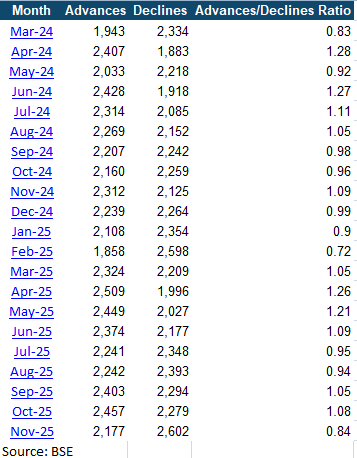



 BSE data suggested the ratio stood at 0.84 for November, with 2,177 stocks advancing and 2,602 declining for the ongoing month.
 Even as benchmark indices the NSE Nifty and the BSE Sensex have showed some recovery of late, the broader market weakness is showing no sign of abating. In fact, the market breadth, as suggested by advance-to-decline ratio for the BSE listed stocks, has fallen to the lowest since March 2025, data compiled from the stock exchange suggested.
In March 2024, a total of 1,943 actively traded stocks on BSE advanced and 2,334 declined, suggesting a advance t0 decline ratio of 0.83. BSE data suggested the ratio stood at 0.84 for November, with 2,177 stocks advancing and 2,602 declining for the ongoing month. It reflected the weakness in the broader markets, even as Nifty and Sensex are up about 2 per cent each this month. The BSE Smallcap index fell 3 per cent during the same period.
A ratio below 1 suggests stocks declined more than advanced, hinting at a bearish trend. For 2025, the ratio has stayed above 1 in six of the 11 months.

 Tata Capital roadmap: 100% micro-housing growth, 500 gold loan branches and more
  AI creators ask for slowdown; 1,100+ employees from OpenAI, Google and Meta warn of 'real risk'
 Your UPI payments could soon be more private; NPCI plans to mask phone numbers on UPI apps
 N Chandrasekaran's ₹685 crore pay in 5 years: The figure that stands out in Tata Sons' latest annual report
 Bengaluru restaurants to boycott Swiggy, Zomato from August 15. Here's why
 Manipal Health IPO Review: Should Investors Apply For Long-Term Growth Or Avoid It?
 Trump And Netanyahu Meet In Washington As Iran Differences Surface At White House
 Pentagon Alters Iran War Casualty Toll As U.S. Troop Losses Spark Massive Storm In Washington
 HUL Share Price Outlook: Brokerages Turn Bullish After Earnings | FMCG Stock Analysis
 I.T. Stocks Rally 16% In July: Is The Biggest Comeback Still Left Or Will Profit Booking Begin?
 Avoid averaging Adani Green, wait for lower levels in Adani Power: Anshul Jain
 KFC, Pizza Hut operator's stock rises 9% in afternoon session; here's why
  Coforge shares extend gains; check latest target prices post Q1 results
 Kalyan Jewellers shares: Fresh buy or exit? Key levels to watch
 Adani Ports Q1 results: PAT rises 10% YoY to Rs 3,650 crore, revenue climbs 19%; shares slip
 "Speak On The Bill, Stop Politics”: Kiren Rijiju Challenges Rahul Gandhi Over Anti-Paper Leak Law
 Bajaj Auto, ETERNAL, Titan May Inch Up Higher
 Trading Crypto? These Last-Minute ITR Checks Could Save You From Costly Tax Mistakes
 'I'm willing to apologise for everything...': Can Swapan Dasgupta bring Tata Sons back to Bengal? Avoid averaging Adani Green, wait for lower levels in Adani Power: Anshul Jain