


 Elara said rupee weakness could help pharma, CDMO, textiles, IT services and upstream oil & gas companies. (AI-generated image)
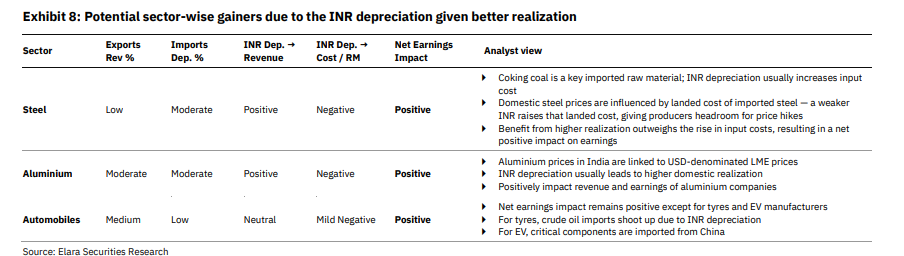
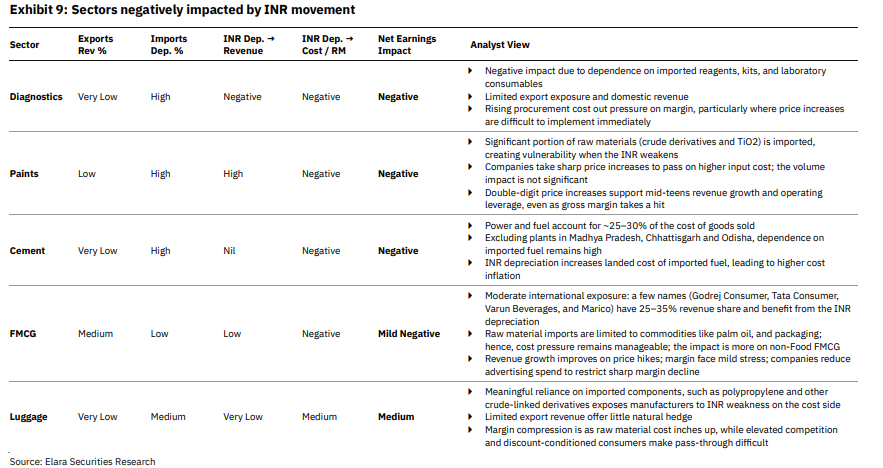
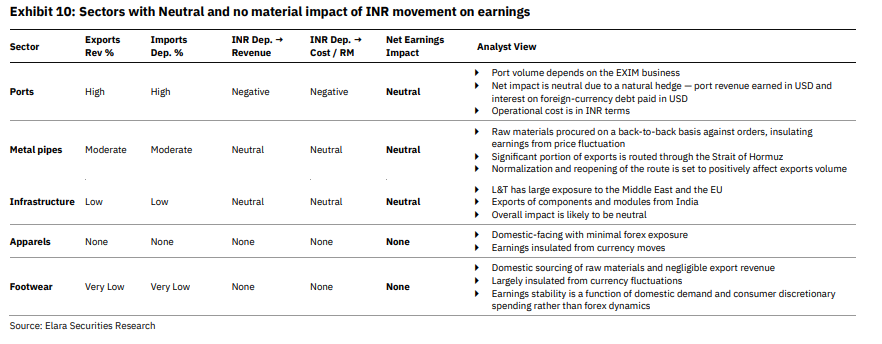
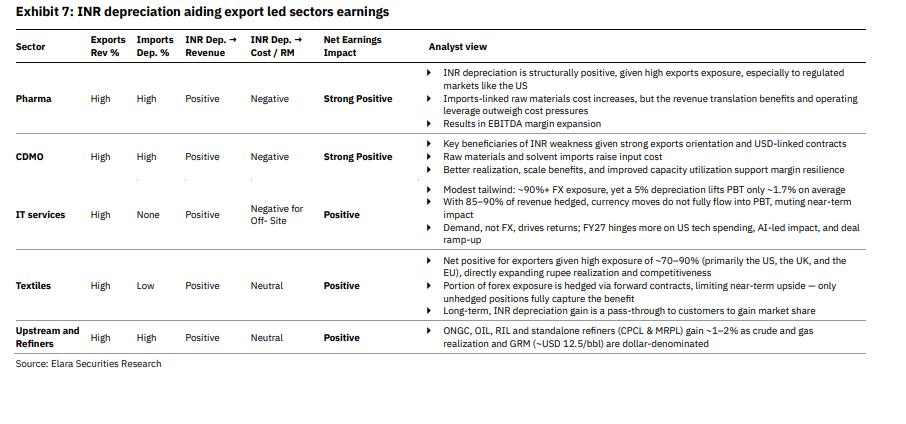
With the rupee weakening further against the dollar, Elara Securities in its latest strategy note said sectors such as pharmaceuticals, CDMO, IT services, textiles, upstream oil and refiners could emerge as key beneficiaries. The domestic brokerage also expects steel, aluminium and automobile companies to benefit from higher realisations. On the other hand, sectors such as diagnostics, paints, cement, FMCG and luggage, which rely on imported inputs and have limited ability to immediately pass on higher costs, could face margin compression, Elara said.
The domestic brokerage, in its latest analysis of Nifty earnings since 2009 covering 65 quarters, said rupee depreciation has historcally supported the sales growth of Indian companies more consistently than profits. The brokerage noted that during periods of sharp rupee depreciation, defined as annual weakness of more than 5 per cent, median Nifty sales growth rose to 14.9 per cent, aided by inflation and pricing action. However, median profit after tax (PAT) growth lagged at 11.6 per cent, compared with 16.8 per cent during phases of rupee appreciation.

 Trent shares hit 10% upper circuit post Q2 business update, HSBC sees 32% upside
  BT BIG STORY | Markets in the red: Here's what experts advise investors to do
 Charity Commissioner seeks response from Tata Trusts over Venu Srinivasan, Vijay Singh’s complaints
 Israel was prepared to shoot down Flydubai plane if it continued towards Tel Aviv: Report
 25 bps RBI repo rate hike could add ₹2.45 lakh to home loan interest over 25 years; here's the calculation
 Varmora Granito IPO: How Management Plans To Reduce Morbi Concentration Risk
 Value Buying, Short Covering Pushes Stocks Higher; BSE, ITC Shine
 Future Of MBA: ISB Dean Madan Pillutla On AI, Skills, Careers And Lifelong Learning
 How Amaravati Plans To Become A Quantum Hub
 MBA In The AI Era:IIM Ahmedabad Director On The Changes In Management Education
 Sterlite Technologies shares cross Rs 1,000 mark, hit record high; here are fresh price targets
  KMB, Axis Bank, IndusInd Bank shares gain up to 4%, IDFC First Bank falls 3%; here's why
 SRIT India, Shah Investor's Home make positive D-st debut; both stocks list at premium
 NSE, Groww, BSE, Angel One, MOFSL, Nuvama shares rally after SEBI CAS rollback report
 BSE Q2 profit may fall QoQ, fate depends on CAS regulation outcome, says NuvamaSterlite Technologies shares cross Rs 1,000 mark, hit record high; here are fresh price targets
  OpenAI plans to watermark ChatGPT and Codex text output in EU amid AI transparency push
 This 1972 computer sold for £37,179 in auction: Why this rare machine matters
 Ola, Uber, Rapido must transition to 100% EV fleets by July 2027 in MaharashtraKMB, Axis Bank, IndusInd Bank shares gain up to 4%, IDFC First Bank falls 3%; here's why