









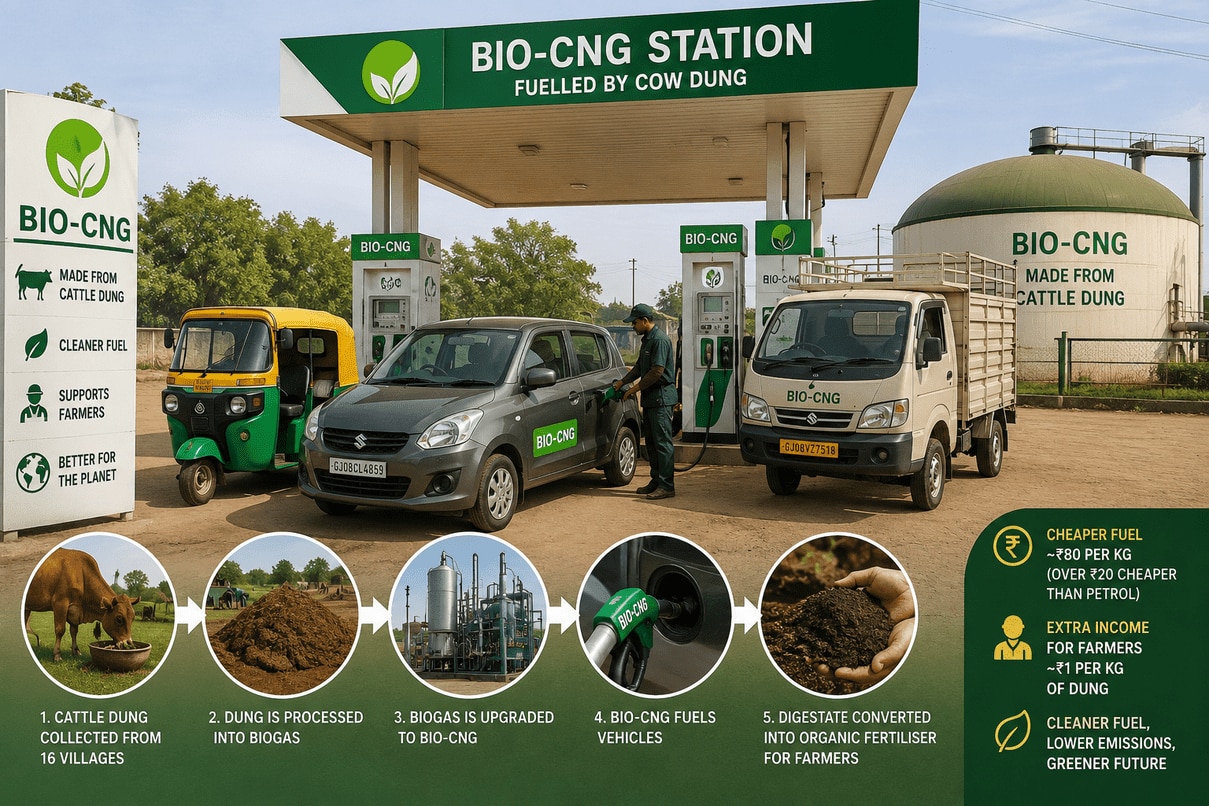



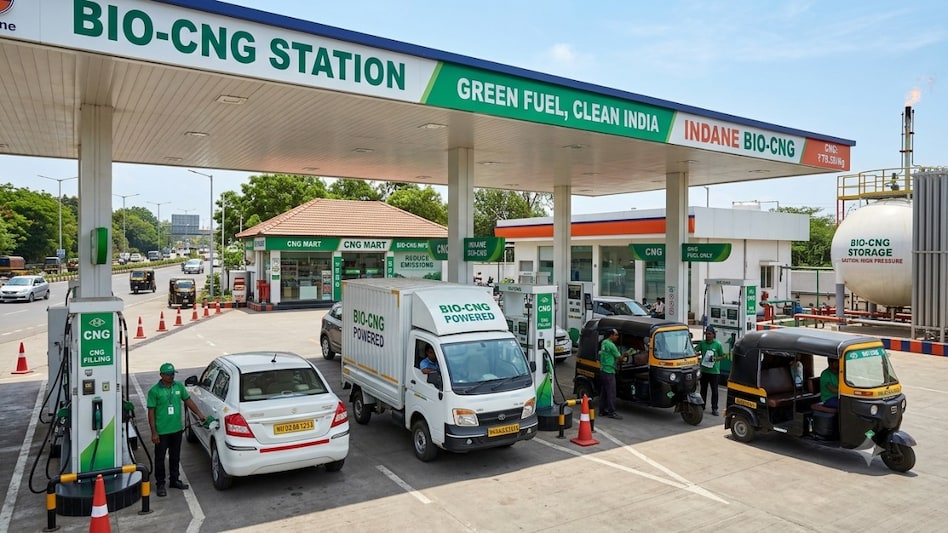
 The station sells biological compressed natural gas made from methane extracted from cattle waste
What if the fuel that could insulate your wallet from the next oil shock was sitting in a cattle shed the whole time? Cow dung is filling up gas tanks in Gujarat — and it's cheap. A bio-CNG station in Banaskantha, backed by Suzuki Motor Corp. and Banas Dairy, is fueling 600 to 700 vehicles a day with fuel made from cattle waste. It sounds like a novelty. But with West Asia's ongoing conflict keeping global energy prices on a knife's edge, this unglamorous experiment could be a genuine glimpse of how India diversifies away from costly imported fuel.
What is being sold at the station?
The station sells biological compressed natural gas made from methane extracted from cattle waste, according to a Bloomberg report. It costs about ₹80 a kg, more than ₹20 cheaper than petrol in some parts of India. At the plant, around 88 tonnes of cattle waste is collected every day from 16 villages. Farmers are paid about ₹1 per kg for dung, creating an additional source of income.
Why does this matter now?
The project comes as India looks for greater energy security and tries to diversify fuel sources in the wake of the Iran war. India already produces bio-CNG from municipal solid waste, agricultural residue and forage crops such as napier grass, and buses in Indore run on biogas from wet waste. But efforts to scale up the fuel are gathering urgency.
How does the model work?
Banas Dairy brings a large village procurement network and access to cattle waste, while Suzuki brings capital and vehicle demand. In Bukhala village, 32-year-old Bhemjibhai Nathubhai, who owns around 30 cattle, sells roughly 400 kg of dung to the plant each day and earns an additional ₹400 alongside income from his millet crop. He also fuels his two CNG cars with compressed biogas produced nearby.
What are the benefits beyond cheaper fuel?
The project is built as a circular model. Methane from livestock waste is captured and used as transport fuel, while the slurry left after digestion is converted into organic fertiliser and sold to nearby farmers. Nathubhai said the manure helped restore soil fertility after years of heavy urea use. Industry executives say such projects can support farmer incomes, cut emissions and reduce dependence on imported chemical fertilisers.
Can bio-CNG become a bigger part of India's energy mix?
Automakers and large companies are showing interest. Suzuki Motor and its India unit have invested heavily in CNG vehicles, while Reliance Industries Ltd. and Adani Group are also investing in biogas production. India is planning to raise the price paid to biogas producers, and a strategic plan signed during a Japanese visit this month has given a push to the addition of 1,000 new biogas plants.
What is holding back faster growth?
Scale remains the main challenge. India consumes 190 million cubic metres of gas a day, half of it imported, while current CBG production stands at 0.3 million cubic metres a day, according to federal oil ministry estimates. The Confederation of Indian Industry said annual CBG output would reach only 2.14 million tonnes by 2030 under current conditions, and 3.98 million tonnes under moderate growth, well below the original 15 million-tonne target.
What are the practical hurdles?
The difficulty is not only producing the fuel but also collecting waste, moving it to plants and transporting gas to buyers. Many plants are in agricultural areas far from pipelines, which raises costs. Executives involved with the Banaskantha facility estimate that it may remain financially unviable for at least another three years because of high upfront capital costs and modest output.
Even so, the Banaskantha station is emerging as a proof of concept for linking cattle waste, transport fuel and fertiliser production. While major hurdles remain on pricing, infrastructure and scale, the project shows how cow dung is being used in India's push for energy security.

 US Senate bill proposes 100% tariffs on India over Russian oil: What it could mean
 Warren Buffett changed his mind twice on Big Tech: First Apple, now Alphabet
 India-UK CETA kicks in: Kolkata ships first jewellery exports to Britain with zero import duty
 Nifty Pharma hits record high; Divi's Labs, Torrent Pharma, Sun Pharma shares shine
  Cabinet approves Semicon 2.0 with budget outlay of ₹1.27 lakh crore
 Instagram's Biggest Update Yet! 5 New Features You Need To Know (2026)
 Q1 Earnings Beat Expectations: Ambareesh Baliga Bets Big On These Bank Stocks
 Silver Crashes 16% In A Month! Should You Buy The Dip? Expert Explains
 Why Has India Stopped Buying Gold & Silver? Expert Explains The Real Reasons
 Copper Ready For A Comeback? Expert Predicts Fresh Rally Despite China Slowdown
 Nifty, Sensex, Nifty Bank outlook for today: GIFT Nifty down 2 points; key levels to watch
 Top stocks in news: HDFC Life, SBI, ICICI Lombard, Laser Power, HDB, Adani Power, Angel OneNifty Pharma hits record high; Divi's Labs, Torrent Pharma, Sun Pharma shares shine
  Sensex, Nifty close higher; Eternal, UltraTech, SBI among top gainers
  Bharti Airtel shares: Should one buy this telecom stock ahead of Jio IPO?