


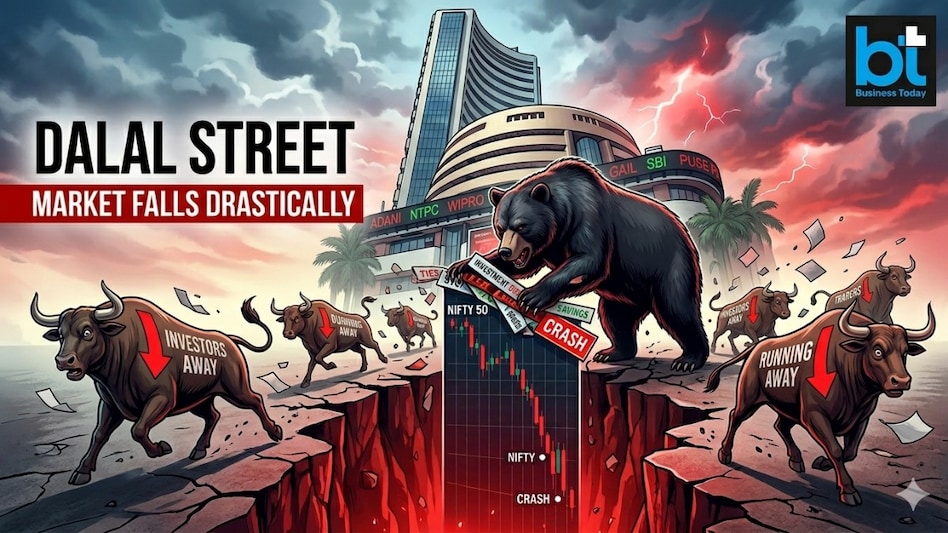
 A Nomura economist noted that Iran is prodding the Houthis to disrupt Red Sea shipping in the event of further escalation. (Pic: AI generated for representational purposes only; Google Gemini AI).
US President Donald Trump’s much-awaited speech on the Iran war failed to cheer investors in Asia, with markets from Korea to Japan falling up to 4 per cent, amid the absence of a clear timeline for an end to the conflict. Indian equities, which had rallied in the previous session, were no exception. Trump, who was earlier suggesting an Iran exit, even without any deal on Strait of Hormuz, declared the US was going to hit Iran "extremely hard" in the next two to three weeks.
Brent crude futures for June delivery jumped 4.64 per cent to $105.85 and the US 10-year bond yield firmed up to 4.36 per cent, hurting investor sentiment. The BSE Sensex opened the day at 72,262.05, down 872.27 points or 1.19 per cent. It extended decline to nearly 1,400 points within seconds. The NSE Nifty stood at 22,383.40, down 296 points or 1.31 per cent.

 ‘An Indian consumes 1/10th of an average American’: Amb Kwatra says energy security comes first
 Tata stock to buy: Nuvama bets on unique tech-telecom play, sees 28% upside
  IndiGo shares in focus as baggage, infant fee, priority boarding charges likely raised
 El Nino impact? India headed for driest monsoon since 2009, food inflation fears rise: Report
 LPG, CNG, PNG prices today (September 18): Check latest rates in Delhi, Mumbai, Kolkata, other cities
 Corporate Health Insurance Vs Retail Policy: Why You Need Personal Health Cover Too
 How India Changed In 12 Years: PM Modi’s Journey From Economic Reforms To Viksit Bharat
 Modi @76: From Twitter To Instagram, How His Digital Outreach Has Evolved
 Stock Picks To Watch: Shibani Kurian Reveals Kotak AMC’s Market Bets
 Gold ETF vs Physical Gold: Know the Tax Rules, Charges and Key Differences
 Oil prices: Red lines crossed? No baseline view, JPMorgan sees $90 fair value
 Top stocks in news: Tata stocks, BEL, Wipro, Veegaland, IndiGo, Skyways Air, PB Fintech, PTC IndiaTata stock to buy: Nuvama bets on unique tech-telecom play, sees 28% upside IndiGo shares in focus as baggage, infant fee, priority boarding charges likely raised
 Hero Motors IPO subscribed 3.37 times on Day 2; retail portion subscribed over 5 timesOil prices: Red lines crossed? No baseline view, JPMorgan sees $90 fair value‘An Indian consumes 1/10th of an average American’: Amb Kwatra says energy security comes firstTop stocks in news: Tata stocks, BEL, Wipro, Veegaland, IndiGo, Skyways Air, PB Fintech, PTC IndiaTata stock to buy: Nuvama bets on unique tech-telecom play, sees 28% upside LPG, CNG, PNG prices today (September 18): Check latest rates in Delhi, Mumbai, Kolkata, other cities












