Aggarwal: To maintain a balancing act between supporting growth and containing inflation, RBI has kept policy rates steady at 5.5%, while ensuring adequate liquidity through calibrated measures. In June 2025, the RBI announced a 100 bps CRR cut, to be implemented in four tranches. This move is expected to inject ₹2.5 lakh crore of liquidity into the banking system by December.
With just one more MPC meeting in this calendar year, which is due in December, it is to be seen how the front-loaded monetary policy actions, along with the recent fiscal measures and trade-related uncertainties, are going to unfold, which will determine further rate cuts by the RBI. If high tariffs weigh on economic growth, the rate cut remains possible, reflecting the RBI’s continued focus on supporting growth. There might be a shift from a neutral to an accommodative stance, signaling a readiness to lower interest rates to boost economic growth.
The RBI also announced 22 measures to strengthen India’s banking and financial sectors. Key initiatives include the Expected Credit Loss (ECL) framework and revised Basel III norms to boost capital efficiency, asset quality, and lending capacity. The higher lending limits against shares and IPO financing aim to support credit growth and bolster the investment climate. The framework allowing Indian banks to finance acquisitions could open new avenues for corporate funding, helping companies undertake strategic acquisitions, drive operational growth more effectively, and enhance bank lending. Ease of Doing Business reforms will reduce compliance burdens and enhance export competitiveness. Consumer satisfaction measures, like expanding Basic Savings Bank Deposit (BSBD) digital services will foster inclusion, while rupee internationalization promotes regional trade efficiency. These steps align with global standards, mitigate tariff-related risks, and deepen financial markets, with medium-term impacts unfolding post-2027 amid global uncertainties.
BT:FIIs have remained net sellers for a long time with no signs of buying in the Indian markets. What are the key reasons for their disinterest in Indian equities and what factors, according to you, can lead to their return to India?
Aggarwal: FIIs have remained net sellers amid global risk aversion, elevated U.S. yields, and relatively more attractive risk-reward opportunities in other emerging markets. Domestic valuations also appear stretched, with India’s P/E higher than peers like Japan, China, and South Korea. However, India stands out due to strong consumption trends driven by demographics, room for growth compared to mature markets, and resilient domestic growth drivers. In the first eight months of 2025, 287 new FPIs registered in India, bringing the total to 12,048, reflecting strong investor interest even amid market sell-offs. Investors are drawn to markets offering geopolitical stability, robust growth, and attractive returns, which India continues to provide.
Going forward, sustained FII inflows will depend on U.S. monetary easing and rupee stability. India’s calibrated measures, such as progress in the US-India trade deal, diversifying supply chains to the UK and EFTA to mitigate tariff impacts, implementing GST rate cuts to boost consumer spending, and focused Make in India initiatives, are expected to support corporate earnings growth, particularly in financials, consumption, and manufacturing. Once earnings justify the premium valuations of Indian equities, renewed FII interest is likely to follow.
BT: Considering Q2 earnings ahead, macroeconomic cues, and liquidity trends, do you think a trade deal with the US will be the biggest trigger that can lead to recovery for the Indian stocks? How do you see Indian markets shaping up in the next 3-6 months and what are your top picks?
Aggarwal: A trade deal with the U.S. could certainly provide a strong sentimental boost, but domestic earnings delivery and liquidity flows will be more decisive for market recovery. Key drivers include the revival of the earnings growth cycle from calibrated measures to boost spending and consumption, a strong recovery in credit growth, and the transmission of monetary policy benefits. Together, these domestic factors, alongside supportive global developments, are expected to play a key role in driving Indian equities.
A potential US-India trade deal, including a 25% reduction in tariffs on Russian oil imports, could improve India’s tariff competitiveness relative to China and Brazil. RBI's active steps to liquidity support, Ease of Doing Business reforms, and the revised GDP growth forecast of 7% for the September quarter, all these factors will be key in driving India's growth.
GST collections rose 9.1% YoY in September to ₹1.89 lakh crores, reflecting resilient consumption. Over the next 3–6 months, Indian markets are likely to see positive momentum, as GST rationalization is expected to support higher net collections. Festive-season spending from Navratri onward across automobiles, mobile phones, and consumer electronics is already showing early results. With global headwinds easing, including softer crude prices, corporate earnings are expected to revive, shaping a stronger outlook for Indian equities in the coming months. Top picks include large private banks, capital goods leaders, and consumption names with strong pricing power.
BT: How do you see the performance of India’s core economy — manufacturing, infrastructure, and services — shaping up? Core sector data has shown mixed trends. Do you think private capex and industrial activity are strong enough to support long-term market optimism?
Aggarwal: India’s core economy shows resilience, though the pace varies across manufacturing, infrastructure, and services. Manufacturing PMI hit a 17.5-year high of 59.3 in August, reflecting strong business optimism. It moderated to 57.7 in September 2025 but remained well above the long-term average. Meanwhile, services PMI reached a 15-year high of 62.9 in August, driven by rising new orders.
Government-led infrastructure push is strong, but private capex revival is still in early stages. Industrial activity is gradually improving, but for a long-term structural uptrend, private sector investments and global demand recovery need to accelerate. Private sector investment is gradually gaining momentum in India, with public-private partnership (PPP) projects showing significant growth. Key supporting factors include GST rate cuts to boost spending, RBI monetary policy easing to drive credit growth, PLI scheme, robust FDI inflows, and continued private capital expenditure, all expected to strengthen economic momentum.
BT: Inflation is stabilizing in some areas but input costs remain elevated. How is this influencing core industries and, in turn, corporate earnings?
Aggarwal: While headline inflation forecasted down at 2.6% for FY26, elevated input costs in energy, commodities, and wages continue to pressure margins in core industries. Geopolitical tensions and supply chain disruptions are adding to cost pressures, impacting short-term profitability.
Companies with strong pricing power or operational efficiencies are better positioned to protect earnings. In Q2 and beyond, earnings dispersion is likely to be high. Pharmaceuticals may face pressure due to U.S. tariffs, though exemptions for generic drugs provide some early relief. IT and FMCG sectors have experienced margin strain, but technological advances and stronger consumer spending point to a bright outlook. Additionally, banks, auto, real estate, insurance, and capital goods are expected to benefit from higher spending driven by GST rate cuts, tax reliefs in the Union Budget, Ease of Doing Business reforms, and MSME-focused measures, supporting broad-based corporate earnings growth.
BT: With uneven monsoon and pressure on rural demand, how might the rural economy impact consumption-driven sectors in the coming quarters? Do you see a disconnect between the resilience of India’s core economy and the cautious sentiment in the stock markets?
Aggarwal: Despite an uneven monsoon, rising rural demand is expected to benefit consumption-driven sectors such as FMCG in the coming quarters, supported by growing e-commerce penetration. FMCG sales volumes increased by 8.3% in July–August 2025, with rural growth outpacing urban. Above-normal monsoon conditions, good progress in kharif sowing, and adequate reservoir levels further support agricultural prospects and rural consumption.
India’s core economy remains resilient, with 7.8% GDP growth in Q1 FY2026 and strong high-frequency indicators such as PMI and tractor sales. Yet, stock markets reflect cautious sentiment due to global uncertainties, including U.S. tariffs and FII selling pressure. This disconnect arises as markets price in external risks. However, domestic drivers such as GST reforms, liquidity surplus, and progress on a U.S. trade deal could support corporate earnings and economic momentum, which may gradually translate into stronger market performance.



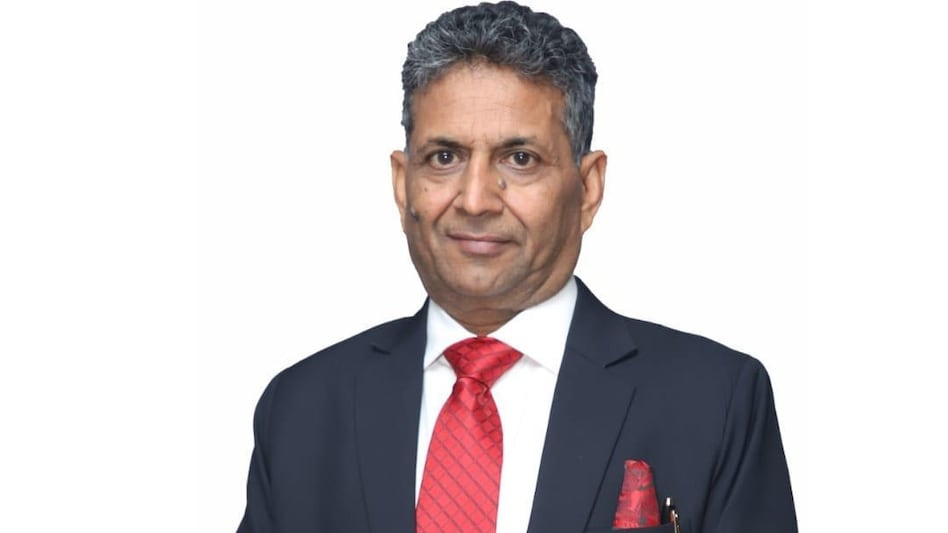 Subhash C. Aggarwal, Chairman and Managing Director, SMC Global Securities
 100% tariffs immediately? What Trump’s new Russia sanctions law means for India
 Russian oil & gas purchase: Trump signs Bill into Act targeting 100% tariffs on India, China
 'Tatas today are the face of India...': Former Solicitor General Harish Salve backs Tata Sons public listing
  Trump’s announces Greenland deal with Denmark: What it means for US military presence
 Panic button: California governor issues order for mandatory kill switch on advanced rogue AI
 Health Insurance: Why Claim Settlement Ratio Is Not Enough When Choosing The Right Insurer
 “Unacceptable And Unprofessional”: MEA Rejects Pakistan’s Claims Over INS Kolkata Collision
  Commodity Trading For Beginners: How MCX & NCDEX Work | Trading Basics | Money Today
 US Fed Rate Hikes A Headwind For Foreign Flows? | Jibi Jacob | Jefferies
 ₹25 Billion FII Outflow: What Could Bring Foreign Investors Back? | Jefferies' Jibi Jacob
 Jindal Supreme, SS Retail, Hero Motors IPOs subscribed up to 181 times on final day; details here
 Sensex, Nifty post sixth weekly loss; TCS, Titan among top laggards, slip up to 4%
 How AI collapse could benefit Indian equity market; Jefferies' Christopher Wood explains
  Banks are no more secular growth story, prefer NBFCs: Chris Wood
 Jefferies' Christopher Wood sees gold at $10,000 'sooner or later'; likes India's small, midcaps
 Ghosts in the machine: How a false AI intel almost triggered a US-China clash in West Asia
 Fujifilm X Half review: The not-so-retro digital camera for Gen-Z
 Now, Google Gemini becomes latest AI model to break out & hack real companies
  On tracks: How Maruti Suzuki is shifting to railways for its car dispatches
 LPG, CNG, PNG prices today (September 19): Check latest rates in Delhi, Mumbai, Kolkata, other cities












