


 Details such as the formal list of documents and the online submission system will be officially released by Chinese authorities and embassies in the coming weeks.
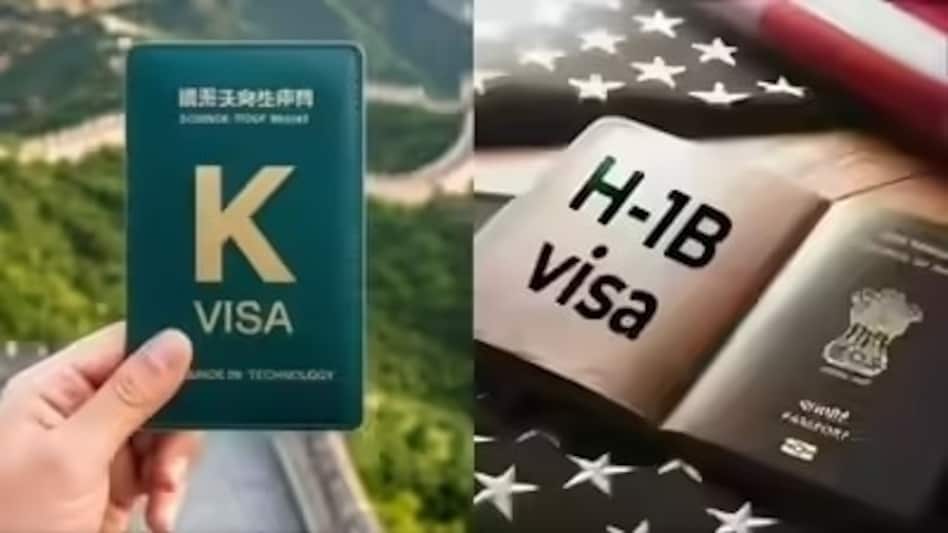
As the U.S. tightens immigration rules for skilled foreign workers, China has launched a new visa aimed at attracting young STEM talent—an apparent play to lure professionals, including Indians, disillusioned by rising H‑1B barriers and costs.
Effective from October, China’s newly introduced K visa offers a sponsor-free entry pathway for foreign graduates and early-career professionals in science, technology, engineering, and mathematics (STEM) fields.
Unlike the U.S. H‑1B, the K visa does not require employer sponsorship—marking a significant shift in China’s strategy to compete in the global talent market.
The visa, announced by China’s State Council in August, has triggered strong interest from professionals across India, Southeast Asia, Europe, and the U.S., according to Edward Hu, Immigration Director at Newland Chase, Shanghai. Inquiries have reportedly spiked over 30% since August.
“The K visa fills a gap in China’s talent system by lowering entry barriers for younger STEM talents,” said Hu, calling it a “strategic move” amid growing dissatisfaction with U.S. visa policies.
This comes as President Donald Trump’s administration imposes a $100,000 fee on H‑1B visa applications, tightens eligibility, and introduces a wage-based lottery—all of which disproportionately affect Indian tech workers, who account for more than 70% of H‑1B recipients.
While not officially linked, China’s timing appears opportune. “The K visa offers a low-cost, sponsor-free pathway—aligning with the global surge in STEM talent demand and making China a more accessible option,” Hu added.
However, obstacles remain. Analysts note China’s limited track record with granting citizenship or permanent residency, language barriers, and workplace culture—including the notorious “9‑9‑6” schedule (9 a.m. to 9 p.m., six days a week)—as deterrents for foreign talent.
To compete with Silicon Valley, Chinese firms will need to offer English-language roles and globally competitive work environments, said Michael Feller, chief strategist at Geopolitical Strategy.
Who can apply?
Activities allowed
Application steps
No employer sponsorship or invitation letter is required, lowering barriers compared to other Chinese visas. Details such as the formal list of documents and the online submission system will be officially released by Chinese authorities and embassies in the coming weeks.

 Tata Consumer stock: Tata Group's FMCG arm reacts to Q1 earnings show
  Sterlite Technologies: What every investor should know about the stock post Q1 earnings
  NEET to be conducted through a computer-based model? Here’s what we know
 ‘Merely because there is agitation…’: Supreme Court says right to peaceful protest is guaranteed
 BT Explainer | PVR Inox shares: Analysts bet big on Odyssey, Ramayana, Avengers & others post solid Q1
 IPO Rush Ahead! Should You Invest In Manipal Health & Upcoming IPOs? Avinash Gorakshakar Explains
 Why IndiGo Stock Is Rallying | Impact Of Falling Crude Oil On Aviation Stocks
 Pralhad Joshi Takes Charge As Education Minister | Big NTA Reforms After NEET Row
 Nirmala Sitharaman Slams Govt Apathy After Tax Dept's 50-Year Land Struggle In Mumbai
 PM Modi’s Big Message To Youth: Border Villages Are India’s First Villages
 Infosys, OFSS, Coforge shares rally up to 4%; all 10 Nifty IT index stocks rise
 Infosys fined €175,000 by French authority over employee time tracking system; says no material business impactTata Consumer stock: Tata Group's FMCG arm reacts to Q1 earnings show
  Why KFin Technologies shares surged 9% today
 Sagility shares surge 8%; brokerages retain 'Buy' despite Q1 revenue dip QoQ; check target pricesInfosys, OFSS, Coforge shares rally up to 4%; all 10 Nifty IT index stocks rise
 Nitin Gadkari moves Bombay High Court against viral E20 deepfakes, hits Meta with suit
  Delhi’s ₹6,969.67-crore tunnel corridor: Route, length and benefits explained
 Delhi to Nepal in just 8 hours! This highway project could boost tourism growthIPO Rush Ahead! Should You Invest In Manipal Health & Upcoming IPOs? Avinash Gorakshakar Explains









