


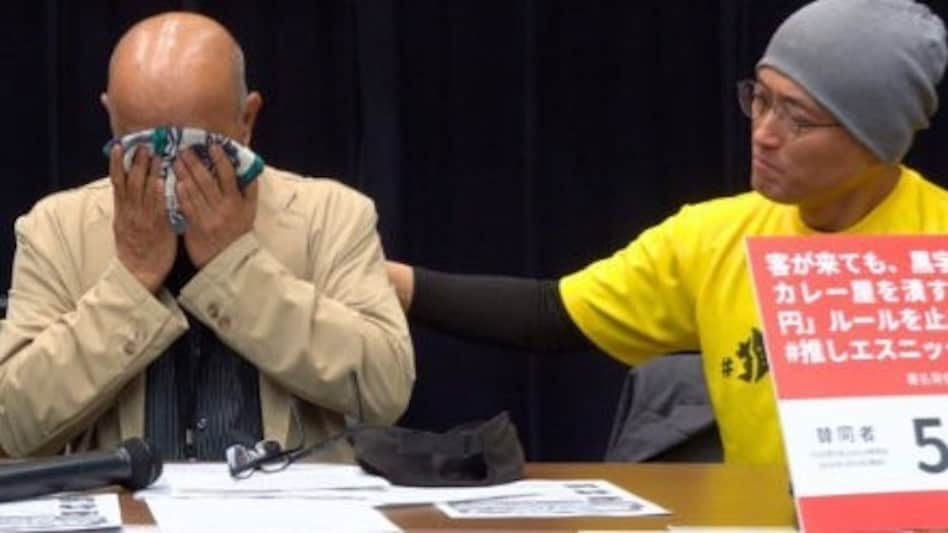
 Manish Kumar, who runs an Indian restaurant in Japan’s Saitama Prefecture, broke down during a protest rally in Tokyo. (Photo credit: Change.org Japan/X)
An Indian restaurant owner who has spent nearly 30 years building his life in Japan now faces deportation after authorities rejected his visa renewal application, throwing renewed attention on Japan’s sweeping immigration overhaul and its impact on long-term foreign entrepreneurs.
Manish Kumar, who runs an Indian restaurant in Japan’s Saitama Prefecture, broke down during a protest rally in Tokyo after being informed by Japan’s Immigration Services Agency (ISA) that he would have to close his 18-year-old business and leave the country.

 'Methodology is very robust': Former statisticians back GDP base year revision
 FCNR deposit bonanza: Economists explain why deft liquidity management will be key
 ‘Painful to hear allegations of data jugglery’: MoSPI secretary Saurabh Garg says every data is verifiable
 ₹1,800 crore Ultravolt bet: Aditya Birla Group enters wires and cables market, targets top two spot in 5 years
 $136 billion forex inflow gives rupee a lift, takes it to two-month high
 Ajay Piramal Explains Why India Can Achieve Viksit Bharat 2047
 Auto Industry Price Hikes Remain Marginal: Hyundai India MD Tarun Garg
 EXCLUSIVE | MoSPI Secretary Saurabh Garg On 7.8% GDP | Rejects Data Manipulation Claims
 AI Is Moving To The PC: Dell’s Jacinta Quah On India’s 51% Adoption
 From Air Marshal To Ram Lalla’s Guardian: Meet The New CEO Of Ayodhya’s Ram Temple Trust
 Coal India, Finolex Cables, Gulf Oil, Federal-Mogul Goetze among stocks to turn ex-dividend tomorrow, details here
 Fintech smallcase launches US stock, ETF portfolios for Indian investors
 Sensex plunges over 2,100 points in 3 minutes; what happened in final 5 minutes?
 Britannia, Tata Consumer, Marico: What should investors do as commodity inflation rise
 How EV-themed stocks could impact sentiment on Maruti Suzuki counter Ajay Piramal Explains Why India Can Achieve Viksit Bharat 2047
 'External debt could rise to $900 bn': RBI's FCNR(B) move has created five major risks, warns ISB professor
 BRICS Summit 2026: Central government offices in Delhi to remain closed on September 11
 Siliguri corridor gets major highway boost! Centre approves ₹2,077 crore NH-327 four-laning plan
 Recruiters may soon stop searching for candidates. LinkedIn wants AI to do it












