It also provides the broadest 'service coverage' as essential out-patient services for several health disorders, as well as disease prevention and health promotion, fall within PHC's remit.
Also Read: Health Is Wealth: How employee health took centre stage for firms
It also provides the best 'cost coverage', both by using less expensive methods of care and by optimising the use of resources for early detection and effective care, thereby limiting progression to advanced disease which is expensive to treat.
Though the world endorsed WHO's call for 'comprehensive' PHC, as the fulcrum of the 'Health For All By 2000' strategy, enunciated at Alma Ata in 1978, countries soon resorted to the adoption of 'selective' primary care.
This donor-driven approach, which focused on a limited set of specific diseases or health conditions, splintered the health system. Both efficiency and equity suffered as a result.
India too adopted such an approach. The National Rural Health Mission, for example, did not cover non-communicable diseases (such as heart disease and diabetes) or mental health disorders, despite their high prevalence and rising incidence. Urban primary healthcare remained an area of neglect.
The National Health Policy of 2017 called for a switch to comprehensive primary care but its implementation has been delayed.
Primary care also offers a platform for linking the health system to the social determinants of health which lie outside the traditional health sector but profoundly influence the health of individuals and populations.
Water, sanitation, hygiene, nutrition, education, pollution control, urban design and transport are among the many areas where primary care can promote synergistic multi-sectoral action.
Also Read: Aarogya Setu App can now be used to generate Ayushman Bharat Health Account
Primary care also provides the connectivity for One Health surveillance systems for zoonotic infections, which require collaboration between forestry, veterinary and public health departments. Response to natural disasters too requires an efficient primary care system working in tandem with other agencies.
During the Covid pandemic, the importance of efficient primary care systems became obvious, even if inadequately acknowledged by the media and policymakers.
Symptom-based household screening for early detection and testing of Covid infected persons, contact tracing, supported home care with appropriate monitoring of clinical status, triage and timely transfer of seriously ill persons to assured hospital care, management of sequelae (Long Covid) and administration of vaccines are all part of primary care.
Swift rollout of the vaccination programme in the UK was due to its well-functioning primary care system. The rapid spread of Covid in our cities could have been prevented if we had invested in urban primary care.
The pandemic also provided an opportunity for innovation which can greatly enhance the outreach, quality and effectiveness of primary healthcare services, while providing better connectivity to higher levels of healthcare.
We have seen exponential growth and extensive use of digital health technologies. Telehealth services provided valuable support to primary and home-based care, helping to overcome the travel restrictions imposed by Covid.
Registration of persons for vaccination was digitally enabled. Point of care diagnostics are helping quicker, easier and less expensive detection of infectious diseases and risk factors of non-communicable diseases.
Various apps helped in self monitoring of vital health parameters and contact tracing. Artificial intelligence helped in developing diagnostic and treatment algorithms that could be applied In primary care settings.
Real-time data analysis, for monitoring health programmes is now easier with digital technologies.
There is a great scope for improving our primary healthcare services, also by applying learnings from the pre-pandemic models of other health systems.
Brazil deployed multi-disciplinary family health teams, each of which covers an assigned number of households. Each team comprises a physician, nurse, nurse technician and four to six community health workers.
They are supported by dental hygienists and physiotherapists, apart from connections to psychologists and obstetricians.
Between 1994 and 2014, this helped Brazil achieve marked reductions in infant mortality, cardiovascular disease mortality, increase in vaccine coverage and reductions in paediatric and adult hospitalisation.
Introduction of women health extension workers (forerunner of Mitanins and ASHAs in India) in Ethiopia in 2003, resulted in a 67% reduction in under-five mortality rate, 71% reduction in maternal mortality rate, 90% reduction in HIV infections, 73% decrease in malaria deaths and over 50% reduction in TB mortality.
There have been successful models of mobile phone linked health programmes to improve antenatal and maternal care (such as MomConnect in South Africa and Medic Mobile in Nepal).
Diagnosis and effective management of hypertension and diabetes, by digitally enabled auxiliary nurse midwives in Indian studies, is mirrored by global experience with frontline workers in Mexico and South Africa.
We now need to adopt some of these models, while integrating the innovations that the Covid pandemic has ushered. A key change in approach is to take care of the home or close to home, rather than expect people to always report to a healthcare facility for their health needs.
Even advanced medical expertise can be provided through telehealth connectivity and primary care kiosks. A key guiding principle is to provide coverage for all the health care needs of the family rather than fragmented disease-specific services under disconnected health programmes.
People-centric primary care has to place the composite health needs of a person as the centrepiece of service delivery design. For this, we need to invest in paid, well trained technologically enabled primary care teams that can provide comprehensive, integrated services. They must provide chronic and acute care, ensure continuity of care and be bidirectionally connected to centres of advanced care.
These upgrades of our primary care systems call for higher levels of public financing. Fifteenth Finance Commission of India called for the strengthening of both urban and rural primary care and their linkage to centres providing critical care.
The connections between primary care facilities, district hospitals and medical college hospitals must be seamless. There is also a need to invest in developing a multi-layered, multi-skilled health workforce, especially through technology-enabled allied health professionals since many functions of primary care are not doctor dependent.
Financing, as well as governance of primary care services, need investment as well smooth coordination between central and state governments since many national health programmes are initiated by the centre even though delivery of health services is the mandate of states.
Primary care should not only be community facing but must also be energised by the active engagement of people.
From helping to define priorities to partnering in the delivery, monitoring and evaluation of programmes and services, people can and should contribute to the efficient functioning of primary care.
Apart from elected rural and urban local bodies (Panchayats and Municipal Corporations), women's self-help groups, youth organisations, faith groups and community based voluntary organisations can play a major role in strengthening primary care.
Participatory research on primary care innovations too must involve the people.
The annual National Health Assembly of Thailand and the Municipal Councils of Brazil are good examples of active people engagement.
Primary care offers the best pathway to the democratisation of the health system. We must advance on that path in the 75th year of our independence.
(Prof. K. Srinath Reddy, a cardiologist and epidemiologist, is President, Public Health Foundation of India (PHFI). The views expressed are personal.)


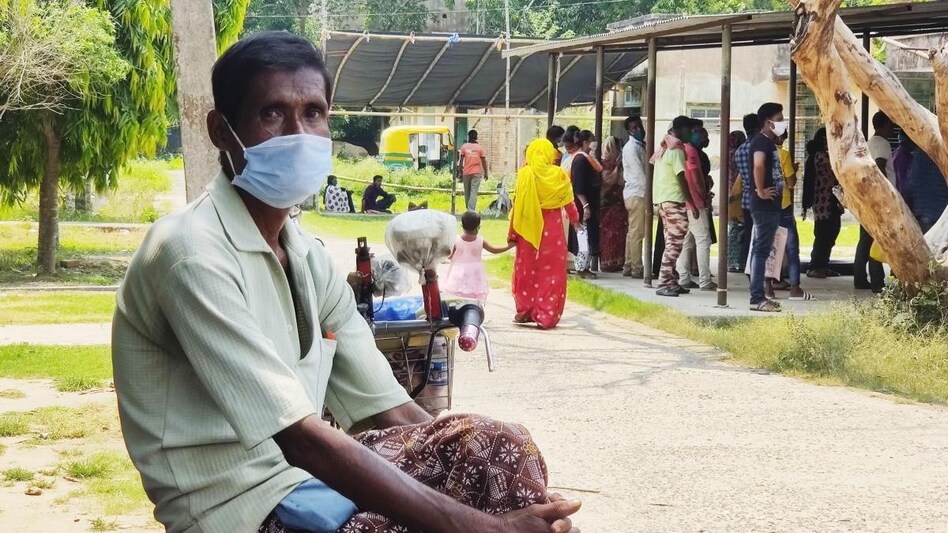 Participatory research on primary care innovations too must involve the people.
  Bitter Friday for Nestlé: Russia seizes assets as Moscow targets Western firms over Ukraine support
 From selling gold to spending ₹3.5 lakh: iPhone 18 Pro fever hits India as fans queue up on sale day
 Jefferies' Christopher Wood sees gold at $10,000 'sooner or later'; likes India's small, midcaps
 NSE IPO fully subscribed on Day 2; QIB, NII quotas booked 1.3 times each
 Warren Buffett steps down as Chairman after 60 years: What changes at Berkshire Hathaway now
 “Unacceptable And Unprofessional”: MEA Rejects Pakistan’s Claims Over INS Kolkata Collision
  Commodity Trading For Beginners: How MCX & NCDEX Work | Trading Basics | Money Today
 US Fed Rate Hikes A Headwind For Foreign Flows? | Jibi Jacob | Jefferies
 ₹25 Billion FII Outflow: What Could Bring Foreign Investors Back? | Jefferies' Jibi Jacob
 India’s Private CapEx Picks Up: Christopher Wood On The Market Outlook
 Jindal Supreme, SS Retail, Hero Motors IPOs subscribed up to 181 times on final day; details here
 Sensex, Nifty post sixth weekly loss; TCS, Titan among top laggards, slip up to 4%
 How AI collapse could benefit Indian equity market; Jefferies' Christopher Wood explains
  Banks are no more secular growth story, prefer NBFCs: Chris Wood
 Tata Electronics, L&T Semiconductor team up to expand India’s semiconductor manufacturing
 Delhi Airport introduces dedicated gates for hand-baggage-only travellers: Check gate numbers
 Highway builders seek extension of West Asia-related relief measures till December 31
 Spending ₹36,999 or ₹49,999 on a Redmi phone? Compare the Note 17 Pro and Pro Max before buying in India












