








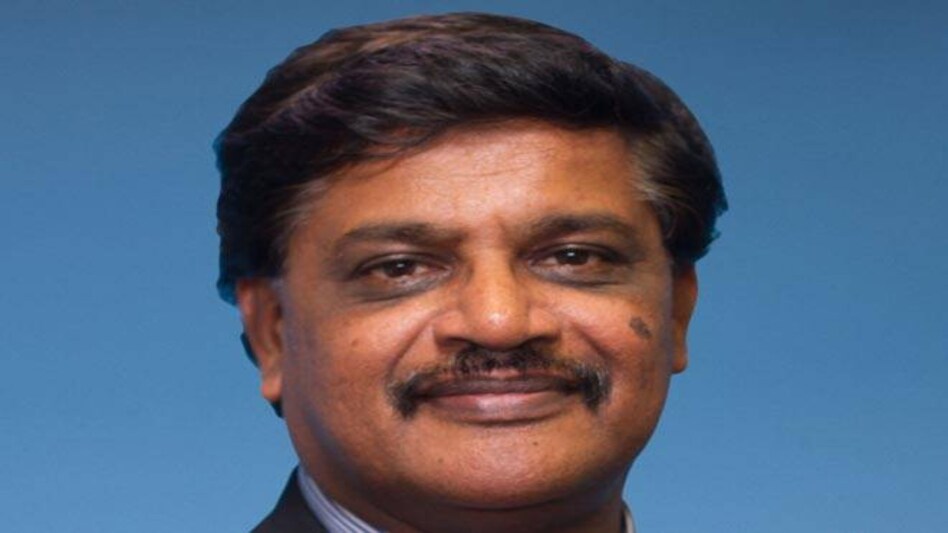
Rajiv Biswas, Asia-Pacific Chief Economist, IHS Global Insight tells BT's Sarika Malhotra that the current situation of export contraction is more severe than in 2008.
BT: Why does the current situation of export contraction look more severe than 2008?
Biswas: Indian exports in December 2015 fell by 14.75 per cent year-on-year, while for the fiscal year to date from April to December 2015, exports fell by 18.06 per cent year-on-year. The overall decline reflects a number of factors, including the slump in world commodity prices, which is impacting Indian commodity-related export values for key exports such as petroleum products as well as other commodities such as iron ore. In the global financial crisis in 2008/09, global exports were also hit hard by severe recessions in the US and EU, but world commodities rebounded quickly due to the very large Chinese economic stimulus package, which boosted Chinese demand for key commodities.
BT: From which countries are demand for Indian goods shrinking considerably and why?
Biswas: A number of major Indian export industries have seen significant declines in exports, including commodity exports such as iron ore and copper, due to falling world prices for metals commodities, as well as a slump in the value of petroleum product exports, due to the collapse in world oil prices. Other sectors that have been impacted include exports of engineering goods as well as jewellery exports. However, not all segments of Indian exports have been so badly impacted, since exports of services have shown a much more moderate decline for the past six months compared to the same period a year ago.
BT: What impact will this export contraction have on the Indian economy?
Biswas: Indian exports accounted for around 15.6 per cent of GDP in 2014/15. While this is significant, India's export sector accounts for a much smaller share of GDP than many East Asian economies such as South Korea, Taiwan, Malaysia or Singapore. Therefore, India's vulnerability to weaker external demand is relatively low compared to many other Asian industrial economies. While the large fall in exports will have negative effects on industrial production and employment, the impact on GDP is limited since imports have also fallen sharply due to lower oil prices, hence the contribution of net exports to GDP is actually improving. Lower oil prices have slashed the cost of imports, resulting in India's net exports position improving. The trade deficit for April-December 2015/16 was estimated at $99.2 billion, which is significantly better than the deficit of $111.7 billion during April-December 2014/15.
BT: Global predictions are hinting that 2016/17 will be as bad as 2008... How will it further impact Indian exports and Indian economy?
Biswas: The outlook for Indian exports in 2016/17 is expected to remain weak due to continued moderation in growth in China and the general slowdown in emerging markets economies, which will dampen Indian exports to China and other emerging markets. Furthermore, oil prices are expected to remain weak in 2016, which will continue to depress Indian refined petroleum product export prices. However bright spots for Indian exports are expected to be the US and EU, where economic growth is expected to show some moderate upturn.
BT: From a policy perspective, what should India do to spur exports and sentiment?
Biswas: The Modi government has been pursuing a very positive policy of trying to attract global foreign direct investment into manufacturing in India through the 'Make in India' policy. This is expected to boost foreign investment into building production facilities in India, including for export. This is an important medium-term strategy for boosting Indian manufacturing exports. However the Indian government must play a much more dynamic role in boosting Indian international competitiveness. At present, India ranks 130 out of 189 countries on the World Bank Ease of Doing Business 2016 Index. Clearly it is hard for India to be competitive while its business regulations and regulatory environment are so uncompetitive. The Modi government needs to push India substantially higher on the World Bank Index over the next three years, to at least above 100. Over the long-term in the next decade, India needs to aim at reaching a ranking of above 80 on this Index.
 Claims of sovereignty loss in India-US trade deal ‘absolute nonsense’: Piyush Goyal
 SEBI draws line between listing norms and RBI rules in guidance to PNB
 India’s US oil imports are strategic decisions, not trade pact obligations: Piyush Goyal
 Domestic airfares set to rise as IndiGo capacity cuts hit summer schedule: Report
 'True luxury is here to stay’: Isprava’s Dhimaan Shah
 BT Golf 2025-26 Kochi, Kerala Awards Ceremony Marks A High-Energy, Successful Conclusion
 Golf Is An Addiction. We Eat And Sleep Golf!
 The Fairway Fixes Everything. Mindset, Life, Relationships
 BT Golf LIVE: Join AU Small Finance Bank Presents BT Golf 2025-26 For Its 4th Leg In Kochi, Kerala
 AI Will Change MBAs, Not Leadership: IMD President On India’s Global Education Rise
 Stocks in news: RIL, Tata Steel, IREDA, Kalyan Jewellers, BEML and more
  RIL, SBI, Kotak Bank, Kalyan, HAL, BEML, BDL among stocks in focus next week; here’s why
 NSE IPO may unlock mega gains for billionaire investors RK Damani, Premji
 SBI Q3 Results: Profit jumps 24% to Rs 21,028 crore; asset quality improves
 IDBI Bank stake sale: Kotak Mahindra Bank says ‘has not submitted a financial bid’