


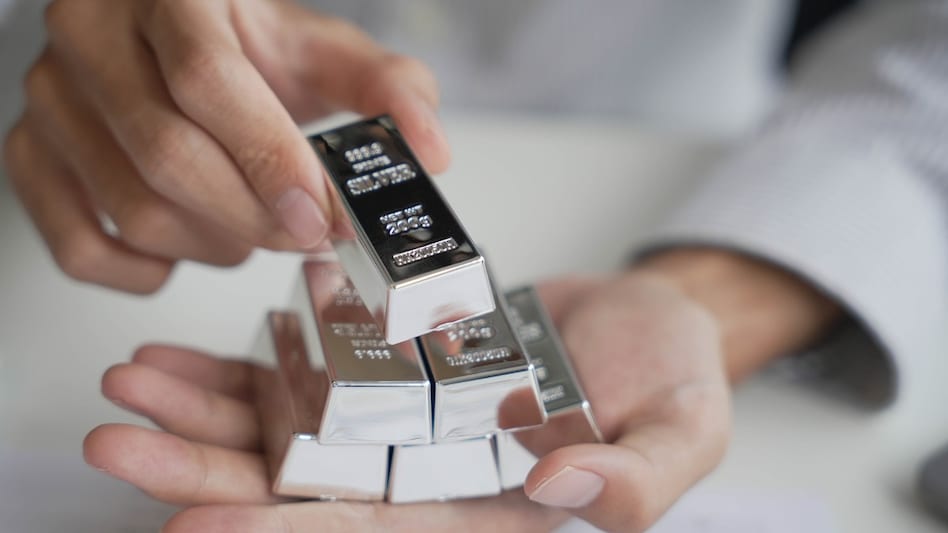
 The sharp correction in silver has spilled over into exchange-traded funds linked to precious metals.
Gold and silver prices are undergoing one of their sharpest corrections in recent years, wiping out a large portion of the extraordinary gains seen during the previous rally. The sell-off has coincided with a shift away from safe-haven and speculative buying that had earlier pushed precious metals to record highs amid global uncertainty, geopolitical risks and aggressive positioning by investors.
On Monday, the decline extended across both international and domestic markets. In overseas trade, gold was hovering near $4,500 an ounce, down about 7.7%, while silver fell much more sharply, losing nearly 14% to trade around $72 an ounce. Indian markets mirrored the global rout. MCX gold futures for the April 2, 2026 contract slipped 4.57% to around ₹1,40,999 per 10 grams, while silver futures for the March 5, 2026 contract plunged close to 13% to ₹2,30,732 per kg.

 90% EVs exported out of India are from Maruti Suzuki: MD & CEO Hisashi Takeuchi
 India's $30 trillion goal needs 8-10% growth, $400 billion more annual investment: Jayant Sinha
 1.1 billion barrels gone: IMF warns that global oil market is running out of safety cushions
 From Devbhoomi to industrial destination: Uttarakhand’s manufacturing moment
 India’s deep-tech startups face a new test: Crossing the valley of death
 #IndiaAt100 : Manufacturing For Viksit Bharat | Can Industry Power India’s $30-Trillion Dream?
 #IndiaAt100 : Tarun Garg On Hyundai & India’s Manufacturing Powerhouse Ambition
 #IndiaAt100 : CM Pushkar Singh Dhami On Uttarakhand’s Industrial Growth & India’s Next Leap
 #IndiaAt100 : Dr. Pawan Goenka On India’s SpaceTech Lift-Off And The Race To 2047
 #IndiaAt100 : P Chidambaram On India’s Growth Dilemma | What Could Hold Back $30 Trillion Dream?
 Cupid, NTPC Green, NTPC, Raymond Realty, HAL shares: Key technical levels to watch
 Defence stock with Rs 2,654-crore order book hits record high; here's why
  GACM Technologies: FII holding jumps to 29%; penny stock in focus
 Puravankara shares rise 5% on fresh order win
  20 high-conviction ideas for up to 95% upside | stocks to buy #IndiaAt100 : Manufacturing For Viksit Bharat | Can Industry Power India’s $30-Trillion Dream?#IndiaAt100 : Tarun Garg On Hyundai & India’s Manufacturing Powerhouse Ambition
 Rising demand, Make in India focus driving manufacturing growth in India, but speed bumps need to be addressed, say expertsFrom Devbhoomi to industrial destination: Uttarakhand’s manufacturing moment90% EVs exported out of India are from Maruti Suzuki: MD & CEO Hisashi Takeuchi












