For consumers, the strategy is increasingly simple: use different cards for different expenses to maximise cashback, discounts and reward points.
Six cards, six purposes
Manoj Singh Negi, a communications professional, told Business Today that he currently uses six credit cards, each serving a different purpose.
His collection includes an Axis Bank co-branded card that offers cashback and deals on platforms such as Myntra, Flipkart and Swiggy, an SBI card for SBI-specific offers, an HDFC card and an RBL card that he mainly uses for movie-ticket benefits.
Rather than putting every expense on the same card, Negi checks the available offers before making a purchase.
“I don't spend just to earn rewards — I simply use the card that offers the best value for a purchase I was already planning to make,” he said.
Don't Miss: SIP is not really about averaging: Deepak Shenoy explains the real reason systematic investing works
That approach has helped him save on some of his larger purchases.
Negi recently bought an Apple Watch using his Axis card and received nearly ₹3,000 as an instant discount, along with around ₹200 cashback. Last year, he purchased a MacBook for around ₹75,000 and received an upfront discount of about ₹8,000 through a credit card offer.
In both cases, the discount influenced the payment method rather than creating the need for the purchase.
“I bought my Apple Watch because there was a good discount available,” he said, adding that the MacBook was something he had already planned to buy.
From shopping to subscriptions
Negi's use of credit cards has also expanded beyond large purchases.
His regular expenses now include apparel, food, groceries and subscriptions. He says the convenience of cards, along with cashback and reward points, has made them useful for everyday transactions.
There is also a practical advantage when it comes to payment flexibility. For larger planned purchases, Negi prefers credit cards because they can offer an interest-free period of up to 45 days along with cashback and other rewards.
UPI remains convenient for him, but he also uses his RuPay credit card linked to UPI when his primary bank's UPI service is unavailable.
Still, he does not see the credit limit as additional money.
“The moment you start treating your credit limit as ‘extra money’ instead of money you'll have to repay next month, it can quickly become a financial temptation,” Manoj said.
His strategy is straightforward: pay the full outstanding amount every month and keep only cards that serve a specific purpose.
Three cards, better deals
Abhishek Chaurasiya, who works at a PR firm, uses three credit cards — two HDFC Millennia cards and an SBI SimplyCLICK card. He chooses between them based on the best available offer across fashion, electronics, travel, food and other purchases.
“I always go for the HDFC Millennia card since I can avail the cash from the earned reward points that will eventually bring down my credit card bill,” Chaurasiya said. He switches to SBI SimplyCLICK when it offers better deals on specific shopping platforms.
His card spending has also expanded to fuel, food delivery, hotels, travel, subscriptions and utility bills where cashback or rewards are available. While he considers UPI the easiest payment mode, he prefers credit cards for larger purchases because of the interest-free period and cashback.
The offers may influence which card he uses, but not whether he buys something. “I know that whatever money is spent, will have to be returned, so I do not indulge in unnecessary shopping,” he said.
Chaurasiya pays his full outstanding amount every month and uses CRED for payment reminders and bill payments.
Three cards for everyday spending
Prerna Kumari, a working professional, uses three cards — an HDFC RuPay credit card, an SBI Cashback Card and a Kotak Myntra Credit Card — depending on what she is buying.
The Kotak card is mainly used for fashion and lifestyle purchases, while the SBI Cashback Card is her preferred option for general shopping.
A recent phone purchase saved her around ₹2,000-3,000 through an instant discount on her HDFC card. Her grocery spending also earns her around 5% cashback.
Her spending pattern has changed significantly over time. Earlier, she mainly used credit cards for electronics and travel. Now, she estimates that almost 90% of her spending goes through credit cards, including groceries, restaurant bills and phone bills.
When offers influence spending
For Arya, a college graduate, having three credit cards is primarily about accessing different benefits.
She says she chose to have multiple cards because each offers different benefits, including cashback, discounts, reward points and coupons. Rather than using all three indiscriminately, she chooses a card based on the purchase and the best offer available at the time.
“I usually choose the card depending on what I am purchasing and which card is offering the best deal at that time,” Arya said.
Her credit card use has also expanded beyond larger purchases. Electronics remain one of her common expenses, particularly when a good credit card offer is available. But she now uses her cards more frequently for everyday spending such as groceries and food delivery.
“Over the past few years, my usage has definitely increased, and I have started using credit cards much more for regular day-to-day purchases rather than only for bigger purchases,” she said.
Cashback, reward points and discounts are the biggest factors influencing whether she uses a credit card instead of UPI, a debit card or cash. Lounge access is another benefit she values, although she does not use it frequently.
Arya generally avoids using credit cards for EMI options because she prefers paying the full amount.
But she also acknowledges that credit cards can sometimes encourage spending.
According to Arya, the gap between making a purchase and paying the bill can create a sense that the payment is still some distance away.
“I think one reason is that when you use a credit card, there is a feeling that the billing date is still far away and that you will have to pay the money later. That can sometimes make it easier to spend more than you normally would,” she said.
She has also made purchases primarily because of credit card offers, discounts, cashback or rewards.
“When I see a good deal on a website, the offer can make the purchase feel more attractive, even if it wasn't something I had originally planned to buy,” she said.
To manage her bills, Arya has set up auto-pay so that the full outstanding amount is automatically withdrawn every month. This helps her avoid missed payments and, more importantly, prevents her from carrying a balance forward.
She prefers paying the full amount rather than the minimum due.
Her advice to someone applying for their first credit card is to treat the card as a payment method rather than extra money.
Seven cards, different uses
Atul Kamal, who works in corporate, takes the multiple-card strategy even further. He currently uses seven credit cards, including three Axis Bank cards, an SBI card, an HDFC card, an ICICI Amazon card and an RBL card.
Each card has a specific use.
He uses his Airtel Axis Bank card for mobile recharges, utility bills and food delivery, while his Flipkart Axis Bank card is used for shopping and groceries. His RBL card is primarily used for movie tickets.
Kamal estimates that his cards save him around ₹500 a month through cashback, discounts and other benefits. He also uses credit cards for no-cost EMI offers and considers lounge access an added benefit.
But Kamal admits that having multiple cards can also affect spending behaviour.
“When I get the cards, it suddenly changes my spending habits and I end up using more,” he said.
He recalls buying an iPhone because of an offer without thinking enough about the repayment. He now sets a monthly budget for card spending and tracks his expenses through Google Keep.
Credit can save — if used right
Priti Rathi Gupta, Founder and CEO of LXME, told Business Today that consumers should remember that “credit is a financial tool, not an extension of income”.
According to Gupta, rewards only create value when they are earned on spending consumers would have made anyway. Spending ₹10,000 extra to earn ₹500 cashback, she pointed out, is not really a saving.
She also cautioned consumers against collecting cards simply because of joining bonuses or lifestyle rewards. A second or third card should have a clear purpose, such as offering better rewards in a category where an existing card falls short.
Aakash Rachh, Qualified Financial Advisor at 1 Finance, said having more cards does not automatically mean more savings.
According to research cited by Rachh, the average cardholder captures about 4% of annual expenses as card benefits, while the potential can be around 10% when cards are properly matched to spending patterns.
“For most people, 2 or 3 categories account for 60 to 70% of total spend, so two well-chosen cards cover almost everything,” Rachh said.
Must Read: Child’s PPF account: Parents cannot deposit ₹1.5 lakh each — Know the combined limit
The reward trap
Subhankar Mishra, Managing Director (Interim), Equifax India, said rewards can be useful but can also encourage consumers to spend more than they otherwise would.
He described this as the “spending to save” trap — making an unnecessary purchase simply to unlock a discount, cashback or reward.
The biggest mistake, Mishra said, is paying only the minimum amount due or rolling over balances. Interest charges can quickly wipe out the value of rewards earned.
For first-time users, the advice is to start with one card, understand the billing cycle and pay the total outstanding amount every month.
For those considering a second or third card, the question should be simple: What does this card offer that my existing card doesn't?
For working professionals, multiple credit cards can help bring down the cost of purchases through cashback, discounts and rewards. But the real saving comes only when cards are used to reduce the cost of planned spending — not justify more spending.



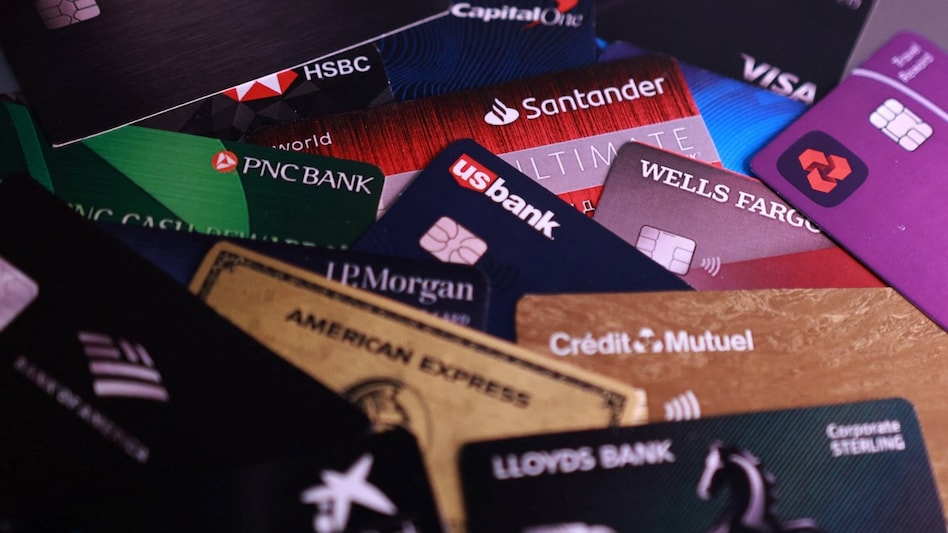 For first-time users, the advice is to start with one card, understand the billing cycle and pay the total outstanding amount every month.
 'India was number one': Sergio Gor applauds Indian companies for $20 bn US investment
 Google to shift Pixel production to India by 2027 to reduce China dependency: All details
  BSE shareholders in a fix: Two downgrades in two days; where is the stock headed?
 Scorpio Lifestyler: Why Mahindra is betting on 'latent demand' for pick-up trucks in India
 From Class 5 dropout to Lalithaa Jewellery IPO: Kiran Kumar builds Rs 11,000 cr empire with 4 gold bangles
 Daily Calls: Ask Your STOCK MARKET TODAY QUERIES | Market Update | Share Market News Today
 Motor Insurance Explained: Coverage, Premiums, Claims & What Vehicle Owners Should Know
 Gaja Alternative Asset Management IPO: Is ₹550 Cr IPO Worth The Bet?
 Horizon Industrial Parks IPO: Growth Story, Valuation & Outlook | CEO
 India Clears 31 New Electronics Projects Worth ₹7,877 Crore, Says MeitY’s S Krishnan
 Despite low valuations, HDFC Bank stock still not a buy: Coheron Wealth's Aditya Agarwal
  Nifty falls for fifth session as brent crude price crosses $91 per barrel mark
  BTTV Exclusive| Gaja IPO: CEO explains valuation, AIF growth, business model and plans after listing
 BEL shares: Technical trend not constructive; long-term investors can stay put, says analyst
 'We must address friction points. Need predictable taxation': Sergio Gor lays out US asks for India
 No more pink buddhi ke baal? Colourless cotton candy takes over after FDA action in Maharashtra
 Yohan Poonawalla Honoured with Hurun Centricity Stars of the Deccan 2026 Recognition












