


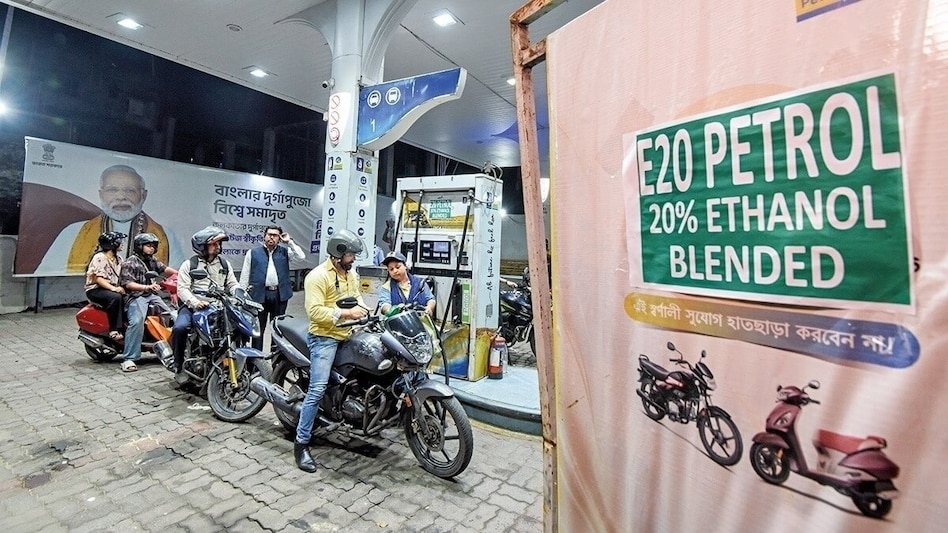
 The Petroleum Ministry said 893 E20 samples collected from IOCL, BPCL and HPCL depots and retail outlets across 27 states and UTs were tested under the prescribed BIS standard, IS 17021.
The Centre has rejected the Karnataka government's allegations of excessive ethanol blending in petrol, saying all 893 fuel samples tested across 27 states and Union Territories complied with prescribed quality standards. The clarification comes after Karnataka claimed that petrol sold at certain retail outlets contained ethanol levels as high as 31%, significantly above the government's 20% blending target.
In a statement issued on November 7, the Ministry of Petroleum and Natural Gas said public sector oil marketing companies (OMCs)—Indian Oil Corporation (IOCL), Bharat Petroleum Corporation (BPCL) and Hindustan Petroleum Corporation (HPCL)—had challenged the state's findings, citing discrepancies in sampling procedures and laboratory testing methods.

 SEBI's new settlement rules effective November 7: Online applications, revised fees, fast-track process explained
 As GRAP III kicks in, Delhi-NCR schools directed to shift classes 1-5 to hybrid mode
 'Humanity’s last personal device': Temple founder Deepinder Goyal shares vision for AI wearable
 India loses $13 billion worth of food annually: How climate change is worsening the crisis
 Nifty 50 gains 1.91%, microcaps crash nearly 9% in October: Should investors shift SIPs to large caps?
 Gold Prices Down 30%: Why Ajay Kedia Sees A New Bull Run Ahead | Gold & Silver Outlook
 Samvat 2083 Outlook: Why Investors Should Focus on the Next 10 Years, Not 6 Months
 Nilesh Shah On Why Earnings Growth Matters More Than FII Flows For India's New-Age Stocks
 5 Must-Have Asset Classes for a Diversified Mutual Fund Portfolio
 Samvat 2083: Which Sectors Could Create The Biggest Wealth As India's Economy Moves Towards $7T?
 SEBI's new settlement rules effective November 7: Online applications, revised fees, fast-track process explained
 Zerodha Fund House becomes Zerodha CASE Funds as investor base crosses 12 lakh in three years
 Gold, silver or stocks this Dhanteras? Nifty 500 won 9 years, gold 7 and silver 5 since 2006
 Bharti Airtel shares: Citi remains bullish after strong Q2 despite elevated churn; Rs 299 plan restored
 Vijay Kedia shares formula on how to pick stocks during correction
 IAF's IL-76MD makes history with world's highest-ever landing at Nyoma in LadakhAs GRAP III kicks in, Delhi-NCR schools directed to shift classes 1-5 to hybrid mode'Humanity’s last personal device': Temple founder Deepinder Goyal shares vision for AI wearableNifty 50 gains 1.91%, microcaps crash nearly 9% in October: Should investors shift SIPs to large caps?
 Indian workers, students face new hurdles as Lithuania tightens residence permit rules












