Key points taxpayers must know for e-mail communication with the income-tax dept
As the time to file your income tax returns nears, here are the guidelines you must comply with while e-communicating with the I-T department.
BusinessToday.In- New Delhi,
- Updated May 30, 2018 3:36 PM IST
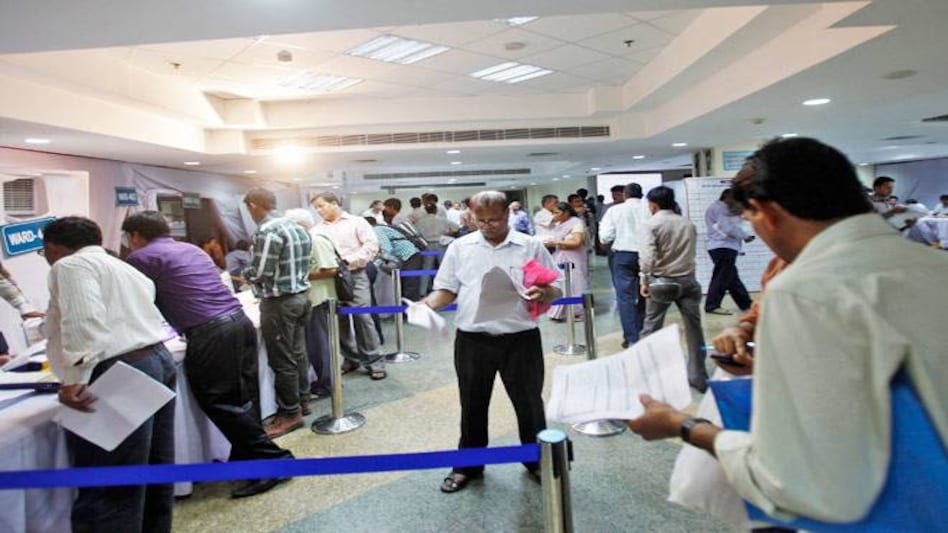 The income tax department will primarily issue notices or other communication through the email address provided by the assessee or the one available in the last income-tax return furnished. (Photo: Reuters)
As the time to file your income tax returns nears, here are the guidelines you must comply with while e-communicating with the I-T department.
- The income tax department will primarily issue notices or other communication through the email address provided by the assessee or the one available in the last income-tax return furnished. In case of a company, its email address as available on the website of Ministry of Corporate Affairs or the one made available by the firm will be the primary address. Tax payers can reply to notices using their registered email address. The assessee may furnish a letter to the Assessing Officer (AO) providing any other email address for the purpose of issuing email. Any email, in response to the notice issued by the AO, received from the primary email address of the assessee shall be considered as a valid response to the notice. The guidelines will apply in respect of select non-corporate assessees as part of the pilot project on paperless assessment proceedings and can be extended to other assessees or proceedings as may be notified by the Board subsequently.
- The email address to be used by the AO for communication shall be his official designation-based email address under the domain @incometax.gov.in. "The AO shall issue all statutory notices/questionnaires including notice u/s 143(2) and notice u/s 142 (1) of the Income Tax Act 1961 from his designation email address to the assessee's email address," it said.
- According to the guidelines issued by the income tax department, a scanned copy of the notice under section 143(2) or 142(1) bearing AO's signature will have to be attached to the email sent to the assessee. In response to the notice, assessee shall, using his primary email address, submit the details called for, to the designation email address of the AO. "All supporting documents shall be submitted as attachment in Portable Document Format (PDF) to the email sent to the AO," it said.
- In case of non-delivery of email on the primary address, the notices shall be sent to other email addresses available with the department. All emails sent or received as per the procedure shall be stored in the ITD database and the communication status shall be displayed on the assessee's 'My Account' on the E-filing portal https://incometaxindiaefiling.gov.in.
- The income-tax department cautioned taxpayers not to share their PIN or password of mails saying it never ask for such details. In a statement the department said it is to ensure that taxpayers are aware the department does not seek confidential or financial information of the taxpayer over email. "The Income Tax Department never asks for your PIN numbers, passwords or similar access information for credit cards, banks or other financial accounts through e-mail," it said. "The Income Tax Department appeals to taxpayers not to respond to such emails and not to share information relating to their credit card, bank and other financial accounts," it added.
- Most of the income tax department's routine communication to taxpayers is through email and SMS. "Therefore, the department is very sensitive and alert to attempts made by fraudsters to spoof the Department's identity to send phishing emails," it said.
- The I-T department said all taxpayer reports of phishing emails are forwarded to incident@cert-in.org.in which is a government of India agency mandated to fight against such threats.
- The department has implemented best practices such as SPF (Sender Policy Framework), DKIM (Domain Keys Identified Mail) and DMARC (Domain-based Message Authentication, Reporting & Conformance) for its email domains. "Use of these protocols enables the email receiver domains such as Gmail, Yahoo, Hotmail etc to determine whether or not a received email is actually from the defined sender such as the Department and block phishing emails from reaching the taxpayer," it said.
- Taxpayers should check for the domain name carefully as fake emails will have miss-pelt or incorrect sounding variants of websites of the Income Tax department. "Do not open such emails in spam or junk folder and do not reply to such emails. Do not open any attachments. Attachments may contain malicious code," it said. "Do not click on any links and even if you have clicked on links inadvertently in a suspicious e-mail or phishing website then do not enter confidential information like bank account, credit card details," it added.
Published on: Feb 5, 2016 5:26 PM IST






 Union Budget 2026: Can India put its AI ambitions on fast track?
 'If we don't, Russia or China will': Trump doubles down on takeover of Greenland
 State Street to acquire 23% stake in Groww AMC to expand India-focused investment offerings
 Infosys ADRs rise 2% in pre-market session as FY26 guidance raised
 One ticket, smoother travel: Saudia and Air India ink codeshare deal for India–Saudi routes
 Fake Silver In Memento For Retired Railway Employees Triggers Probe
 Rajnath Singh Salutes Armed Forces Veterans, Calls Them India’s Greatest Strength
 Silver Rally Turns Explosive: $100 Crossed, $115 Next?
 Denmark Backs Aravalli Restoration Study, Calls Land Degradation A Global Climate Challenge
 Tata Elxsi Q3 Results: Profit Slides, Stock Under Pressure Despite Margin Recovery
 FirstCry shares hit 52-week low; down nearly 30% in six months; what's next?
 Groww stock rises despite Q3 profit drop; analysts share outlook
 RBI gives nod to Japan's SMBC to set up subsidiary in India; what it means for YES Bank
 Labour Codes impact: Infosys Q3 provisions at Rs 1,289 cr; top 3 IT firms at Rs 4,373 cr