

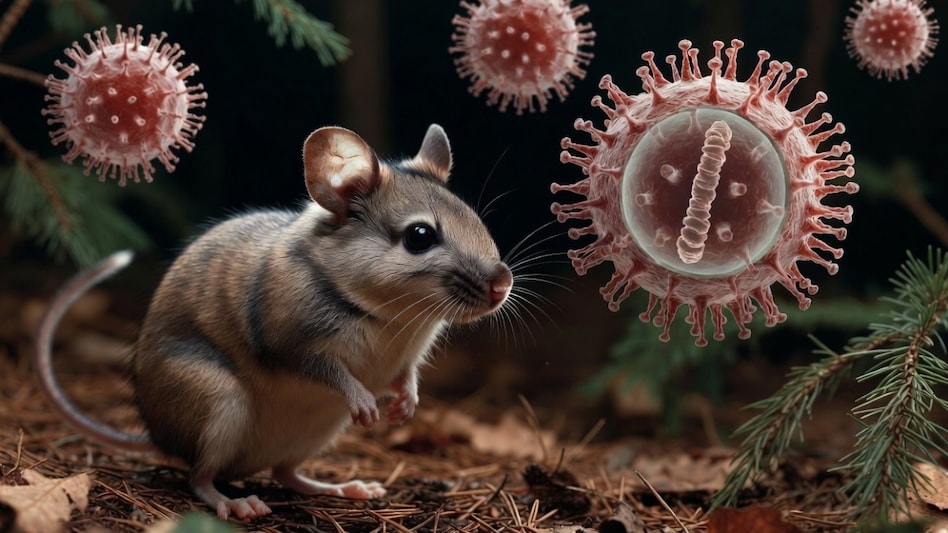
 Most hantaviruses spread to humans through contact with infected rodents, especially exposure to urine, droppings or saliva particles.
As fears grow around the recent hantavirus outbreak linked to the cruise ship MV Hondius, many are asking the same question: when does a disease outbreak officially become a pandemic?
According to the World Health Organization (WHO), a pandemic is defined as “the worldwide spread of a new disease.” But the label is not based only on death counts. The WHO looks at several key factors before considering an outbreak a pandemic-level threat.
 RBI MPC meet: Why your borrowing costs may go up from October
 PM Modi speaks to Trump amid India-US trade talks, reviews ties across trade, defence, energy
 'Pilot tried to crash the plane': Netanyahu shares dramatic details on Flydubai flight
 Small savings scheme interest rates unchanged for Q3 FY27: Check PPF, SCSS, SSY rates
 BT BIG STORY: Why your MBA fees keep getting more expensive
 MSP: ‘Cost Plus 50%’ Principle Fully Maintained, Says Ashwini Vaishnaw
 Economy In Right Hands, Business Environment Very Positive: Nirmal Minda
 Nara Lokesh Exclusive: Why Andhra Pradesh Is In A Hurry To Build Its Data Centre Ecosystem
 KLM Steps Up SAF Push On India-Europe Route
 LIVE What’s Hot: Stocks, Gold & Big Money Moves | Daily Markets Show | September 30 | Business Today
 Sensex, Nifty fail to sustain recovery as intraday gains fade; what's next for D-Street?
 FPI onboarding in 5 days: Sebi, RBI push digital registration to attract foreign investors
 Jio Finance shares in a downtrend after key support breach, analyst on the NBFC stock's outlook
  Meesho stock faces consolidation after 100% rally; analyst on the breakout move
  Microcaps lead D-Street returns as large, mid and smallcaps lag; Sigma Advanced gains 595% in six months
 Financial Horoscope Today, October 1, 2026: Pisces Will Have Increased Focus, Know the Status of Other Signs
 Only 35% of family offices have a succession plan: Why wealth transfer remains a blind spot
 51 years too late: Calcutta High Court rejects plea for railway job linked to father’s 1974 strike service
 Dubai to Abu Dhabi by train: Etihad rail passenger service begins, check fares, timings, routes
 Harshad Mehta scam to insurance reforms: Why Deepak Shenoy calls regulation 'a feature, not a bug'












