Until recently, Apple’s gateway into the MacBook lineup in India was the MacBook Air. With newer models priced from Rs 1,19,900, this firmly placed MacBooks in the premium category and limited adoption largely to designers, developers and corporate professionals.
The Neo changes that equation.
Taking on Windows dominance
India’s PC ecosystem has historically been dominated by Windows-based machines from vendors such as HP Inc., Lenovo Group Ltd. and AsusTek Computer Inc., which together account for the bulk of shipments in the country.
Their advantage has been a wide range of devices across price bands, especially the entry and mid-range segments that drive volumes in India.
For instance, an HP student laptop powered by the 13th Gen Intel Core i3-1315U processor with 512GB storage is priced at around Rs 51,119, while a Lenovo laptop with a 7th Gen AMD Ryzen processor and 256GB SSD starts at about Rs 46,152.
Apple’s new device places it much closer to this segment.
“Apple’s MacBook Neo, priced at Rs 69,900, represents a strategic entry by Apple into India’s high-volume Rs 40,000–Rs 70,000 laptop segment, one that accounts for roughly 40% of overall PC shipments and has historically lacked premium Mac options. The move directly challenges the dominance of Windows OEMs such as HP, Lenovo and ASUS, which collectively control more than 70% of the segment,” said Prabhu Ram, Vice President, Industry Research Group (IRG) at CyberMedia Research.
Ram added that over the longer term, the launch signals Apple’s broader ambition to expand its roughly 7% PC market share in India toward double digits by 2027.
Full macOS at a lower price
The MacBook Neo is not just about reducing the entry price.
Unlike many budget laptops, Apple has not adopted the Chromebook model of using a stripped-down operating system to reduce costs. The Neo runs the full version of macOS Tahoe, offering the same desktop experience and features available on higher-end Macs, including Apple Intelligence.
Apple is also leaning heavily on its software ecosystem.
Unlike Windows machines, where users often subscribe to Microsoft 365, Apple’s productivity apps, Pages, Numbers, and Keynote, are available for free through the App Store.
On the hardware side, the Neo retains Apple’s signature design approach with an aluminium body and a 13-inch Liquid Retina display.
The biggest shift is in the processor.
Instead of Apple’s M-series chips used in most Macs, the Neo runs on the Apple A18 Pro chip, the same processor used in the iPhone 16 Pro Max launched in 2024. Apple says the chip can handle everyday tasks such as browsing, content consumption and light productivity while delivering up to 16 hours of battery life.
“This model doesn't just sell a laptop; it sells entry into the Apple ecosystem, leveraging the A18 Pro chip and Apple Intelligence to redefine what users expect from a mid-range productivity device. By combining a fanless, ultra-portable design, Apple is successfully positioning itself as the aspirational yet logical choice for long-term use,” said Navkendar Singh, Associate Vice President, Client Devices & IPDS at IDC India.
The move could also push competitors to rethink their strategies.
“Moreover, this shift forces competitors to move beyond raw specs and focus on premium build quality and software integration to keep pace with Apple’s growing mainstream momentum,” Singh added.
A gateway Mac for students
Analysts believe the device could bring a new generation of users into the Mac ecosystem, particularly students who have long viewed MacBooks as aspirational devices.
“MacBooks are aspirational products and many people in their student age would love to have one. While coders might still prefer a more powerful laptop for their heavy usage, I believe Neo to emerge as one of the popular laptops in many management, art, law, and science colleges,” said Abhilash Kumar, an independent technology analyst.
Financing could drive adoption
Apple is also leaning on financing, a strategy that has helped boost smartphone sales in India.
According to Counterpoint Research, nearly two-thirds of smartphone purchases above Rs 30,000 are now financed, reflecting how easy EMI options make it for consumers to upgrade to higher-priced devices.
A similar trend is now emerging in laptops.
The MacBook Neo, priced at Rs 69,900 for the 256GB variant, is available through no-cost EMI options starting at about Rs 11,150 per month for six months. Longer repayment plans extend up to 24 months, with payments starting around Rs 3,275 per month, although these include interest charges.
Student pricing further lowers the entry barrier.
With Apple’s education discount, the device can be purchased for around Rs 59,900, bringing the price closer to mainstream laptops.
“Financing will play a decisive role. In India’s EMI-driven purchase environment, no-cost EMIs (3–12 months) and education discounts are likely to be key levers in accelerating uptake,” Ram said.
Expanding retail reach
Another advantage for Windows PC makers has been their extensive offline retail network across India.
Devices from HP, Lenovo and Dell Technologies Inc. are widely available across neighbourhood computer stores, multi-brand electronics retailers and large electronics chains.
Meanwhile, MacBooks had a narrower distribution footprint, largely limited to authorised resellers and Apple premium partners.
But that is now changing. Over the past three years, Apple has expanded its retail presence with official stores in cities including Delhi, Mumbai, Noida, Pune and Bengaluru, offering an experiential format where customers can test devices before buying.
Apple now operates six official retail stores in India and works with more than 3,000 resellers nationwide, according to analysts.
“Apple currently operates six official stores in India but has more than 3,000 resellers across the country, which makes the overall retail presence reasonably strong,” Kumar said.
These stores often allow first-time buyers to experience macOS through guided demos and device setup support, helping reduce hesitation among users switching from Windows.
Apple’s next push in India’s PC market
If Apple’s pricing, financing and retail strategies succeed, the MacBook Neo could mark the beginning of a broader shift.
For years, Apple has remained a niche PC player in India despite its strong iPhone presence.
The Neo suggests the company is now aiming to change that, turning its large smartphone user base into potential Mac customers and pushing the brand further into India’s mainstream laptop market.



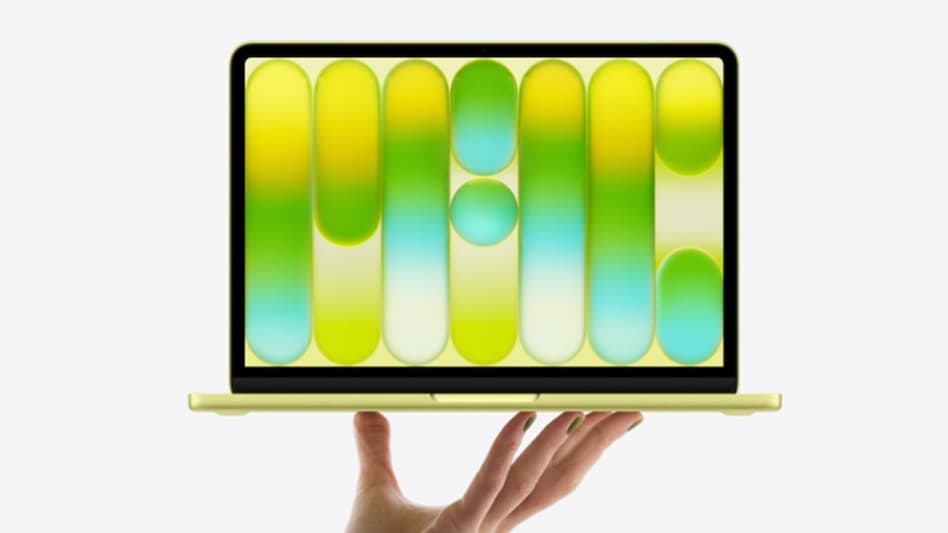 Apple Macbook Neo
 FII sentiment shows early signs of turnaround after months of selling: Report
 Apple job cuts 2026: iPhone maker slashes 200 jobs in Siri, Vision Pro immersive video, gaming teams
 'Last-minute changes unfair, uneconomic': US-Canada trade talks collapse as Trump readies 50% tariffs on Canadian products
 ₹24,800 crore bill: How transaction costs are eating into retail derivatives trading
 The $1.8 trillion space economy: Who will capture value as the final frontier goes commercial?
 Motor Insurance Explained: Is Third-Party Car Insurance Enough? Know Before You Buy
 Retirement Tax Planning: 5 Ways Senior Citizens Can Reduce Their Tax Liability
 #IndiaAt100 : Adipen Bose Nandhiji On Conscious Capitalism- Can Profit & Purpose Coexist?
 #IndiaAt100 : Hisashi Takeuchi On Driving India’s Manufacturing Revolution
 #IndiaAt100 : Manufacturing For Viksit Bharat | Can Industry Power India’s $30-Trillion Dream?
 Cupid, NTPC Green, NTPC, Raymond Realty, HAL shares: Key technical levels to watch
 Defence stock with Rs 2,654-crore order book hits record high; here's why
  GACM Technologies: FII holding jumps to 29%; penny stock in focus
 ₹1.88 lakh champagne, 10,000 salt crusted red snapper: Inside Salman Khan's adopted sister Arpita Khan Sharma’s restaurant Mercii's menu
  ‘I've been posted out before joining’: Tukaram Mundhe recalls his shortest tenure ever as an officer












