









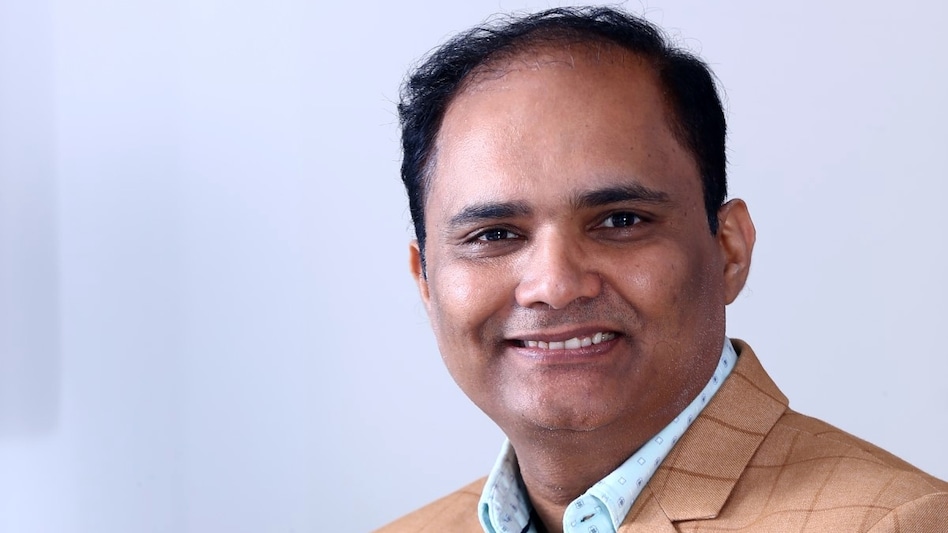
 Mallari Kulkarni, Director, environmental, social, and governance (ESG) ESG Social Innovation, Dell Technologies

 Mallari Kulkarni, Director, environmental, social, and governance (ESG) ESG Social Innovation, Dell Technologies
Digital LifeCare, a digital platform with mobile, cloud and analytics applications from Dell Technologies has facilitated government to enrol over 135 million people across 33 states under its screening and treatment program for non-communicable diseases such as hypertension and diabetes, in the last five years. Mallari Kulkarni, Director, environmental, social, and governance (ESG) ESG Social Innovation, Dell Technologies India talked about burden of NCDs in India, company’s role in mitigating the impact and scalability of the digital platform in future. Edited excerpts from an interview:
Tell us about Digital LifeCare?
Digital LifeCare is a flagship ESG initiative of Dell Technologies developed to help India address the rising burden of NCDs at population scale. It is a future-ready technology platform on which healthcare systems can be integrated digitally, enabling a continuum of care for patients, improving the productivity of the deployed healthcare workers and officials and executing programs at scale. We are also looking at scaling up the platform to include other diseases as well. The government has implemented the National Programme for Non-Communicable Diseases (NP-NCD), previously known as NPCDCS (National Program for Prevention and Control of Cancer, Diabetes, Cardiovascular Diseases and Stroke). It aims to screen individuals aged 30 and above for five specific diseases: hypertension, diabetes, oral cancer, breast cancer, and cervical cancer. Given the government's target of screening 100 million individuals aged 30 and above and providing hypertension treatment to 13 million screened patients in the Budget Outcome 2023-2024, the role of technology becomes crucial in achieving such a large-scale initiative. Recognizing the challenge, Dell Technologies was onboarded as the technology partner and TATA Trust as implementation partner to help the Indian government address the rising burden of NCDs. It was integrated with the program in 2018.
What are the salient features of the platform?
We have created mobile apps for health workers have been developed around user-centred design with a 2-way intelligent sync mechanism to mitigate field connectivity challenges along with support for 11 local languages for ease of communication and feedback. It supports Hybrid/Mixed Cloud deployment, as health comes under the purview of the State Government. Cloud health records are therefore updated by all care providers for the consistency and accuracy of record keeping. The platform is also built with plug-and-play architecture and designed to be interoperable, using open source, modular, scalable and secure technology that allows varied users to engage with patients, capture data and deliver assessments with regard to patient care. It features distributed data warehouse and analytics capabilities to provide data-driven actionable intelligence to Center, State and District officials to make timely policy decisions for running the program effectively.
Why is effective management of NCDs important for the government considering the healthcare impact?
According to the world health organization (WHO), NCDs cause 41 million deaths globally each year, out of which 77% of deaths occur in low and middle-income countries. If the current situation remains unchanged, the United Nations projects, the global economy could suffer a cumulative loss of $47 trillion by 2030 due to NCDs. In India alone, two-thirds of NCD patients fall in the most productive age group (26 to 59 years) according to a report by ASSOCHAM, adding to the social and economic burden of NCDs.
As a technology partner, how do you ensure that healthcare facilities are available in the remotest areas?
We recognized the problem of internet penetration early on and ensured that we built our platform with an offline-first approach. If they don’t have internet connectivity, they will still be able to provide the delivery of their services. For e.g.- ASHA workers and Auxiliary Nurse Midwife (ANM) provide risk assessment and screening while the community health officers provide treatment - all these can be done in an offline manner. Naturally, the security of this data becomes a primary concern to which the platform has in-built security solutions. Another challenge faced is that ANM and ASHA workers typically interact with their patients in the local language, so we built our application in eleven local languages for ease of use
When you are operating at such a large scale, data becomes indispensable, and it needs to be made accessible without complexities. With a suite of mobile, cloud and analytics applications, Digital LifeCare collectively provides a unified view of patients over time, across all levels of care, through seamless and secure data-sharing. It assists the healthcare community in the delivery of preventive and curative NCD services. We have built a highly scalable, federated deployment architecture which can be deployed in private cloud or on-premises
What is the potential in the Indian market in terms of technology adoption? What kind of opportunities do you think exist, apart from the government?
The digital healthcare sector is experiencing rapid evolution, driven by tech companies leading the transformation leveraging health data to develop Personal Health Record (PHR) apps. Several digital health start-ups in the market have the potential to offer value-added services that simplify the patient's treatment journey. For instance, apps can send medication reminders and notify patients when prescription refills are due. Leveraging this data, e-pharmacies can deliver medicines directly to the patient's doorstep. Ultimately, data plays a crucial role in facilitating enhanced patient care and service provision.
How can public-private partnerships transform the Indian healthcare system to achieve Universal Health Coverage?
Public-private partnerships have a transformative potential to help achieve Universal Health Coverage in India. By combining the resources, expertise, and innovation capabilities, these partnerships can help bridge gaps in healthcare access, improve service delivery, and enhance overall healthcare quality. Together, they can work towards expanding healthcare infrastructure, implementing effective health programs, and ensuring affordable and equitable access to quality healthcare services for all citizens.
Watch: Renowned astrologer P. Khurrana, father of Ayushmann Khurrana and Aparshakti Khurrana, passes away
For Unparalleled coverage of India's Businesses and Economy – Subscribe to Business Today Magazine
 Big news for commercial petrol, diesel buyers: India lifts emergency curbs on retail sales from July 1
  'Never seen so many tankers': India's Russian crude imports may hit record high in June
 Delhi EV Policy 2026 Explained: What's changing for car, bike and auto buyers
 Why Jio BlackRock feels hybrid long-short is the perfect fund to launch now as it enters the SIF space
 Where should investors put their money? PL Wealth CEO has some tips
  Why Jio BlackRock AMC Is Launching Hybrid Long-Short As It's First SIF
 Delhi Unveils ₹15,000 Crore EV Policy: What It Means For Auto Companies And Consumers
 Gold, Silver Or Crude? Where Should Investors Bet Now? | Vandana Bharti
 How India Strategically Managed LPG & Crude Oil Supplies During West Asia War | K. Surana Explains
 Delhi’s Green Revolution: CM Rekha Gupta Unveils Massive ₹15,000 Crore EV Policy To Combat Pollution
 Why Jio BlackRock feels hybrid long-short is the perfect fund to launch now as it enters the SIF spaceWhere should investors put their money? PL Wealth CEO has some tips
  Axis Bank CFO Puneet Sharma steps down; stock likely in focus on Tuesday
 Apollo Hospitals, Medanta, Healthcare Global, Max Healthcare, Artemis Medicare: Check target prices, outlook
 Polycab: Amid record FII buying, shares at all-time high but brokerages expect more upside