


 Pixxel
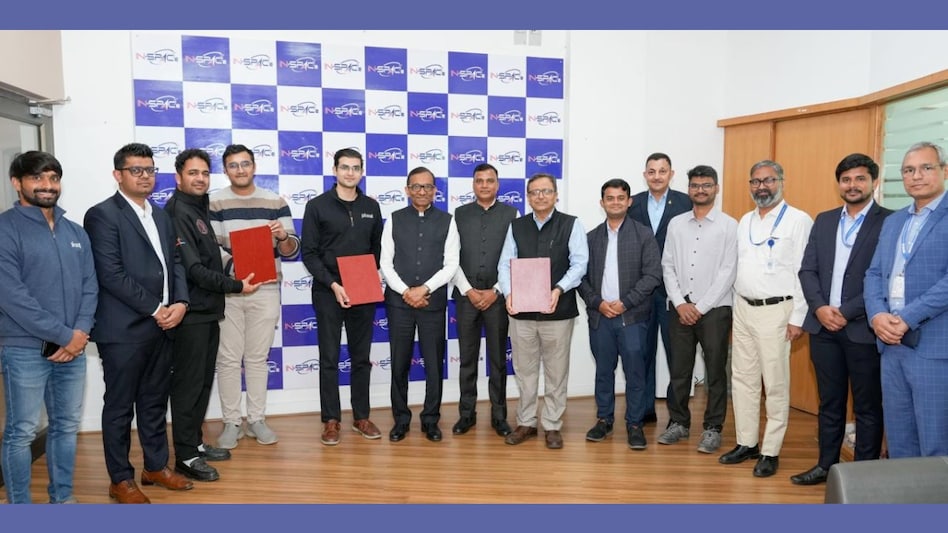
Pixxel, a Bengaluru-based planetary intelligence startup, has signed an agreement with the Indian National Space Promotion and Authorisation Centre (IN-SPACe) to build and operate India’s first privately led national Earth Observation (EO) constellation under a public-private partnership (PPP) framework.
The planetary intelligence startup will lead a consortium of four Indian space companies, Pixxel, Dhruva Space, PierSight and SatSure, to design, build, own and operate the country’s first private-led national satellite system. The consortium plans to invest more than Rs 1,200 crore over the next five years to deploy a 12-satellite constellation.
 Capital formation, exports fuel 7.8% Q1 GDP growth
 GRT Jewellers to acquire 74.12% stake in Tribhovandas Bhimji Zaveri for Rs 1,033.71 crore
 India braves global headwinds: Q1GDP surges 7.8% as investment and services fire on all cylinders
  Kotak Bank recommends two internal candidates for CEO post: Report
 'Doomsayers were doomed, India bloomed': PM Modi as GDP growth jumps to 7.8% in Q1 FY27
 Indian Markets Outlook: Is Bear Phase Ending? Maneesh Dangi Sees Better Next 6-12 Months
 This ₹5 Lakh AI Gym Wants To Replace Your Gym
 Nepal Flood Horror: Sadhguru, Manisha Koirala Stand In Solidarity As Rescue Efforts Continue
 Nepal Flood Horror: Children Found Alive After Days Under Debris, Hope Emerges From Devastation
 India’s 6% Growth Trap: Why Manufacturing Still Struggles To Beat China
 Priority Jewels IPO subscribed 21.23 times on Day 2; check latest GMP, other key details
 Ola Electric shares jump 5%; still down 34% in a year; what's ahead?
 Sensex falls 307 points, Nifty settles below 24,100; what happened today
 Market veteran Ajay Bagga on top sectoral picks; impact of oil prices, monsoon on economy
  Nifty Bank jumps over 600 points in last five minutes; CAS in focus
 Travelling to Uzbekistan? Indians can now pay through UPI while abroad by scanning UZQR codes
 Manufacturing Majors: Maruti Suzuki driving ‘Make in India’
 Not just Divya Mittal: Her IAS husband also quit civil services in 2022
 PM Modi To Putin: “Move Away From Endless War Towards An End To War”
 NIIF targets $3.2 billion infrastructure fund as global investors eye India’s growth story: Report












