


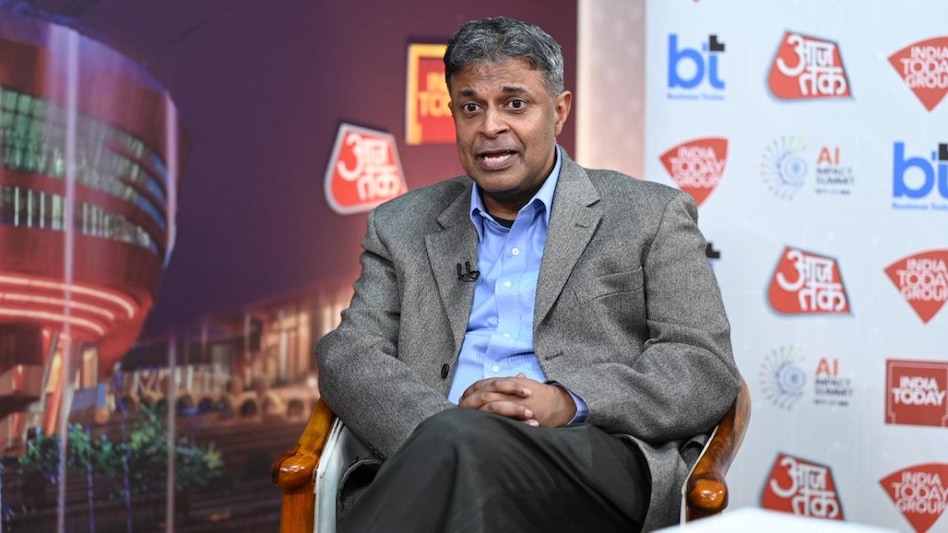
 Raghavan said the economics of frontier AI make it difficult for startups to compete directly with multinational firms that have already invested tens of billions of dollars.
India should treat heavily subsidised foreign artificial intelligence services as “dumping” and the government should step in as an early customer for domestic alternatives, according to Sarvam AI co-founder Vivek Raghavan, who argued that sovereign AI efforts will struggle without large-scale local adoption.
“In any other industry, spending billions or hundreds of billions of dollars for something and then offering it for free would be considered dumping,” Raghavan told Business Today in an interview. “There should be some policy response.”

 BT BIG STORY: India Inc is more confident about Q3, but unwilling to hire or invest
 RBL Bank shares: Q2 beat, yet Goldman Sachs says sell; CLSA, Citi, Morgan Stanley targets
 'Will try to avoid mass layoffs, no pay increase': Zoho's Sridhar Vembu says outlook for software jobs is grim
 IMF raises India's growth forecast to 7% for 2026, upgrades outlook by 60 BPS
 Charity commissioner asks Noel Tata, Tata Trusts to respond to Venu Srinivasan, Vijay Singh’s complaint by Oct 19
 India's Next Connectivity Leap? Tata Communications Bets On Satcom & Smart Villages
 Motorola's Shivam Ranjan Speaks To Business Today About Motorola's Upcoming Flagship @ IMC26
 Is The AI Boom Sustainable? The Debate Over Investment Returns, India's AI Future And Job Disruption
 India-UK Trade Ties Set for Fresh Push? Goyal Calls for Faster Business Cooperation
 Rahul Gandhi Vs Gyanesh Kumar: 200 Officers Claim Escalates Election Commission Row
 HCL Tech share price: Targets suggest limited upside; what JPMorgan, Jefferies, Citi say
 IRCON International shares in focus after company bags Rs 862-crore contract
 ICICI Prudential AMC Q2 results beat estimates, here's what brokerages say
  Mazagon Dock, GRSE, Cochin Shipyard: Defence stocks to trade — Check key levels, targets & stop loss
 GIFT Nifty up 33 points; HCL Tech, ICICI AMC, Ola Electric, RBL Bank, Ircon among stocks in focusHCL Tech share price: Targets suggest limited upside; what JPMorgan, Jefferies, Citi sayIRCON International shares in focus after company bags Rs 862-crore contract
 Family assets don’t belong to one individual: Venu Srinivasan’s family says no settlement has been reached
 LPG, CNG, PNG prices today (October 13): Check latest rates in Delhi, Mumbai, Kolkata, other citiesICICI Prudential AMC Q2 results beat estimates, here's what brokerages say












