


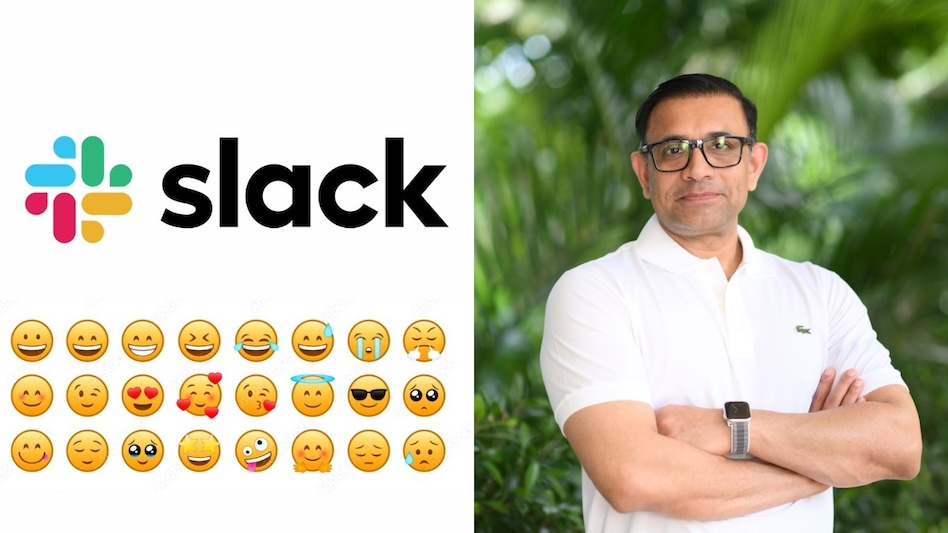
 Himanshu Rajpal, Regional Sales Director at Salesforce India
In an era defined by remote collaboration and digital overload, the humble emoji has emerged as one of the most influential tools in the modern Indian workplace. No longer just playful characters tucked into casual chats, these icons have evolved into a crucial component of professional communication, especially in a country as linguistically diverse and generationally varied as India.
To understand this shift, Business Today spoke to Himanshu Rajpal, Regional Sales Director at Salesforce India, who shared insights on how emojis are reshaping culture, clarity, and connection across organisations. His responses offer a window into why this visual language is becoming indispensable in a text-first professional world.
Emojis as the New Digital Body Language
Rajpal believes the rise of digital communication at work has fundamentally changed how teams express nuance. With employees increasingly communicating asynchronously, emojis have stepped into the role once filled by tone of voice and facial expressions.
“In today’s text-first workplace, emojis have become the new digital body language,” he said. “As more employees, especially digital-native talent, communicate asynchronously, emojis help add tone, nuance, and emotional context that traditional messages often lack. They function like a quick nod, a polite smile, or a gentle nudge, helping people express intent instantly without adding to message overload.”
This clarity has become vital in a world weary of constant meetings and information deluge. “They cut through the ambiguity, make intent obvious, and reduce the friction of back-and-forth messages,” he added.
Bridging Generational and Hierarchical Divides
India’s workplaces often combine tradition with rapidly evolving digital habits. According to Rajpal, emojis have emerged as a cultural leveller.
“Emojis are proving to be a significant bridge across generational and hierarchical divides in Indian workplaces,” he observed. “In a culture that often values politeness and indirectness, emojis soften otherwise blunt or transactional feedback, making communication more approachable.”
His example is telling. “What might seem brief or abrupt in plain text, for instance, a simple ‘Done’, becomes warmer and more collaborative with a checkmark or smile emoji.”
By using emojis thoughtfully, leaders also signal an openness that encourages younger employees to engage more freely. It creates an inclusive culture where everyone feels comfortable contributing.
Professionalism Versus Informality: Finding the Balance
A common question among managers is how to embrace emojis without blurring professional boundaries. Rajpal’s view is that the approach must be strategic rather than restrictive.
“Striking the right balance is about understanding the subtle, powerful language emojis represent and embracing them strategically, rather than policing their use,” he explained. “Leaders can set the tone by using emojis for positive reinforcement, celebrating team wins, or expressing empathy, while reserving formal language for critical feedback or sensitive discussions.”
He highlights simple examples that many teams already adopt: a thumbs up to acknowledge completion or a rocket emoji to cheer on a new initiative. The intention is not to dilute professionalism but to enhance communication in ways that are efficient and emotionally intelligent.
The Distinctively Indian Twist on Emoji Use
Emojis in India carry cultural flavour. Rajpal pointed out that employees often employ emojis in ways that echo the Indian instinct for ‘Jugaad’ or clever improvisation.
“We’ve observed how emojis embody the quintessentially Indian concept of ‘Jugaad’ in communication,” he said. A laughing emoji after a shared joke, he explained, fosters camaraderie in a way formal language never could. Similarly, a celebration emoji used to acknowledge a colleague’s achievement becomes an instant, public show of support that boosts morale.
These patterns blend modern digital habits with traditional Indian values of warmth and community.
A Friendlier, Clearer Future for Workplace Engagement
Looking ahead, Rajpal believes emojis will play an even more significant role in workplace communication, particularly for younger talent navigating digital-first environments.
“Emojis are leading the way as a vital tool helping to build and maintain relationships in a digital-first world where nearly 50 percent of Gen Z employees report wasting time interpreting unclear messages,” he noted, citing a joint report by BCG and Snap Inc.
Platforms like Slack, he said, amplify this impact with features such as emoji reactions and custom icons that help build internal culture. Examples range from custom dev-approval emojis to light bulb symbols for sharing ideas.
“Emojis are the pixels that paint a richer, more human picture of our professional interactions,” Rajpal said. “The future of workplace communication in India is not just faster; it’s friendlier, clearer, and more fun, with emojis leading the way.”
As companies navigate hybrid work models and generational shifts, emojis have transcended novelty status. They are now essential tools that enhance clarity, human connection, and collaborative spirit.
For Unparalleled coverage of India's Businesses and Economy – Subscribe to Business Today Magazine

 Tata Consumer stock: Tata Group's FMCG arm reacts to Q1 earnings show
  Sterlite Technologies: What every investor should know about the stock post Q1 earnings
  NEET to be conducted through a computer-based model? Here’s what we know
 ‘Merely because there is agitation…’: Supreme Court says right to peaceful protest is guaranteed
 BT Explainer | PVR Inox shares: Analysts bet big on Odyssey, Ramayana, Avengers & others post solid Q1
 IPO Rush Ahead! Should You Invest In Manipal Health & Upcoming IPOs? Avinash Gorakshakar Explains
 Why IndiGo Stock Is Rallying | Impact Of Falling Crude Oil On Aviation Stocks
 Pralhad Joshi Takes Charge As Education Minister | Big NTA Reforms After NEET Row
 Nirmala Sitharaman Slams Govt Apathy After Tax Dept's 50-Year Land Struggle In Mumbai
 PM Modi’s Big Message To Youth: Border Villages Are India’s First Villages
 Infosys fined €175,000 by French authority over employee time tracking system; says no material business impactTata Consumer stock: Tata Group's FMCG arm reacts to Q1 earnings show
  Why KFin Technologies shares surged 9% today
 Sagility shares surge 8%; brokerages retain 'Buy' despite Q1 revenue dip QoQ; check target pricesSterlite Technologies: What every investor should know about the stock post Q1 earnings
  Delhi to Nepal in just 8 hours! This highway project could boost tourism growthIPO Rush Ahead! Should You Invest In Manipal Health & Upcoming IPOs? Avinash Gorakshakar Explains
 From ribbon to medal: How Mirabai Chanu made India cry with joyWhy IndiGo Stock Is Rallying | Impact Of Falling Crude Oil On Aviation Stocks
 Passenger lights diya inside AC train coach: Viral clip sparks debate over railway safety









