


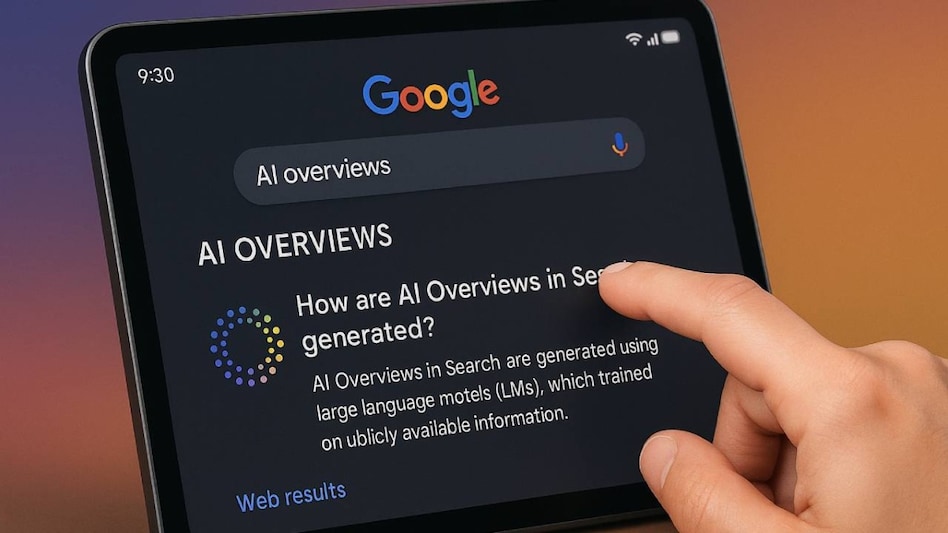
 Google says the new machine-based headline will help “identify content on a page that would be a useful and relevant title to a user's query."
Google is quietly testing an AI-powered feature that rewrites news headlines in Search results, a move that could significantly reshape how users discover content and how publishers retain control over it.
According to a recent report by The Verge, the company is experimenting with replacing original publisher headlines with AI-generated alternatives in Search. Google confirmed to The Verge that it is running a “small” test that changes titles of news articles and content from “other websites” using artificial intelligence.

 Jefferies' Christopher Wood sees gold at $10,000 'sooner or later'; likes India's small, midcaps
 NSE IPO fully subscribed on Day 2; QIB, NII quotas booked 1.3 times each
 Warren Buffett steps down as Chairman after 60 years: What changes at Berkshire Hathaway now
 Net direct tax rises 13% to over ₹12.12 lakh crore till Sept 17
 Satya Nadella highlights India’s AI talent, sees massive developer community emerging by 2030
 BTTV Exclusive | Jefferies’ Chris Wood On AI, US Bonds, Oil & India’s Market Outlook
 LIVE What’s Hot: Stocks, Gold & Big Money Moves | Daily Markets Show | September 17 | Business Today
 From NPAs To Infrastructure: CEA On How India’s Economy Has Changed Under PM Modi
  “PM Modi Is Architect Of Economic Policy”: CEA V. Anantha Nageswaran On India’s Growth Journey
 iPhone Sale Sparks Overnight Rush As Buyers Queue Across Delhi, Mumbai, Bengaluru
 Banks are no more secular growth story, prefer NBFCs: Chris WoodJefferies' Christopher Wood sees gold at $10,000 'sooner or later'; likes India's small, midcaps
 NSE IPO: Applying for short-term gains from share sale? Analyst says this
 STT collections jump 52.9% to Rs 40,214 crore in FY27 so far; key details
 Kaynes Technology stock needs breakout confirmation; Moschip preferred semiconductor pick: Analyst
  India’s first dengue vaccine is coming: Dr Reddy’s ties up with Japan’s TakedaBanks are no more secular growth story, prefer NBFCs: Chris Wood
 Exam reforms: SC to inspect NTA office as Nandan Nilekani-led panel to submit report soon
 Biggest drop since 2009: Rice output faces 10 mn tonne slump amid rainfall deficit, El Niño risk
 West Asia war: Saudi Aramco halts crude shipments to Indian refiners indefinitely after pipeline strike












