


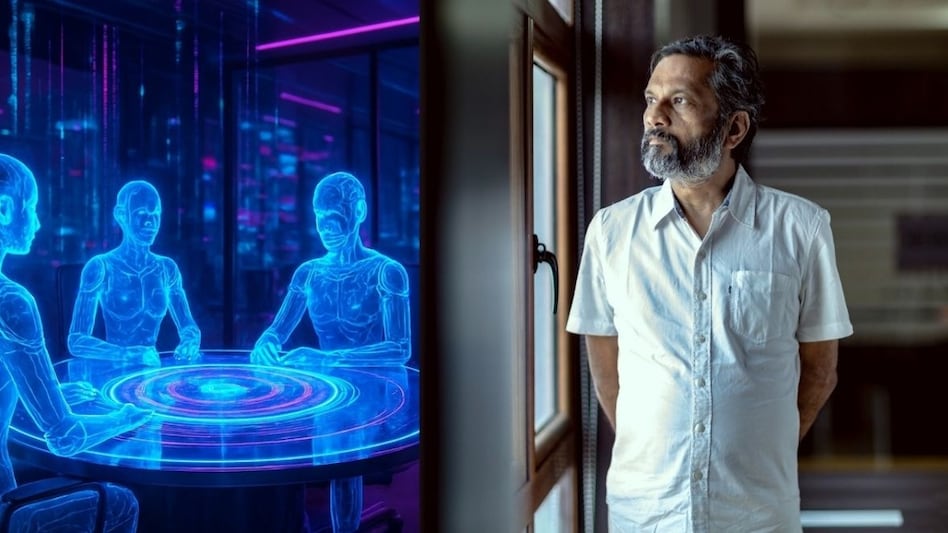
 White-collar work in AI era: Sridhar Vembu outlines how he is thinking
Sridhar Vembu, founder and chief scientist at Zoho, on Monday said he is still in the early stages of understanding how artificial intelligence (AI) will affect companies and employment.
Reacting to a post by London School of Economics professor Luis Garicano, who argued that many professional jobs cannot be fully automated because they involve complex human judgement, Vembu said fast-changing technology requires caution before forming conclusions. "The quoted post makes a strong argument that white-collar jobs won't go away anytime soon due to AI. In rapidly changing times like this, here is a framework I use:"

 Commerce through international waterways must be restored: India condemns attacks on vessels in Hormuz at UNSC
 Suzlon share price: UBS, Investec, others cut targets post Q1 results; lowest and highest
 Will commercial real estate investing get easier with India's first REIT-focused index fund?
 WhatsApp launches web calling: You can now make video & audio calls directly from your browser, no app needed
 Kanwar Yatra 2026: Delhi-Haridwar highway reserved for kanwariyas; check list of traffic restrictions here
 7.1 Quake Shakes Southern Japan: Roads Split, Buildings Burn, Hundreds Of Thousands Evacuated
 How Mohammad Irfan Went From Street Hawker To India's Most Viral Protest Voice
 Congress Vs BJP Clash In Lok Sabha Over Anti-Paper Leak Bill 2026 As Opposition Questions Police
 "Justice Delayed Is Justice Denied": Bansuri Swaraj Hails Anti-Paper Leak Bill Strict Penalties
 CM Rekha Gupta Approves ‘Delhi Lakshmi Yojana’; Women To Get ₹2,500 Monthly Financial Assistance
 Suzlon share price: UBS, Investec, others cut targets post Q1 results; lowest and highest
 Nifty, Sensex, Nifty Bank outlook for today: GIFT Nifty up 120 points; key levels to watch
 Top stocks in news: L&T, Birlasoft, LIC, Tata Capital, NTPC, Graphite, RVNL, RPG Life, AEL
 Moschip Technologies, Tamilnad Mercantile Bank shares: Here's what charts indicate
 Sensex, Nifty end lower as FMCG, energy weigh; IT stocks outperformCommerce through international waterways must be restored: India condemns attacks on vessels in Hormuz at UNSC
 Petrol, diesel prices today, July 29: Check latest rates in Delhi, Mumbai, Chennai, Kolkata & more
 How digital gift cards are becoming part of employee financial wellnessSuzlon share price: UBS, Investec, others cut targets post Q1 results; lowest and highest
 Europe’s new eco-friendly plate is coming from India’s forest communities










