









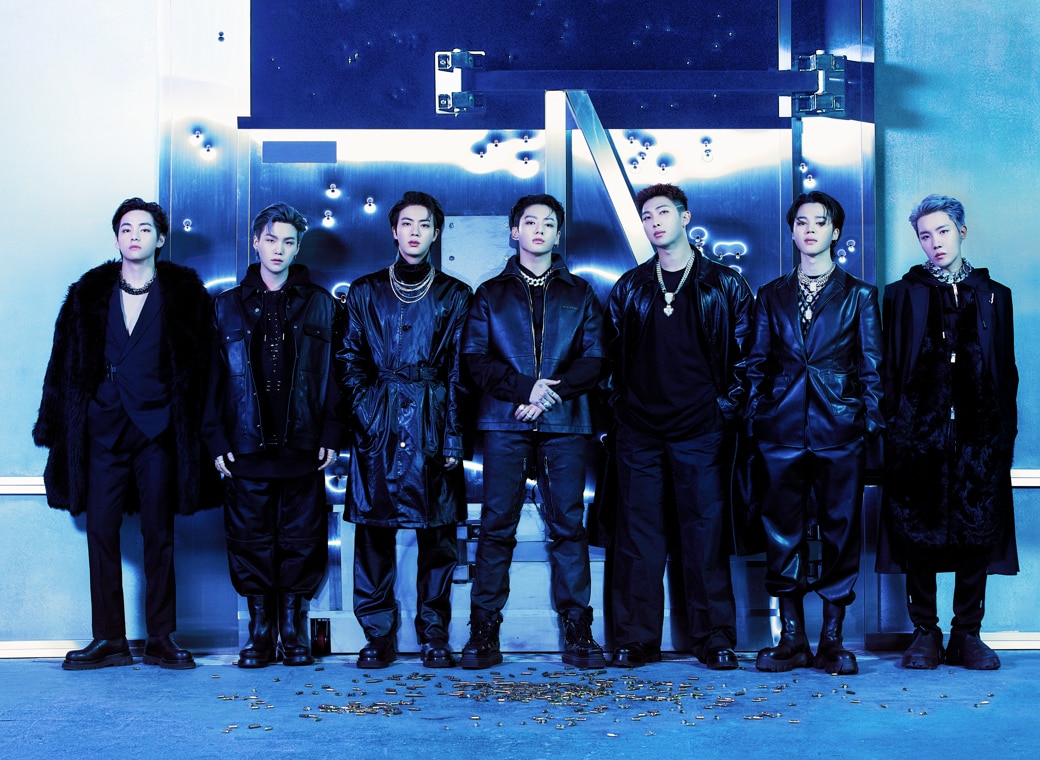


 HYBE is one of the most powerful entertainment companies in the world
India’s music industry has never been more alive, or more fragmented. Streaming has surged, independent artists are cutting through the noise, film music continues to dominate but no longer monopolises attention, and a digitally empowered Gen Z is consuming, sharing, and shaping culture faster than legacy systems can track. Into this flux enters one of the most powerful entertainment companies in the world: HYBE.
Over the last decade, HYBE has evolved from a single-artist management company into a global entertainment corporation valued at over USD 8-9 billion, with annual revenues exceeding USD 1.65 billion (KRW 2 trillion) in 2024 and operations spanning South Korea, the United States, Japan and Latin America. Its portfolio includes global acts such as BTS, SEVENTEEN, TXT, ENHYPEN and LE SSERAFIM, alongside technology platforms like Weverse that have redefined fandom monetisation.
HYBE’s India entry, through the formal launch of HYBE INDIA, is therefore not symbolic expansion. It is a calculated market move, one that signals confidence in India as a long-term revenue, talent and innovation hub.
Before auditions, before debuts, before infrastructure announcements, HYBE chose to test the market through its first official India-facing activity: “Jung Kook: GOLDEN – The Moments”, a large-scale exhibition at Mumbai’s Mehboob Studio. The results were instructive.
Within the first four days, the exhibition recorded tens of thousands of footfalls, with multiple daily slots running house full, particularly across the opening weekend. Merchandise counters, stocked with officially licensed GOLDEN collectibles, saw near-total sell-outs by Day 3, prompting discussions around restocking and extended inventory cycles. Limited-edition photo cards and exhibition-only apparel moved fastest, indicating strong per-capita spend rather than casual browsing.
Crucially, attendance was not confined to Mumbai. Industry tracking shows fans travelling in from Delhi NCR, Pune, Ahmedabad and Bengaluru, positioning the exhibition as a destination event, a key metric for live IP scalability. For the label, the exhibition functioned less as fan engagement and more as a live-market stress test. The outcome was clear: India is operationally ready for monetised fandom experiences.

This early signal explains why HYBE is accelerating its India roadmap.
“Guided by the belief that ‘fans exist everywhere,’ HYBE prioritizes expanding connections through music and content,” Chairman Bang Si-Hyuk tells Business Today, adding, “The establishment of HYBE INDIA represents a natural extension of our global strategy.”
From a business perspective, the timing is deliberate. India is now the second-largest music streaming market globally by users, with over 185 million monthly active listeners, while K-pop consumption in India has grown by over 350 percent in recent years. Nearly 65 percent of India’s population is under 35, and live entertainment has rebounded sharply post-pandemic, with stadium-level tours by Coldplay, Ed Sheeran and others resetting benchmarks for ticketed events.
For BTS’ parent company, this convergence creates a rare opportunity: a large, young market with high digital engagement, rising live-event appetite, and limited structured artist-development systems at a global scale.
“With a population of 1.4 billion, India stands as one of the most important music markets of the future,” Bang says. “The independent music scene is expanding, live infrastructure is being revitalized, and cultural confidence is rising.”
Rather than viewing India’s complexity, multiple languages, regional markets, genre fragmentation, as a challenge, the label sees it as leverage. Its multi-home, multi-genre strategy, already deployed across the U.S., Japan and Latin America, is designed to operate across diverse cultural ecosystems while maintaining centralised production, training, and monetisation standards.
HYBE’s financial muscle matters here. Unlike traditional label entries that focus on licensing or distribution, HYBE invests heavily upfront, in artist training systems, content production pipelines, fan platforms, live-event IP, and long-term talent incubation. Each of these translates into capital inflow: employment generation, local production spending, venue partnerships, technology deployment, and ancillary industries.

Bang confirms that nationwide auditions will begin in 2026, marking HYBE’s first structural investment into Indian talent discovery. “We plan to apply HYBE’s methodology as a framework, while developing a model optimised for India and scalable globally,” he explains.
The distinction is important. HYBE is not positioning itself as a competitor to Indian labels like T-Series or Zee Music, whose strength lies in catalogue dominance and film integration. Instead, it is importing a systemised global expansion model, one that builds artists as long-term intellectual property across music, live events, merchandise, digital platforms, and storytelling universes.
“What sets us apart is our integrated, multi-layered production and fandom-building expertise,” Bang states. “Our goal is not just to debut artists, but to strengthen the overall ecosystem — including producers, managers and industry professionals.”
Over a 5–10-year horizon, HYBE INDIA is expected to evolve from a subsidiary into a regional command centre, connecting South Asia with its diaspora markets across North America, the Middle East, and Southeast Asia. India, Bang suggests, will also serve as a laboratory for innovation, where traditional musical forms intersect with contemporary global production, generating export-ready formats for HYBE’s worldwide labels.
Technology will be central to this push. HYBE already leads global peers in AI-assisted content, fan analytics, and platform-driven monetisation. India, which leapfrogged from physical formats to streaming, is viewed internally as an early adopter for the next wave of digital music infrastructure, albeit with strict ethical guardrails around artist rights and human creativity.
Bang’s personal connection to India predates HYBE INDIA. He recalls the impact of BTS’ Dynamite during the pandemic, when India emerged as a high-growth streaming market and fan challenges went viral organically. “We believe it is now time to give back the love,” he says.
From a business lens, that sentiment translates into long-term capital, infrastructure, and creative commitment.
For decades, Indian music has fuelled cinema. HYBE is betting that India’s next phase will fuel global pop. Early indicators suggest the market is ready and already paying attention.
 Exam reforms: Tech titan Nandan Nilekani picked by PM Modi to fix national public examination system
  'Tax officers struggled for own land': Nirmala Sitharaman slams laidback attitude of govt depts
 CBDT issues new crypto reporting guidance: No new tax, but exchanges must track and report all transactions
 Did Cockroach Janta Party's 'Chalo Sansad' 2.0 threat trigger Dharmendra Pradhan's resignation? What we know so far
 'Will discharge my responsibilities with complete humility': Pralhad Joshi after being appointed Education Minister
 AI Data Centers, Aerospace & Gas Turbines: What's Powering Indo-MIM's Future Growth?
 Best Healthcare Stocks: Gaurang Shah's Outlook On Apollo Hospitals, Fortis & The Manipal Health IPO
 Is Indo-MIM's IPO Valuation Justified? Here's Why The Company Sees Strong Growth Ahead
 Treasury Bills Explained: Why T-Bills Are One Of The Safest Short-Term Investment Options
 FDs vs Markets: Where Should You Keep Your Short-Term Money?
 Gland Pharma stock: Price target of Rs 3,250 likely in medium term, says analyst
  Metal recycling stocks to buy: Gravita, Pondy Oxides, Jain Resource among top picks
 TRIL shares: Should you average the falling stock? Here's 'fixed and final' stop loss
 Adani Power: 45 GW target, Rs 2 lakh crore capex plan among conference call highlights
  ITC Hotels, Chalet, Ventive, IHCL, SAMHI: Hotel stocks to buy despite travel disruptions
 Beyond mutual funds: Why analysts see SBI Funds' alternative asset business as a long-term growth engine
 'Ashamed of it...': Manoj Muntashir calls Adipurush his biggest mistake, seeks country's forgiveness Exam reforms: Tech titan Nandan Nilekani picked by PM Modi to fix national public examination system 'Tax officers struggled for own land': Nirmala Sitharaman slams laidback attitude of govt depts
 Delhi targets traffic bottlenecks on Aruna Asaf Ali Marg with ₹1.97 crore elevated road study